

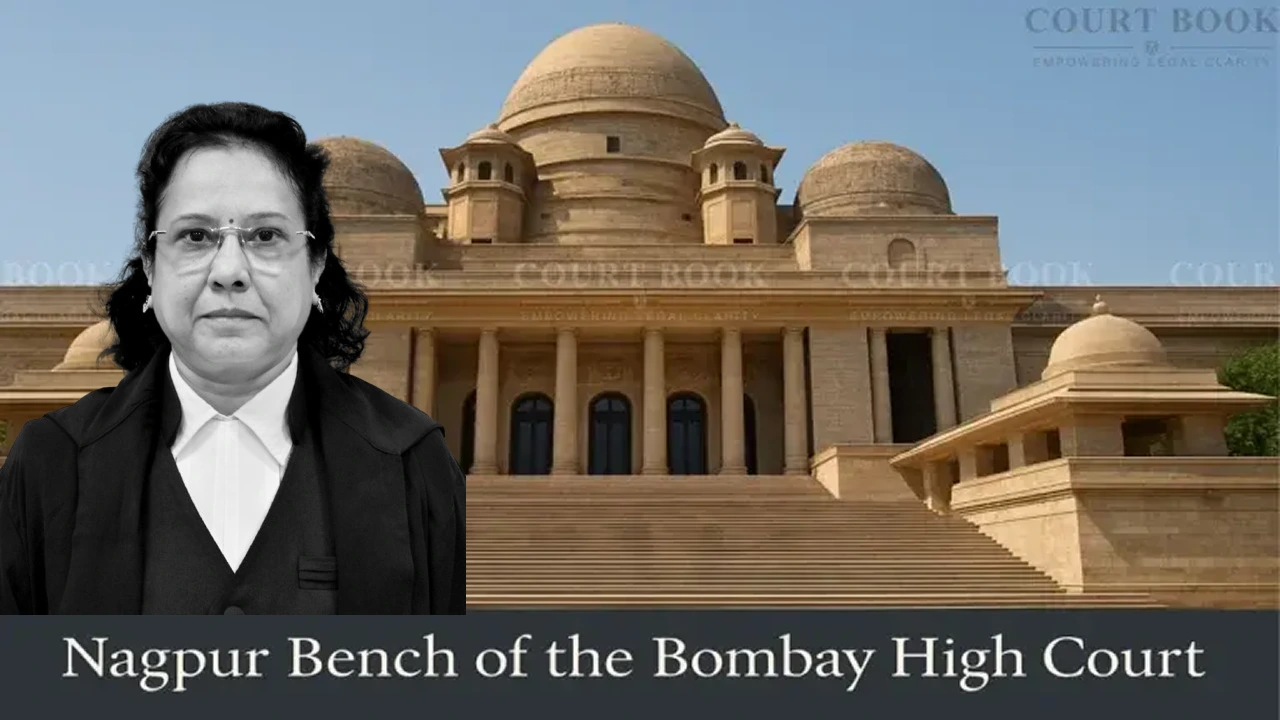
The Bombay High Court has ruled that merely showing a person's name in cultivation records is not enough to establish tenancy rights under the Bombay Tenancy and Agricultural Lands (Vidarbha Region) Act, 1958. Dismissing a writ petition, the Court held that a person seeking ownership of agricultural land must first prove the legal existence of a landlord-tenant relationship through proper pleadings and supporting evidence.
Justice Nivedita P. Mehta observed that the petitioner had failed to establish the basic foundation of his tenancy claim and therefore could not seek ownership rights over the disputed agricultural land.
Background of the Case
The dispute concerned agricultural land in Yavatmal district. The petitioner, Santosh Chandrawanshi, claimed that his father had been inducted as a lessee in 1951-52 under the Berar Regulation of Agricultural Leases Act, 1951. According to him, his father continued cultivating the land for decades, and after his father's death in 1990, he remained in possession.
Relying on revenue records showing cultivation, the petitioner sought fixation of the purchase price and conferment of ownership rights under the Tenancy Act, 1958. However, the Tahsildar rejected the claim after remand, and both the Sub-Divisional Officer and the Maharashtra Revenue Tribunal upheld that decision. The petitioner then approached the High Court challenging those concurrent findings.
Court's Observations
The High Court said the burden of proving tenancy lies entirely on the person asserting it.
The bench observed,
"Mere long possession or cultivation, by itself, does not establish tenancy unless it is shown that such possession originated in a lawful tenancy recognised by law."
The Court noted that apart from entries showing cultivation, the petitioner had not produced any lease deed, rent receipts, tenancy register, mutation entry, or any official record recognising his father as a tenant. It also found significant gaps in the pleadings, including the absence of details about when and how the tenancy began, who inducted the petitioner's father, and the terms of the alleged lease.
Rejecting the argument that the petitioner should be treated as a deemed tenant under Section 6 of the Tenancy Act, the Court held that such a plea requires specific factual pleadings and evidence. It cannot be raised for the first time merely as a legal argument during writ proceedings.
The bench further observed,
"Pleadings constitute the foundation of every claim and no amount of evidence can substitute the absence of material pleadings."
The Court also clarified that entries in the cultivation column of the 7/12 extract only indicate actual cultivation and do not establish the legal status of a tenant.
Court's Decision
Finding no perversity or legal error in the concurrent findings of the revenue authorities, the High Court declined to interfere under Articles 226 and 227 of the Constitution.
Holding that the petitioner had failed to prove either contractual tenancy or deemed tenancy under the Tenancy Act, the Court dismissed the writ petition and upheld the orders of the Tahsildar, the Sub-Divisional Officer and the Maharashtra Revenue Tribunal.
There was no order as to costs.
Case Details
Case Title: Santosh S/o Nandkishor Chandrawanshi v. Prakash S/o Shriniwas Chandore & Others
Case Number: Writ Petition No. 5492 of 2011
Judge: Justice Nivedita P. Mehta
Decision Date: 23 June 2026


