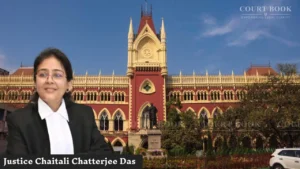
The Calcutta High Court has dismissed a writ petition filed by a government employee challenging a fresh departmental charge memo issued in 2022, holding that authorities were legally entitled to restart disciplinary proceedings after withdrawing an earlier defective charge sheet.
A Division Bench of Justice Madhuresh Prasad and Justice Prasenjit Biswas delivered the judgment on May 22, 2026, affirming an earlier order of the West Bengal Administrative Tribunal.
Background of the Case
The petitioner, Gitesh Das Mahapatra, had initially been served with a charge memo in August 2014 under the West Bengal Services (Classification, Control and Appeal) Rules, 1971. However, the memo contained only a draft article of charges rather than a proper charge sheet.
He challenged the proceedings before the West Bengal Administrative Tribunal. During those proceedings, the State acknowledged the procedural defect and informed the Tribunal that it did not wish to continue with the defective charge memo or subsequent communications based on it. The Tribunal disposed of the matter as infructuous in March 2022.
Soon after, the authorities issued a fresh charge memo dated April 22, 2022. The petitioner again approached the Tribunal, arguing that since no liberty had been granted to the State to initiate fresh proceedings, the new charge memo was invalid. The Tribunal rejected his plea, leading to the present writ petition before the High Court.
Before the High Court, the petitioner relied on principles similar to those contained in Order 23 Rule 1 of the Civil Procedure Code, contending that the State could not start fresh proceedings after abandoning the earlier ones without obtaining specific permission.
The Bench, however, found that the earlier challenge was confined to the procedural defect in the charge memo and did not question the substance of the allegations. The Court noted that the State had merely withdrawn the defective documents and had never undertaken that fresh proceedings would not be initiated in accordance with law.
“The authorities cannot be precluded in future from proceeding against the petitioner based on proper charge memo, in accordance with the 1971 Rules,” the Bench observed.
The Court further emphasized that disciplinary authorities are required to follow the mandatory procedure prescribed under service rules and cannot be prevented from correcting procedural defects and proceeding lawfully.
Rejecting the petitioner’s arguments, the High Court held that the Tribunal’s earlier order did not bar the issuance of a fresh charge memo. It concluded that the disciplinary proceedings initiated through the charge memo dated April 22, 2022, were legally sustainable.
The Bench stated that it found no reason to interfere with either the fresh departmental proceedings or the Tribunal’s order dismissing the employee’s application.
Accordingly, the writ petition was dismissed for lack of merit.
Case Details:
Case Title: Gitesh Das Mahapatra v. State of West Bengal & Ors.
Case Number: W.P.S.T. 185 of 2025
Bench: Justice Madhuresh Prasad and Justice Prasenjit Biswas
Decision Date: May 22, 2026