

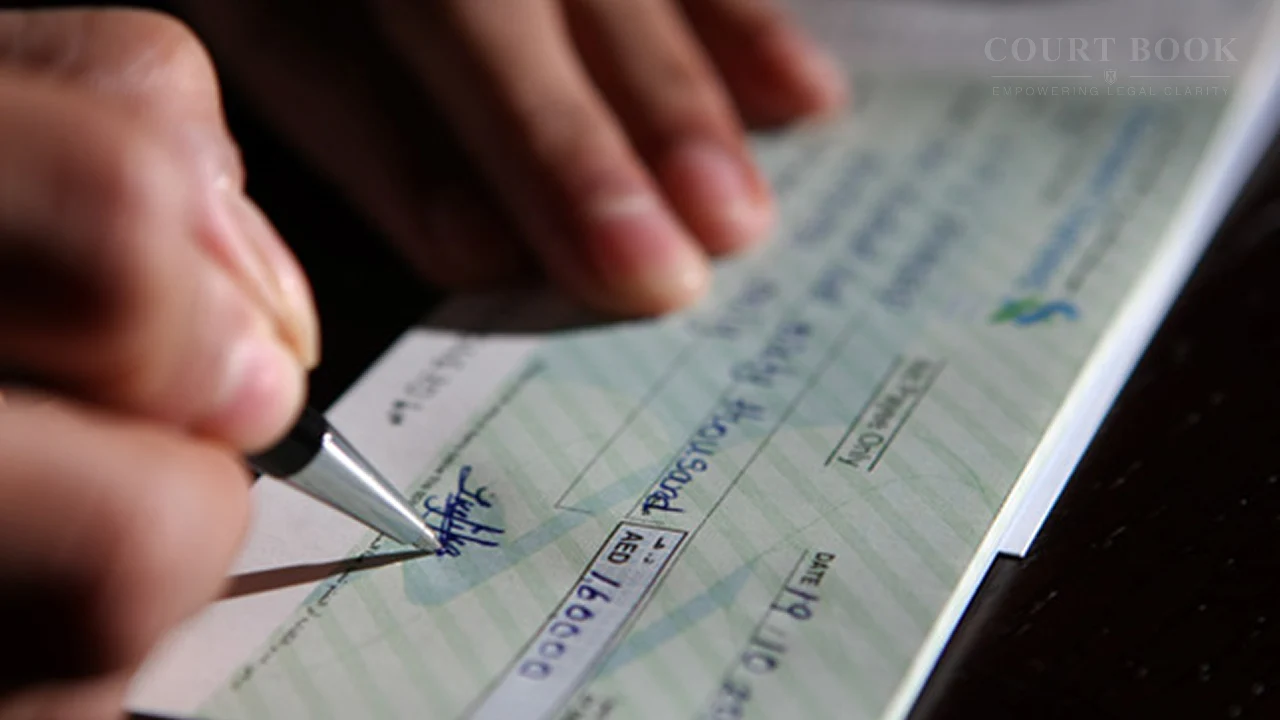
After more than a decade of litigation, the Supreme Court on Tuesday brought an abrupt end to a cheque dishonour case, ruling that the trial court had committed a basic procedural mistake at the very beginning. The top court held that taking cognisance of a delayed complaint before condoning the delay was legally impermissible, even if the delay was only for two days.
The ruling came in an appeal filed by S. Nagesh, challenging a Karnataka High Court order that had refused to quash the proceedings against him.
Background of the Case
The dispute arose from a financial transaction dating back to 2010. Shobha S. Aradhya, the complainant, alleged that Nagesh had borrowed ₹5.40 lakh from her family to purchase a house and meet legal expenses. To repay the amount, he issued a cheque in July 2013.
When the cheque was presented, it was returned unpaid due to insufficient funds. A legal notice was sent soon after. With no payment forthcoming, Aradhya filed a criminal complaint under Section 138 of the Negotiable Instruments Act, which deals with cheque bounce offences.
However, the complaint was filed two days beyond the statutory limitation period.
Despite this, the trial court in Mysuru took cognisance of the offence on the very same day the complaint was filed, without first passing any order condoning the delay.
Years later, during the proceedings, the complainant filed a separate application seeking condonation of the two-day delay, citing illness supported by a medical certificate. The Magistrate allowed the application in 2018, treating the delay as bona fide.
Nagesh challenged this before the Karnataka High Court, arguing that the court had no power to take cognisance before condoning the delay. The High Court rejected his plea, calling the sequence a “curable irregularity”.
That rejection led to the present appeal before the Supreme Court.
Read also:- Bombay High Court restrains former franchisee from using Jawed Habib trademark after franchise expiry
Supreme Court’s Observations
A Bench of Justices Sanjay Kumar and Alok Aradhe took a strict view of the statutory scheme.
“The power to take cognisance of a belated complaint is conditional,” the Bench observed, noting that the complainant must first satisfy the court about the reasons for delay.
The judges emphasised that the proviso to Section 142 of the Negotiable Instruments Act is clear: condonation of delay must come before cognisance, not the other way around.
Rejecting the High Court’s reasoning, the Bench said the sequence could not be treated as interchangeable.
“The satisfaction of the court resulting in condonation of delay must precede the act of taking cognisance,” the judgment stated.
The court also pointed out that the complainant herself had contributed to the confusion by wrongly stating in the complaint that it was filed within limitation.
The Supreme Court explained that proceedings affected by limitation do not properly come on the court’s file until delay is condoned. Drawing parallels with civil procedure, the Bench noted that courts routinely refuse to register time-barred matters unless delay is first addressed.
In this case, cognisance was taken in October 2013, while delay was condoned only in October 2018.
“That initial illegality could not be cured retrospectively,” the court made clear.
Final Decision
Allowing the appeal, the Supreme Court set aside the Karnataka High Court’s order and quashed the cheque bounce complaint in its entirety.
As a result, the criminal case pending for over 11 years against S. Nagesh stands closed.
The judgment was delivered by the Supreme Court of India on January 6, 2026, bringing finality to the long-running dispute.
Case Title: S. Nagesh vs Shobha S. Aradhya
Case No.: Criminal Appeal arising out of SLP (Crl.) No. 18127 of 2024
Case Type: Criminal Appeal (Cheque Dishonour – NI Act)
Decision Date: January 6, 2026
Download Judgment

