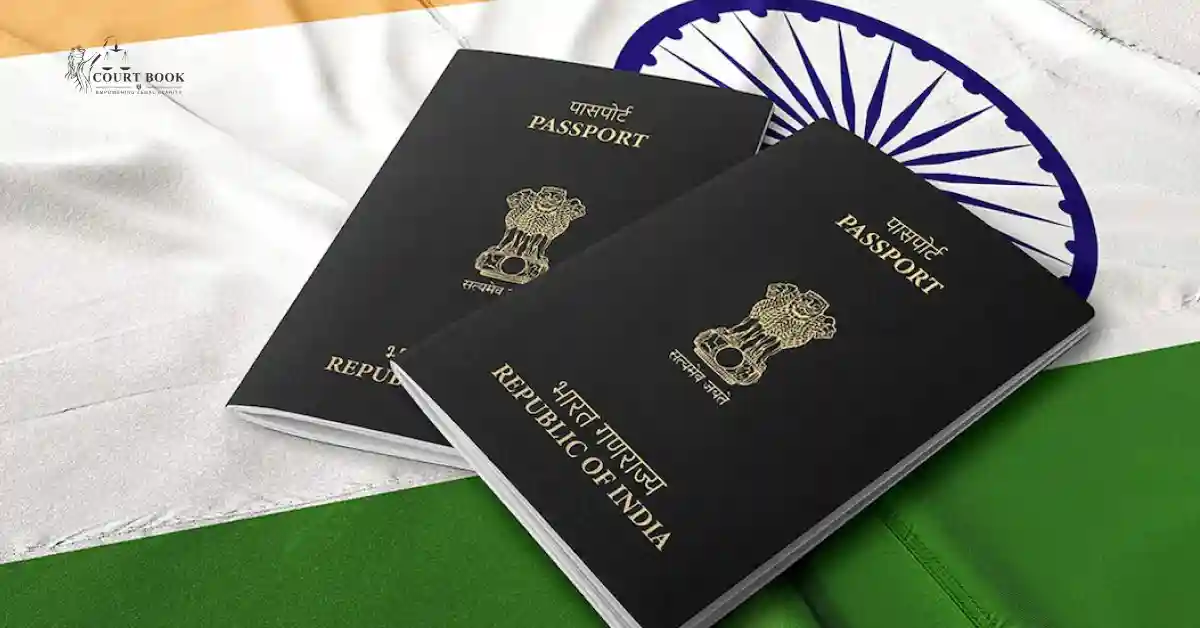
The Allahabad High Court has observed that the mere pendency of a criminal case cannot, by itself, be treated as a ground to deny or withhold a citizen’s passport. The Court distinguished between possessing a valid passport and actually travelling abroad, holding that restrictions on foreign travel can be considered by the concerned criminal court.
A Division Bench comprising Justice J.J. Munir and Justice Indrajeet Shukla passed the order in Writ-C No. 36603 of 2026 on September 14, 2026.
Background
The petition was filed by Mohd. Aftab, who stated that his passport was being withheld by the Regional Passport Officer, Lucknow because two criminal cases were pending against him.
One case was registered as Case Crime No. 32 of 2024 at Kareli Police Station, Prayagraj, under several provisions of the Indian Penal Code, including Section 307. The petitioner stated that he was on bail in that matter.
The second case, Case Crime No. 10 of 2024, was also registered at Kareli Police Station. Proceedings relating to the second case had been challenged before the High Court, which had earlier stayed further proceedings after prima facie finding the dispute to be civil in nature.
The Bench drew a distinction between issuance of a passport and permission to travel outside India. It observed that obtaining a passport does not automatically give its holder an unrestricted right to leave the country.
The Court stated:
“The passport is essentially a civil document to which a citizen is entitled under the law and it is prima facie no business of the passport authorities to deny a passport on the ground that a criminal case is pending.”
The Bench further observed that if a person facing criminal proceedings seeks to travel abroad, the investigating agency or prosecution can approach the criminal court seeking surrender of the passport or appropriate restrictions.
The High Court relied upon the Supreme Court’s decision in Mahesh Kumar Agarwal v. Union of India, 2025 SCC OnLine SC 2887.
The Supreme Court had distinguished possession of a valid passport from actual foreign travel, observing that a criminal court can decide whether a person facing trial or on bail may leave India and can impose conditions on such travel.
The Allahabad High Court also considered the earlier Division Bench decision in Pawan Kumar Rajbhar v. Union of India and others, but noted that the later Supreme Court ruling in Mahesh Kumar Agarwal had subsequently clarified the legal position.
The High Court admitted the petition and granted the respondents two weeks to file their counter affidavit. The matter was adjourned to September 30, 2026.
On the interim application, the Court issued an interim mandamus to the Regional Passport Officer, Lucknow, requiring consideration of the petitioner’s passport application in light of the Supreme Court’s decision in Mahesh Kumar Agarwal.
The officer was directed either to comply or show cause through a counter affidavit by the next scheduled date.
Case Details:
Case Title: Mohd. Aftab v. Union of India and others
Case Number: Writ-C No. 36603 of 2026
Judges: Justice J.J. Munir and Justice Indrajeet Shukla
Decision Date: September 14, 2026