The Allahabad High Court has held that a major woman cannot be compelled to remain with her father when she clearly states before the Court that she wants to live with the person of her choice. The Court declined to examine the father’s disputed objection regarding performance of Saptapadi, holding that the issue did not need to be determined in the habeas corpus proceedings when the parties themselves were not disputing the marriage.
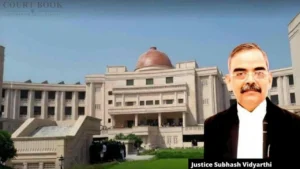
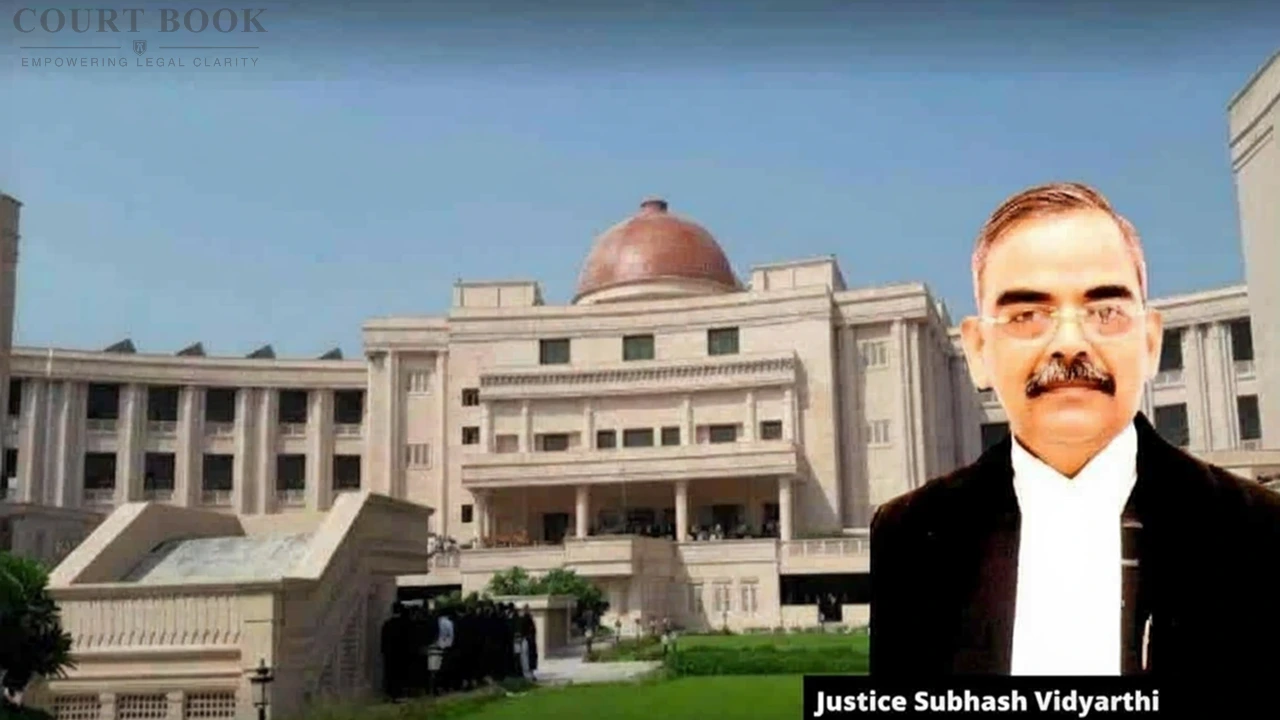
Justice Subhash Vidyarthi delivered the judgment on September 11, 2026, in Smt. Princy Thru Her Husband Gurpreet Singh v. State of U.P. Thru. Prin. Secy. Home Civil Sectt. Lko. and 3 Others.
Princy had approached the Court through her husband and next friend, Gurpreet Singh, alleging that her father, Manoj Kumar Soni, had detained her against her wishes.
According to the petition, Princy met Gurpreet Singh through social media in February 2025 and left her parental home out of her own accord on September 19, 2025. The couple later claimed to have married at a temple in Noida on November 4, 2025, and began living together.
The petition stated that Princy’s family opposed the relationship because Gurpreet Singh follows Sikhism while Princy is Hindu. She was subsequently called to her parental home on the occasion of Rakshabandhan. The petition further stated that Princy sent messages to Gurpreet Singh complaining that her family members were assaulting and harassing her and asking him to rescue her.
During the hearing, Princy was produced before the Court. She categorically stated that she wanted to live with Gurpreet Singh and that her father was preventing her from joining him.
The father’s counsel questioned the validity of the alleged marriage, arguing that there was no statement or proof showing that Saptapadi had been performed. He relied on the Allahabad High Court’s decision in Shruti Agnihotri v. Anand Kumar Srivastava, 2024 SCC OnLine All 3701, where the Court had dealt with the requirement of essential Hindu marriage ceremonies.
He also relied on Manoj Kumar Gupta v. State of U.P., 2006 SCC OnLine All 1523, in which the Court had declined habeas corpus relief after finding that the alleged husband was not legally the woman’s husband and that she was not being illegally detained.
Justice Vidyarthi, however, distinguished those cases on their facts. In the earlier matters relied upon by the father, the alleged wife herself had disputed the marriage or had refused to join the alleged husband. Here, Princy herself stated that she had married Gurpreet Singh and wanted to live with him.
The Court further held that the disputed question concerning the performance of Saptapadi could not be examined in these circumstances, particularly when the parties to the marriage were not disputing its validity.
Referring to the Supreme Court’s ruling in Soni Gerry v. Gerry Douglas, the Court reiterated:
“It needs no special emphasis to state that attaining the age of majority in an individual's life has its own significance. She/He is entitled to make her/his choice. The courts cannot, as long as the choice remains, assume the role of parens patriae. The daughter is entitled to enjoy her freedom as the law permits and the court should not assume the role of a super guardian being moved by any kind of sentiment of the mother or the egotism of the father. We say so without any reservation.”
The Court also relied on Shafin Jahan v. Asokan K.M., observing that habeas corpus jurisdiction requires the Court to ascertain the detenue’s independent choice and ensure release from illegal restraint where such restraint is established.
The High Court concluded that Princy, being a major, had the legal right to decide whom she wanted to live with. The Court held that her father could not compel her to remain with him against her wishes.
The habeas corpus petition was accordingly allowed. Princy was set at liberty from her father’s custody and joined the company of Gurpreet Singh.
Case Title: Smt. Princy Thru. Her Husband Gurpreet Singh v. State of U.P. Thru. Prin. Secy. Home Civil Sectt. Lko. and 3 Others
Case Number: Habeas Corpus Writ Petition No. 360 of 2026
Judge: Justice Subhash Vidyarthi
Decision Date: September 11, 2026