

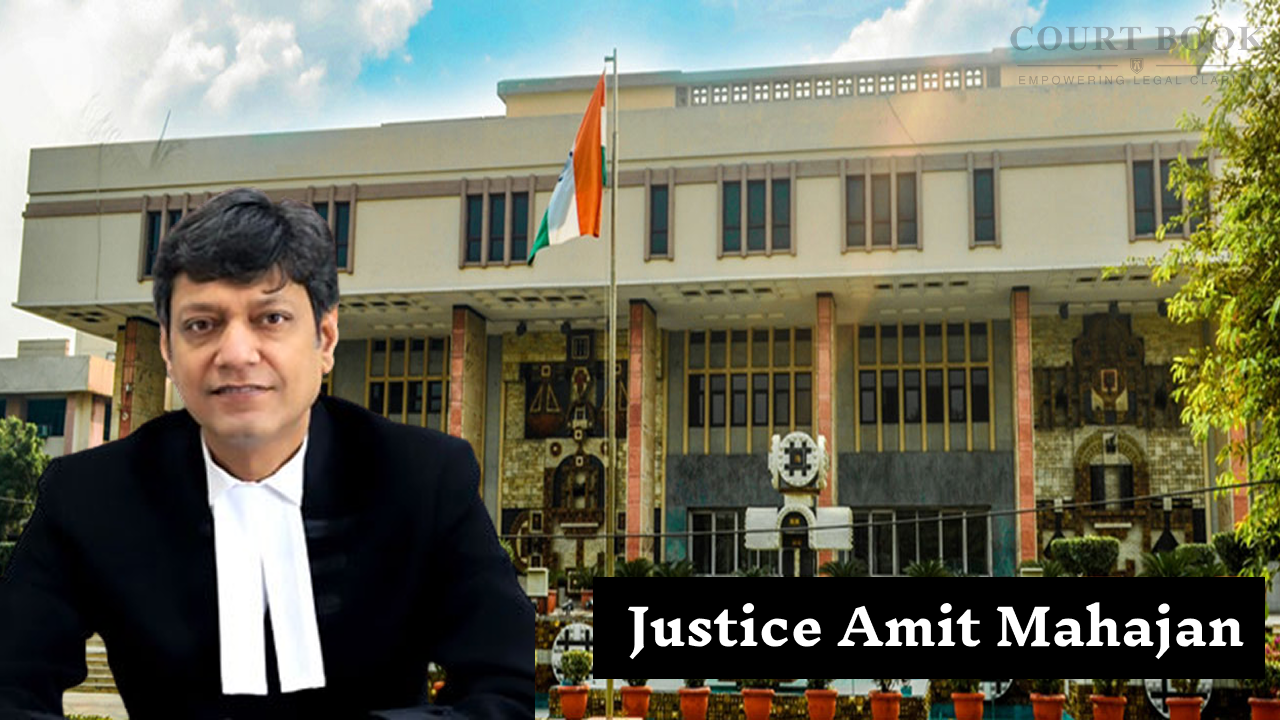
After nearly two decades of litigation, the Delhi High Court has brought closure to a criminal case against a court process server accused of fabricating a summons service report in a matrimonial dispute. Justice Amit Mahajan set aside an order directing trial and restored the magistrate’s decision to discharge the accused, holding that the prosecution lacked basic and reliable evidence
Background of the Case
The case traces back to a divorce dispute from the early 2000s. Indu Malhotra alleged that her husband, Pankaj Malhotra, had secretly obtained an ex parte divorce decree from a Jaipur court without her knowledge. Central to her complaint was the claim that summons in the divorce case were never properly served on her.
Narender Singh, a process server working in Delhi courts at the time, was accused of falsely showing service of summons at her Saket address. It was alleged that he manipulated the summons, handed it to the husband instead of serving it personally, and then filed a false service report before the Jaipur court.
Although the investigating agency later gave Singh a clean chit, a magistrate summoned him for trial under Section 193 of the Indian Penal Code, which deals with fabrication of false evidence. After years of proceedings, the trial court discharged him in 2012. That discharge was reversed by a sessions court in 2013, leading Singh to approach the High Court.
Court’s Observations
Justice Mahajan closely examined the record and found serious gaps in the prosecution’s case. The Court noted that the original summons -- the very document alleged to be forged - was never seized or produced during investigation.
Read also:- Delhi High Court Stops AI Film Using Akira Nandan’s Identity, Orders Takedown of Deepfake Content
“The prosecution sought to proceed without placing the primary document on record,” the Court observed, adding that without the alleged forged summons, the charge of fabricating false evidence became “inherently fragile”.
The High Court also criticised reliance on departmental disciplinary proceedings against Singh. It clarified that findings of “misconduct” in service matters are based on a lower standard of proof and cannot automatically justify criminal prosecution.
Another important factor was that the complainant had admitted her signatures and handwriting on the summons. There was no forensic report to show that Singh had inserted any false details, nor was there evidence of conspiracy between him and the husband.
Read also:- Patna High Court Upholds 4-Year Jail Term in Minor Abduction Case, Refuses POCSO Charge Enhancement
The Court further noted that the main accused husband had already been acquitted in 2014, with the trial court holding that the complainant was aware of the divorce proceedings and had voluntarily signed the summons.
Decision
Concluding that the sessions court had exceeded its revisional powers, the High Court restored the magistrate’s discharge order. It held that continuing the trial without the core document and without proof of deliberate falsification would amount to an abuse of the legal process.
Allowing the revision petition, the Court formally quashed the order directing framing of charges against Narender Singh, finally ending the criminal proceedings that began with an FIR registered in 2003.
Case Title: Narender Singh v. State
Download Judgment

