

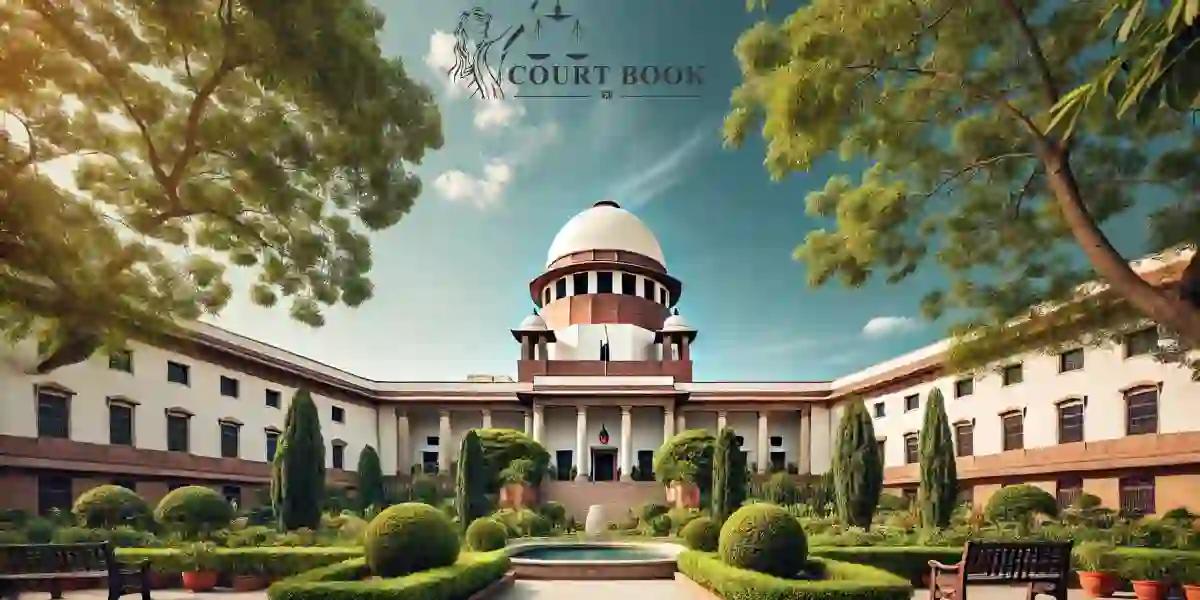
The Supreme Court of India has ruled that two sugarcane growers’ cooperative societies located in Uttarakhand cannot be treated as multi-state cooperative societies merely because their operations were affected by the bifurcation of Uttar Pradesh in 2000.
In a detailed judgment delivered on March 10, 2026, a bench of Justices Pamidighantam Sri Narasimha and Alok Aradhe held that the societies - Bajpur and Gadarpur - remained state cooperative societies after reorganisation and therefore fall under the jurisdiction of state cooperative authorities.
The Court also set aside a Uttarakhand High Court ruling that had earlier treated the societies as multi-state cooperative societies.
Read also:-Chhattisgarh High Court Quashes Criminal Complaint Against Judges, Says Allegations Based
Background of the Case
The dispute arose after the creation of the State of Uttarakhand following the bifurcation of Uttar Pradesh under the Uttar Pradesh Reorganisation Act, 2000.
Before the bifurcation, the Sugarcane Growers Cooperative Society at Bajpur operated across several villages located in what later became two different states - Uttar Pradesh and Uttarakhand. After the new state was created on November 9, 2000, some villages remained in Uttar Pradesh while others became part of Uttarakhand.
To address this administrative situation, officials from both states held a meeting in February 2001. They decided that societies whose operations extended into both states could be reorganized. Subsequently, the general body of the Bajpur society passed a resolution in April 2001 to reorganize itself by separating villages falling in Uttar Pradesh.
Later, authorities directed the removal of certain villages from the society’s operational area and placed them under another cooperative society in Rampur district, Uttar Pradesh. As a result, the Bajpur society’s activities were restricted to Uttarakhand.
Read also:-Supreme Court Grants Anticipatory Bail To Folk Singer Neha Singh Rathore In FIR Over Posts On PM
A similar restructuring process was undertaken for the Gadarpur cooperative society.
How the Dispute Reached the Courts
The dispute began when a sugarcane farmer from a village in Uttar Pradesh challenged his exclusion from the Bajpur society’s membership.
The farmer argued that after the creation of Uttarakhand, the society automatically became a multi-state cooperative society under Section 103 of the Multi‑State Cooperative Societies Act, 2002.
An arbitrator accepted this argument and ruled that the society should be treated as a multi-state cooperative body. Later, the Uttarakhand High Court also upheld this interpretation and directed that elections to the society’s managing committee be conducted under the supervision of the Central Registrar for Multi-State Cooperative Societies.
This decision was challenged before the Supreme Court by the State of Uttarakhand and other parties.
Read also:-Kerala High Court Quashes Ombudsman Proceedings Against Village Officer, Says He Is Not
Court’s Observations
The Supreme Court examined the interaction between the Multi-State Cooperative Societies Act, 2002 and the Uttar Pradesh Reorganisation Act, 2000.
The bench noted that Section 103 of the 2002 Act contains a legal fiction under which certain cooperative societies affected by state reorganisation may be treated as multi-state cooperative societies. However, the Court clarified that this status does not arise automatically.
“The deeming fiction under Section 103 is neither automatic nor universal,” the Court observed, explaining that the provision requires a factual determination of the society’s objectives.
The judges emphasized that the statutory purpose of the society must extend across more than one state. Merely having members or operations in multiple states does not satisfy this requirement.
The Court further held that the reorganisation process undertaken by authorities under the Reorganisation Act had already confined the societies’ operations to a single state. Since these steps were completed under the transitional provisions of the Act, they could not be invalidated by invoking the deeming provision of the 2002 law.
The bench stressed that both statutes must be interpreted harmoniously, and the legal fiction under the 2002 Act cannot override actions validly taken under the Reorganisation Act.
Read also:-Himachal Pradesh High Court Upholds Termination of Power Board Worker Over Matric Certificate from
Supreme Court’s Decision
After examining the statutory framework and factual background, the Court concluded that the societies’ objectives were limited to promoting the interests of local cane growers within a single state.
Because their purposes were not inherently multi-state in character, the Court ruled that they could not be treated as multi-state cooperative societies under the 2002 Act.
Accordingly, the Supreme Court set aside the Uttarakhand High Court judgment dated March 14, 2007. It held that the Bajpur and Gadarpur sugarcane cooperative societies are state cooperative societies governed by state cooperative laws.
The Court allowed three civil appeals filed by the state authorities and dismissed one appeal filed by cane farmers. It also directed that elections to the managing committees of the societies be conducted expeditiously under the applicable state cooperative laws.
Case Title: Registrar Cane Cooperative Societies & Ors. vs Gurdeep Singh Narval (Dead) through LRs & Ors.
Case No.: Civil Appeal Nos. 8743, 8744, 8745 & 8746 of 2013
Decision Date: March 10, 2026
Download Judgment

