

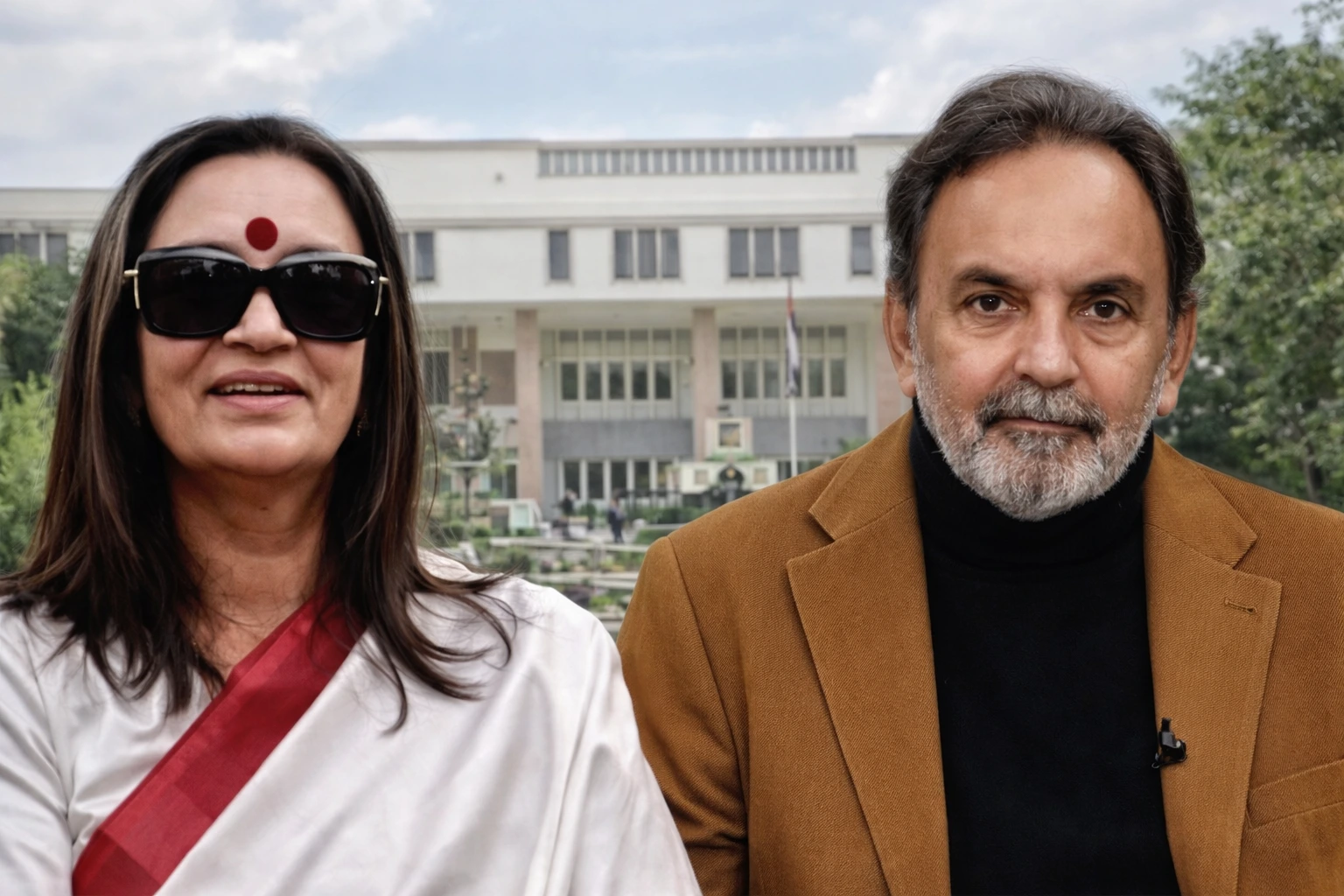
The Delhi High Court has set aside fresh income tax reassessment notices issued to media professionals Radhika Roy and Dr. Prannoy Roy for the assessment year 2009–10, holding that the tax department acted without legal authority. The court ruled that reopening an already examined issue amounted to a mere “change of opinion,” which is not permitted under the Income Tax Act.
Background of the Case
The dispute traces back to the financial year 2008–09. Radhika Roy, who held a 50 percent stake in RRPR Holding Private Limited, had filed her income tax return declaring an income of about Rs.1.66 crore. The return was initially accepted without scrutiny.
Read also:- Delhi High Court Quashes Tax Reassessment Notices to NDTV Founders, Imposes ₹2 Lakh Cost on IT Dept
Later, the Income Tax Department reopened the assessment in 2011, alleging undervaluation in share transactions involving NDTV. During this reassessment, the assessing officer also examined interest-free loans given by RRPR to its directors, including Radhika Roy and Dr. Prannoy Roy.
After calling for records, balance sheets, and explanations, the officer completed reassessment proceedings in March 2013. Importantly, no addition was made on account of the interest-free loans.
Three years later, in March 2016, the department issued fresh notices under Section 148 of the Income Tax Act, again seeking to reopen the same assessment year. This time, the department proposed to treat the notional benefit of interest-free loans as taxable income.
Read also:- Supreme Court Rejects Plea for Higher Compassionate Post After 19 Years, Imposes ₹10,000 Cost on Appellant
Arguments by the Petitioners
Senior Advocate Sachit Jolly, appearing for the Roys, argued that the second reassessment was legally unsustainable. He pointed out that the interest-free loan issue had already been examined in detail during the earlier reassessment.
“All primary facts, including audited accounts and loan details, were fully disclosed,” the petitioners contended. According to them, reopening the case again was nothing but harassment and a clear case of rethinking an issue already settled.
They also argued that the law does not permit repeated reassessments on the same facts merely because the department wants to apply a different legal provision later.
Read also:- Supreme Court Seeks Justice Gita Mittal Panel Report on Manipur Relief Camps, Sets Two-Month Deadline
Stand of the Income Tax Department
The tax department defended its action by stating that new information had surfaced through complaints and internal record transfers. It claimed that the interest-free loans caused a financial benefit to the directors, which should be taxed as “income” under a different provision of the Act.
The department also argued that since only a notice had been issued, the petitioners should first respond before the assessing officer instead of approaching the High Court directly.
Court’s Observations
The division bench of Justice Dinesh Mehta and Justice Vinod Kumar rejected the department’s arguments. The court noted that the very foundation of the fresh reassessment was the same interest-free loan transaction already scrutinized earlier.
Read also:- No Evidence of Caste Humiliation: Supreme Court Quashes SC/ST Act Case
“The assessing officer had consciously examined the issue and chose not to make any addition,” the bench observed. Reopening the case again, it said, “hits the very root of a fair adjudicatory process.”
The court emphasized that reassessment is an exception, not a routine power. It can only be exercised when new, undisclosed material facts come to light. Complaints or a different interpretation of the same facts cannot justify reopening an assessment.
The bench also rejected the claim that the petitioners had failed to disclose material facts. It pointed out that audited balance sheets clearly recorded the interest-free loans, and these documents were placed before the tax authorities during the first reassessment.
Quoting Supreme Court precedent, the court reminded that an assessee is required to disclose primary facts, not possible legal inferences. “It is for the assessing officer to draw conclusions,” the bench said.
Decision
After considering all the aspects, the Delhi High Court quashed both the re-evaluation notices issued on March 31, 2016.
The court said that the proceedings were not only without jurisdiction but also violated the rights guaranteed under Articles 14 and 19(1)(g) of the Constitution.
The court also ordered the Income Tax Department to pay a symbolic cost of ₹1 lakh to each petitioner and closed the case.
Download Judgment

