

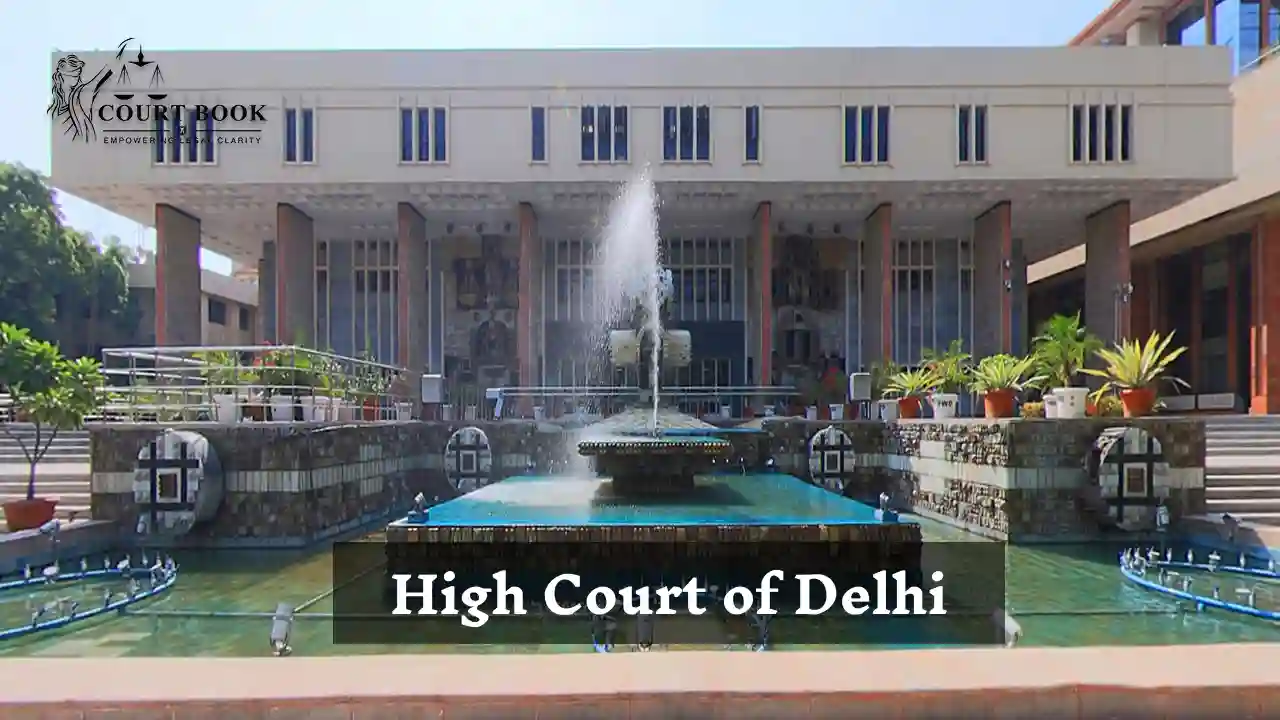
The Delhi High Court declined to summarily throw out a family property dispute involving the Trakru family, holding that the case raises issues that can only be decided after a full-fledged trial.
The ruling came in CS(OS) 216/2025, where the court was asked to decide whether the plaint itself deserved to be rejected at the threshold under Order VII Rule 11 of the Code of Civil Procedure. The judge made it clear that courts cannot short-circuit trials when pleadings disclose triable issues.
Background of the Case
The suit has been filed by Kanak Trakru and Anmol Trakru against their relatives, including their aunts and uncles, seeking partition and declaration of rights in a property said to have been acquired by their grandparents, late Avtar Krishen Trakru and Raj Dulari Trakru.
Read Also:- Custody Battles Can’t Be Won by Exclusion: Delhi High Court Upholds Father’s Rights
According to the plaintiffs, the property was purchased using the retiral benefits of Avtar Krishen Trakru and later governed by a registered joint Will dated March 1, 2017. The Will, they argue, clearly sets out beneficiaries and their respective shares.
As an alternative plea, the plaintiffs have also claimed that if the Will is found invalid, the property should be treated as ancestral Hindu Undivided Family (HUF) property, in which they claim a share.
What Was Argued in Court
Counsel for defendant no.1 urged the court to reject the plaint outright. The argument was that the plaintiffs, being grandchildren, had no legal right to seek partition during the lifetime of their father. It was also contended that the suit lacked proper pleadings regarding the existence of an HUF and that the property could not be treated as ancestral.
A major plank of the defence was the interpretation of the 2017 joint Will. The defence argued that after the death of Avtar Krishen Trakru, the entire estate vested absolutely in his wife, Raj Dulari Trakru, making the property her self-acquired asset. On this basis, it was argued that the plaintiffs had no cause of action.
Read Also:- Remarried Childless Widow Can Continue Family Pension, Parents Have No Right: Delhi High Court
The defence relied heavily on judicial precedents to claim that the plaint was legally untenable and deserved to be rejected at the outset.
On the other hand, the plaintiffs’ counsel countered that the main relief in the suit flows directly from the Will, under which the plaintiffs are named beneficiaries. The HUF claim, it was pointed out, is only an alternative plea.
Importantly, the plaintiffs argued that law does not permit partial rejection of a plaint and that disputed interpretations of a Will cannot be settled in an application meant only for preliminary scrutiny.
What the Court Observed
Justice Avneesh Jhingan carefully examined the scope of Order VII Rule 11 and reiterated that, at this stage, the court is confined strictly to the averments made in the plaint.
The judge observed that whether a cause of action exists is primarily a question of fact and must be determined by reading the plaint as a whole, without testing the defence version or deciding complex legal questions.
The court noted that the primary claim of the plaintiffs is based on the Will dated March 1, 2017. Even if objections were raised against the alternative HUF plea, accepting such arguments would result in a partial rejection of the plaint, which is impermissible in law.
On the issue of the joint Will, the bench made it clear that deciding whether the surviving spouse became the absolute owner of the property would involve complicated questions of law and fact.
“The nature and intent of the Will cannot be determined at this stage,” the court effectively held, underlining that such issues require evidence and detailed adjudication.
Justice Jhingan also took note of the fact that probate proceedings relating to the same Will are already pending, and the plaintiffs have sought impleadment there as well. In such a situation, the court said, it would be inappropriate to prejudge the validity or effect of the Will.
Addressing the argument that grandchildren cannot seek partition during their father’s lifetime, the judge declined to go into that issue at this preliminary stage, observing that it would have a bearing on the merits of the suit itself.
In its final ruling, the Delhi High Court found no merit in the application seeking rejection of the plaint.
The court held that the suit discloses a cause of action, that partial rejection of a plaint is not permissible under Order VII Rule 11, and that disputed questions relating to the Will and property rights must be decided only after a full trial.
Accordingly, the application was dismissed, allowing the civil suit to proceed on merits.
Case Title: Kanak Trakru & Anr. v. Renu Trakru Singla & Ors.
Case Number: CS(OS) 216/2025
Download Judgment

