

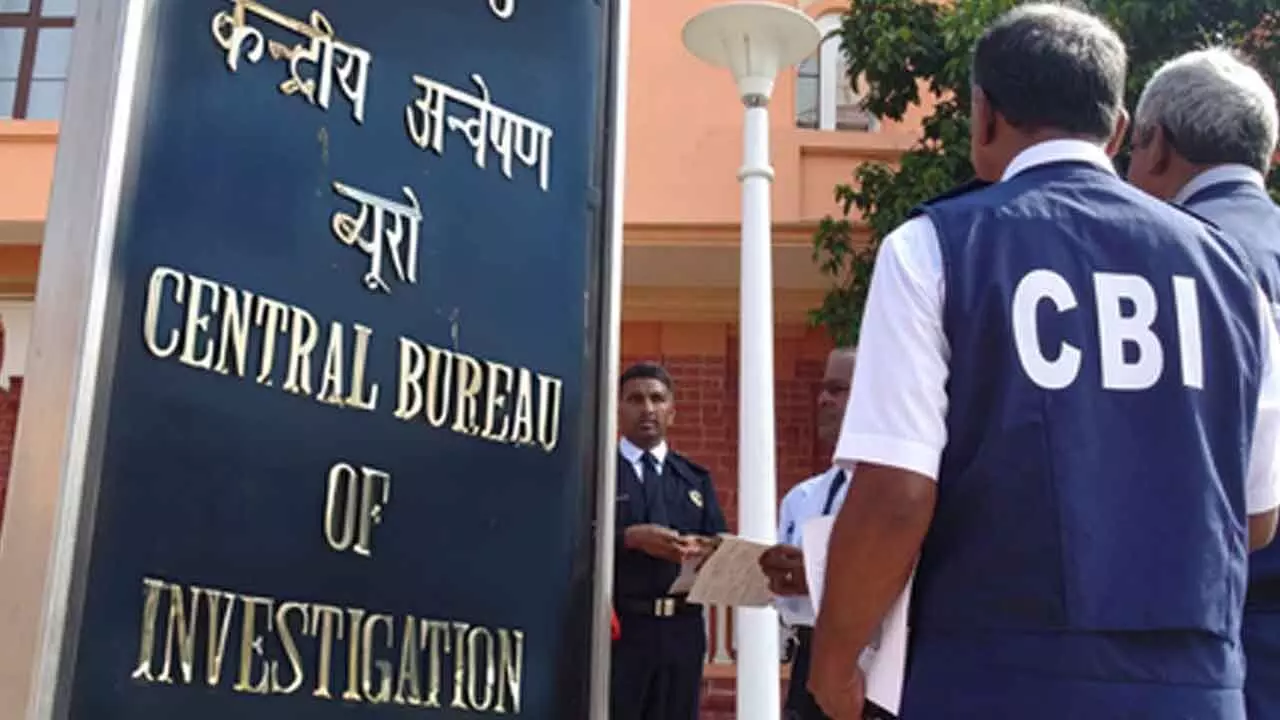
The Delhi High Court has refused to interfere with a trial court order directing businessman Moin Akhtar Qureshi to provide his voice samples to the Central Bureau of Investigation (CBI). The samples are to be matched with intercepted phone conversations forming part of a long-running corruption investigation.
Justice Neena Bansal Krishna, while dismissing Qureshi’s petition, held that the direction was lawful and did not violate constitutional protections against self-incrimination.
Background of the Case
The case has its roots in telephone interceptions carried out by the Income Tax Department during 2013 and early 2014. These calls allegedly involved Qureshi, who was suspected of acting as a middleman for certain public servants.
Following searches at his premises in February 2014, the Enforcement Directorate later shared materials with the CBI. Acting on this, the agency registered an FIR in 2017 under provisions of the Indian Penal Code and the Prevention of Corruption Act.
During the investigation, the CBI sought Qureshi’s voice samples to verify whether his voice matched the intercepted calls. In October 2021, a Special CBI Court allowed this request, relying on Supreme Court precedent.
Read also:-Supreme Court Rejects Goregaon Pearl Society's Curative Pleas, Ends Long-Running Housing Dispute
Qureshi challenged that order before the High Court.
Qureshi argued that forcing him to give voice samples violated his fundamental rights. His counsel contended that:
• The intercepted calls were old and allegedly collected without following mandatory legal safeguards.
• The recordings were unreliable and unsupported by proper certification under the Evidence Act.
• Comparing his voice with such material would amount to a “fishing expedition” by investigators.
• There was no clear statutory procedure allowing compulsory voice sampling in such circumstances.
He also claimed that the direction amounted to testimonial compulsion, barred under Article 20(3) of the Constitution.
CBI’s Stand
The CBI countered that voice samples are taken purely for identification. They do not, by themselves, incriminate an accused.
The agency relied on Supreme Court rulings to argue that courts are empowered to order voice samples during investigation. According to the CBI, questions about admissibility or reliability of recordings can only be examined during trial, not at the investigation stage.
Court’s Observations
Justice Neena Bansal Krishna rejected the claim that voice sampling violates constitutional safeguards.
“The furnishing of a voice sample is only a mechanical process meant for comparison,” the court observed, adding that it does not amount to giving testimony against oneself.
Read also:-Orissa HC Sets Aside JMFC Cognizance Order in ₹70 Lakh Misappropriation Case, Seeks Fresh Reasoned
The court reiterated that procedural law should assist, not obstruct, the search for truth. It relied on Supreme Court judgments holding that courts can fill legislative gaps to ensure effective investigation.
On the argument about the legality of the intercepted calls, the judge made it clear that such objections were premature. “Admissibility, authenticity, and evidentiary value are matters to be tested during trial,” the court noted, refusing to conduct what it described as a “mini-trial” at the investigation stage.
The court also addressed privacy concerns, stating that while privacy is a fundamental right, it is not absolute and must yield to legitimate state interests like crime investigation.
Read also:-Delhi High Court Clarifies Cost Order, Waives ₹20,000 Imposed for Adjournment in Criminal Case
Decision
Finding no illegality or abuse of process in the trial court’s order, the Delhi High Court dismissed Qureshi’s petition.
The court directed him to comply with the order and appear before investigators to provide voice samples as scheduled. Any interim protection earlier granted was vacated, bringing the legal challenge to an end at this stage.
Case Title: Moin Akhtar Qureshi v. Central Bureau of Investigation
Case No.: CRL.M.C. 2867/2021
Case Type: Criminal Miscellaneous Petition
Decision Date: 24 December 2025
Download Judgment

