

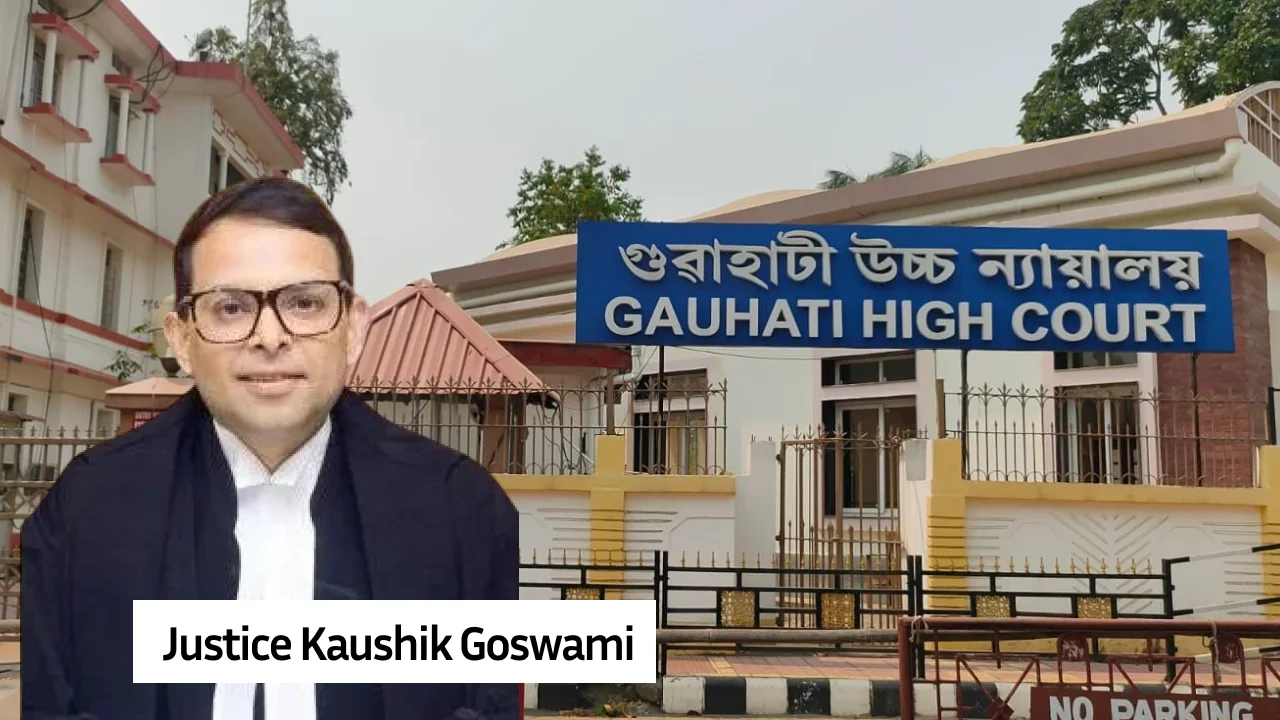
The Gauhati High Court has declined to interfere with proceedings initiated under the Employees’ State Insurance Act, 1948 against a Tripura-based hotel establishment, holding that disputes relating to employee strength, liability and contribution assessment must be adjudicated before the Employees’ Insurance Court under Section 75 of the Act.
Justice Kaushik Goswami dismissed a writ petition filed by M/s Hotel Brideway and its proprietor Ashit Baran Saha challenging a show-cause notice, assessment order and recovery proceedings initiated by the Employees’ State Insurance Corporation (ESIC).
Background of the Case
According to the petitioners, the establishment operated a 10-bedded lodging house in Agartala and was wrongly subjected to ESIC proceedings based on an old survey report from 2010. The ESIC had issued a show-cause notice in August 2018 alleging liability under the ESI Act on the ground that the establishment employed ten workers.
Subsequently, an order under Section 45A of the ESI Act was passed in January 2019 determining contribution payable by the establishment. The appeal preferred under Section 45AA was also rejected in June 2019.
The hotel owners then approached the High Court under Article 226 of the Constitution challenging the legality of the proceedings and the recovery action initiated thereafter.
What Happened During the Hearing
Counsel for the petitioners argued that the ESIC lacked jurisdiction to initiate proceedings because the statutory conditions under Sections 44 and 45A of the ESI Act were not satisfied. It was also argued that reliance on a survey conducted several years earlier rendered the proceedings arbitrary and unsustainable.
On the other hand, ESIC contended that the writ petition was not maintainable due to the availability of an effective statutory remedy under Section 75 of the Act. The Corporation submitted that the establishment had been given repeated opportunities to produce records but failed to do so.
Court’s Key Observation
The High Court observed that there is a distinction between a total lack of jurisdiction and disputes involving factual determination of jurisdictional issues.
The Court noted that questions such as whether the establishment employed ten persons, whether the survey report was reliable, and whether the contribution assessment was excessive were all factual matters requiring evidence and adjudication.
Justice Goswami held that such disputes squarely fall within the jurisdiction of the Employees’ Insurance Court constituted under Section 75 of the ESI Act.
The Court further remarked that writ jurisdiction cannot be used to bypass a statutory adjudicatory framework merely because the statutory process may be “procedurally or financially burdensome.”
Court’s Decision
The High Court dismissed the writ petition on the ground that an efficacious alternative remedy was available under the ESI Act. However, it clarified that the petitioners would remain free to approach the competent statutory forum and all issues on merits were left open.
Case Title: M/S. Hotel Brideway and Anr. v. Union of India and 3 Ors.
Case Number: WP(C)/6469/2019
Court: Gauhati High Court
Judge: Justice Kaushik Goswami
Date: May 12, 2026
Download Order

