

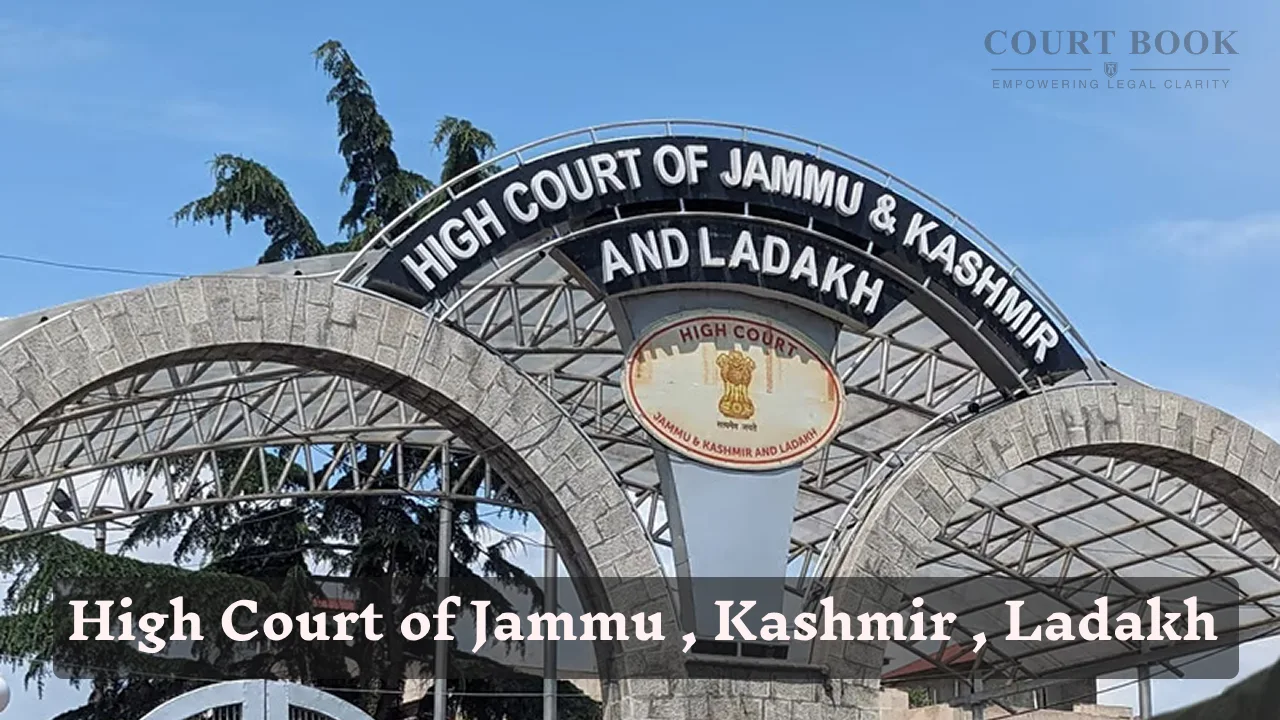
On a winter morning in the Jammu wing of the High Court, a long-running service dispute quietly reached its legal end. The Jammu & Kashmir and Ladakh High Court declined to interfere with a Central Administrative Tribunal order directing the regularisation of a daily wager who has worked continuously since the early 1990s. The bench made it clear that the government cannot keep shifting its stand to deny a legitimate claim that has survived scrutiny over years of litigation.
हिंदी में पढ़ें
Background
The case arose from a writ petition filed by the Union Territory of Jammu & Kashmir challenging an order passed by the Central Administrative Tribunal, Jammu. The Tribunal had allowed the application of Kashmir Singh, who was engaged in 1993 in the Public Health Engineering Department and continued to work for nearly three decades without regular status.
Despite completing more than seven years of service - the basic requirement under SRO 64 of 1994 - his case for regularisation was repeatedly ignored. Earlier, in 2012, the High Court had already directed the authorities to consider his claim. Instead of resolving the issue, the department passed a speaking order in 2022 rejecting his request, calling him a “casual labourer”. This rejection pushed Singh back into litigation, eventually resulting in the Tribunal’s 2025 order in his favour.
Court’s Observations
Hearing the UT’s challenge, the Division Bench noted a serious contradiction in the government’s own records. “The petitioners themselves admit that the respondent was engaged as a Daily Rated Worker in 1993,” the bench observed, pointing out that this admission fatally undermined the argument that Singh was merely a casual labourer.
The court also referred to service certificates and internal communications which showed uninterrupted work since 1993. The judges remarked that the rejection order was based on an incorrect premise and ignored clear documentary evidence. Citing recent Supreme Court rulings, the bench observed that prolonged engagement on daily wages, when the work is permanent in nature, cannot be used as a tool to deny fairness. The court remarked that authorities are expected to act consistently and not “change their stand frequently just to deny the legitimate claim of the respondent”.
In simple terms, the judges made it clear: if the department needed his services for 30 years, it could not pretend the job was temporary.
Decision
Finding no illegality or perversity in the Tribunal’s reasoning, the High Court dismissed the writ petition. The Tribunal’s direction to regularise Kashmir Singh under SRO 64 of 1994, along with all consequential benefits, was allowed to stand. With this, the long service dispute finally came to an end at the High Court level.
Case Title: U. T. of J&K and Others vs. Kashmir Singh
Case No.: WP(C) No. 3303/2025
Case Type: Writ Petition (Service / Regularisation Matter)
Decision Date: 11 December 2025
Download Judgment

