

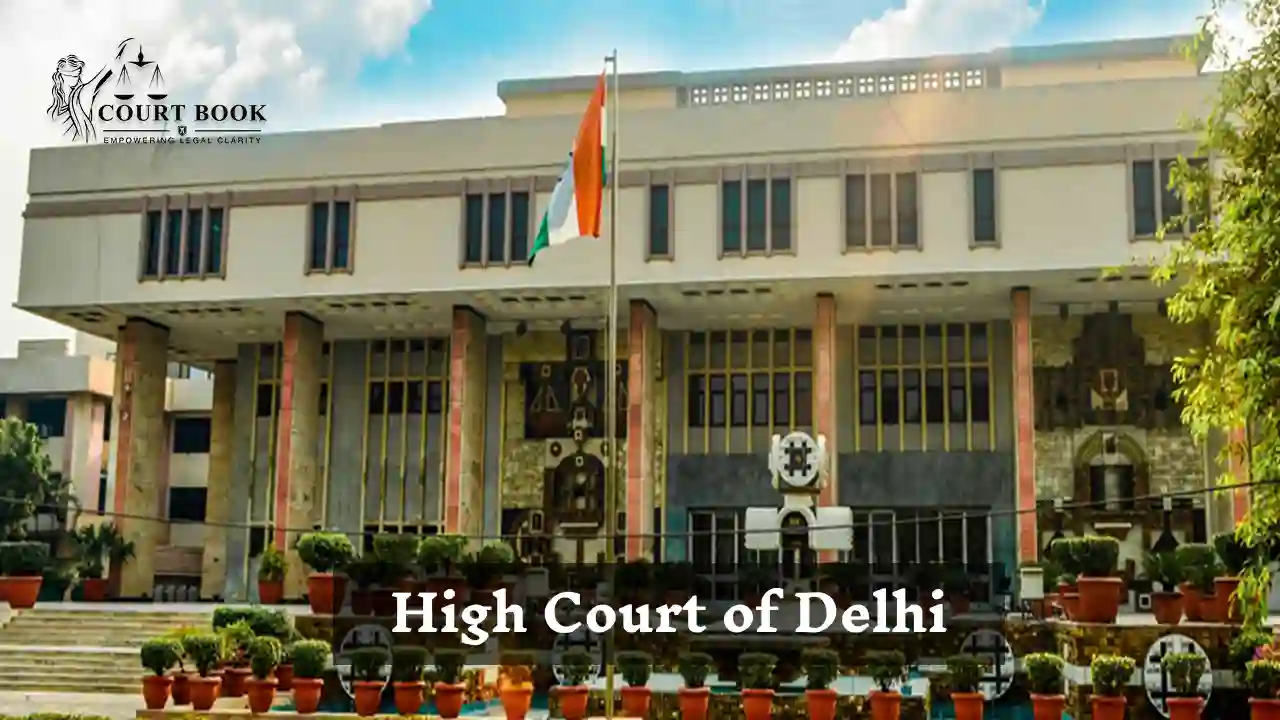
The Delhi High Court has refused to recall its earlier judgment that had expunged adverse remarks made by a trial court against police officials in a criminal case. While dismissing the recall plea, the court clarified that its earlier decision did not contain any remarks questioning the competence or integrity of the judicial officer concerned.
The ruling was delivered by Justice Swarana Kanta Sharma on March 11, 2026, in Sanjay Kumar Sain v. State of NCT of Delhi. The court held that setting aside or modifying an order of a lower court is a routine part of the judicial hierarchy and cannot automatically be treated as criticism of the judge who passed the order.
Background of the Case
The matter arose from a criminal writ petition filed by Sanjay Kumar Sain, in which the Delhi High Court had earlier passed a judgment on March 1, 2023.
Read also:- Arvind Kejriwal Moves Supreme Court After Delhi HC Refuses to Change Judge in Excise Policy Case
In that decision, the High Court had expunged remarks made by a trial court against police officials, including a Deputy Commissioner of Police (DCP), regarding delays in the investigation and filing of forensic reports.
The trial court had earlier issued directions criticizing police officials for delays in receiving Forensic Science Laboratory (FSL) reports, which had delayed progress in the case where the accused had been in custody since 2019.
However, the High Court concluded that the delay was primarily attributable to the FSL and not the police authorities, noting that police officials had regularly followed up and issued priority communications regarding the pending reports.
Subsequently, the judicial officer who had passed the original orders filed a recall application, seeking deletion of remarks made in the High Court’s 2023 judgment.
Read also:- Delhi High Court Declines Arvind Kejriwal’s Request to Transfer CBI Excise Policy Case
The applicant, who was serving as Special Judge (NDPS) and Additional Sessions Judge at Karkardooma Courts, argued that the High Court’s earlier judgment had been passed without giving him an opportunity to be heard.
It was also contended that:
• The judgment was delivered on the first date of listing.
• No notice was issued to the applicant.
• Trial court records were not examined.
• The observations in the judgment caused prejudice to his professional reputation.
The applicant further claimed that the judgment was later circulated among judicial officers and had allegedly affected his Annual Confidential Report (ACR) and career prospects.
On this basis, the applicant sought recall of the judgment and expunging of the observations.
Justice Sharma rejected the contention that the earlier judgment contained adverse remarks against the judicial officer.
The court clarified that the judgment never mentioned the officer by name and had only referred to the “learned Trial Court” while examining the legality of the orders passed.
The court observed:
“The recording of reasons while setting aside an order cannot, by itself, be construed as a reflection on the competence, integrity, or ability of the judicial officer.”
The court emphasized that judicial scrutiny by higher courts is a fundamental feature of the Indian judicial system.
It further noted that:
• Trial court orders are routinely examined by higher courts.
• Modification or reversal of an order is part of appellate review.
• Such intervention does not imply criticism of the judge unless specific observations are made.
The High Court also cited the Supreme Court’s decision in Sonu Agnihotri v. Chandra Shekhar, which clarified that while higher courts may criticize erroneous orders, personal comments on judicial officers should generally be avoided.
After examining the submissions, the Delhi High Court concluded that the recall application was not maintainable.
The court held that the earlier judgment only examined the legality of the trial court’s orders and did not contain any personal criticism of the judicial officer.
Read also:- Madhya Pradesh High Court Upholds Mother’s Custody of Two Minor Daughters, Dismisses Father’s Appeal
However, the court issued an important clarification:
• The observations in the 2023 judgment should not be treated as adverse remarks against the judicial officer.
• They should not affect his Annual Confidential Report or service record.
The court also addressed the concern regarding circulation of the judgment among judicial officers. It observed that while the judgment did not name the officer, his name appeared in the covering letter circulated by the Registry.
Referring to earlier directions issued in a similar case, the court stated that future circulars should avoid mentioning the names of judicial officers, and instead refer to the court designation.
With these observations, the High Court disposed of the recall application.
Case Title: Sanjay Kumar Sain v. State of NCT of Delhi
Case Number: W.P.(CRL.) 76/2023
Date of Decision: March 11, 2026


