

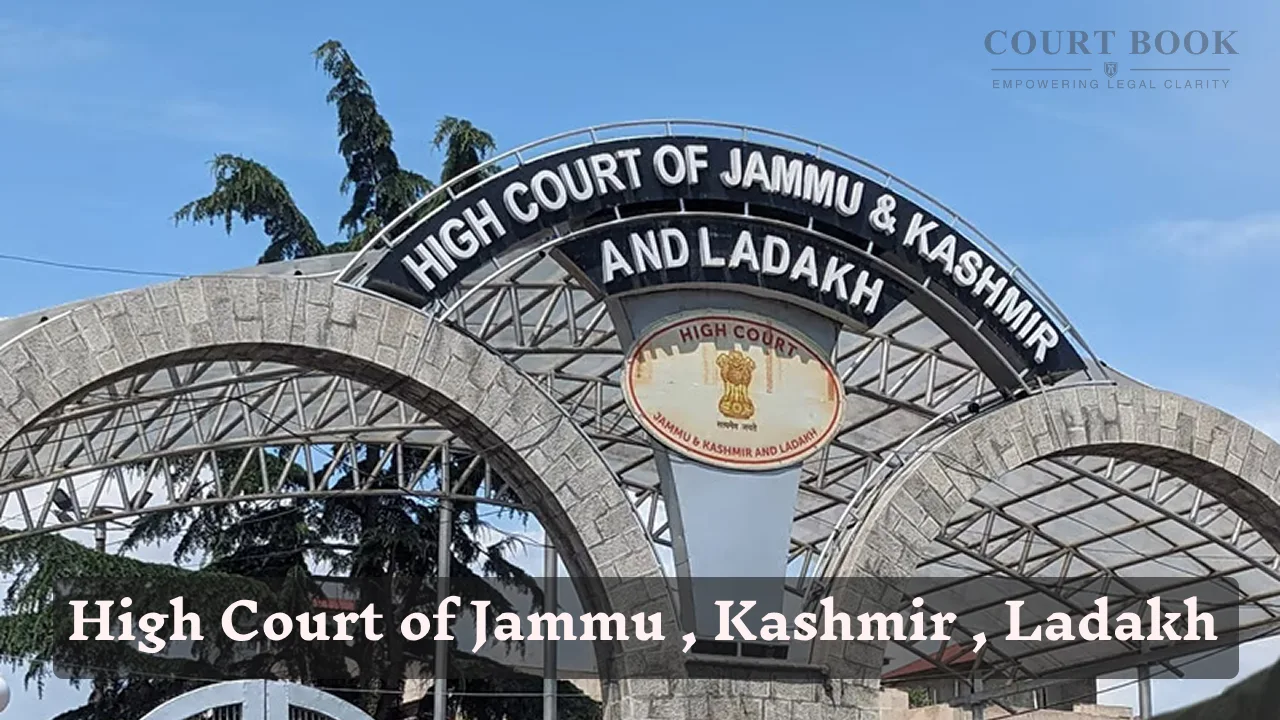
A quiet courtroom in Srinagar on Thursday saw the Jammu & Kashmir and Ladakh High Court step into a long-running land dispute from Kulgam, drawing a firm line between a withdrawn appeal and a compromise decree. Justice Sanjay Dhar made it clear that once an appeal is voluntarily withdrawn, courts cannot later force the appellant to reopen it under the garb of a flawed compromise.
हिंदी में पढ़ें
The ruling came while deciding two connected petitions that had emerged from a 27-year-old property dispute involving nearly 22 kanals of land in village Mah, Kulgam.
Background
The matter traces back to a civil suit filed by Mst. Sara Begum, who had challenged a 1998 decree concerning agricultural land. Her suit was dismissed by a Sub Judge in 2018. Unhappy with that outcome, she filed an appeal before the Principal District Judge, Kulgam.
During the appeal proceedings in January 2019, both sides informed the court that they had reached a settlement. A written compromise deed was placed on record, and on Sara Begum’s request, the appeal was dismissed as withdrawn. No decree was passed on the compromise; the file was simply closed.
Years later, in February 2025, the opposite side approached the appellate court seeking recall of that 2019 order. They alleged fraud, missing signatures, and even claimed that one party was a minor at the time of compromise. The appellate court accepted these arguments, recalled its earlier order, and restored the appeal-triggering the present challenge before the High Court.
Court’s Observations
Justice Dhar carefully examined what actually happened in January 2019. Reading out the translated order, the court noted that the appellate judge had only permitted withdrawal of the appeal. No statements of parties were recorded. No satisfaction about the compromise was expressed. Most importantly, no decree was passed.
“The order passed on 23.01.2019 does not have the trappings of a compromise decree,” the bench observed, explaining that a valid compromise under law requires the court’s clear satisfaction and a formal decree.
The judge underlined a simple principle in everyday language: an appellant has an unfettered right to withdraw an appeal. Once that happens, courts cannot later compel the person to continue litigation merely because the other side feels aggrieved.
On allegations that Sara Begum later used the compromise deed to secure land mutations, the court remarked that such grievances must be addressed before appropriate authorities. “That cannot be a ground to reopen a withdrawn appeal,” the bench noted.
Decision
Allowing Sara Begum’s petition, the High Court set aside the Kulgam appellate court’s order dated 11 March 2025, holding it to be beyond jurisdiction. The connected petition filed by the opposing party seeking restoration and restitution was dismissed. The appeal remains withdrawn, as it stood in January 2019, and the High Court directed that records be sent back to the lower courts accordingly.
Case Title: Mehraj Ahmad Ganai & Anr. vs. Mst. Sara Begum & Ors.
Case No.: CM(M) No.136/2025 c/w CM(M) No.185/2025
Case Type: Civil Miscellaneous Petition (Article 227 – Supervisory Jurisdiction)
Decision Date: 11 December 2025
Download Judgment

