

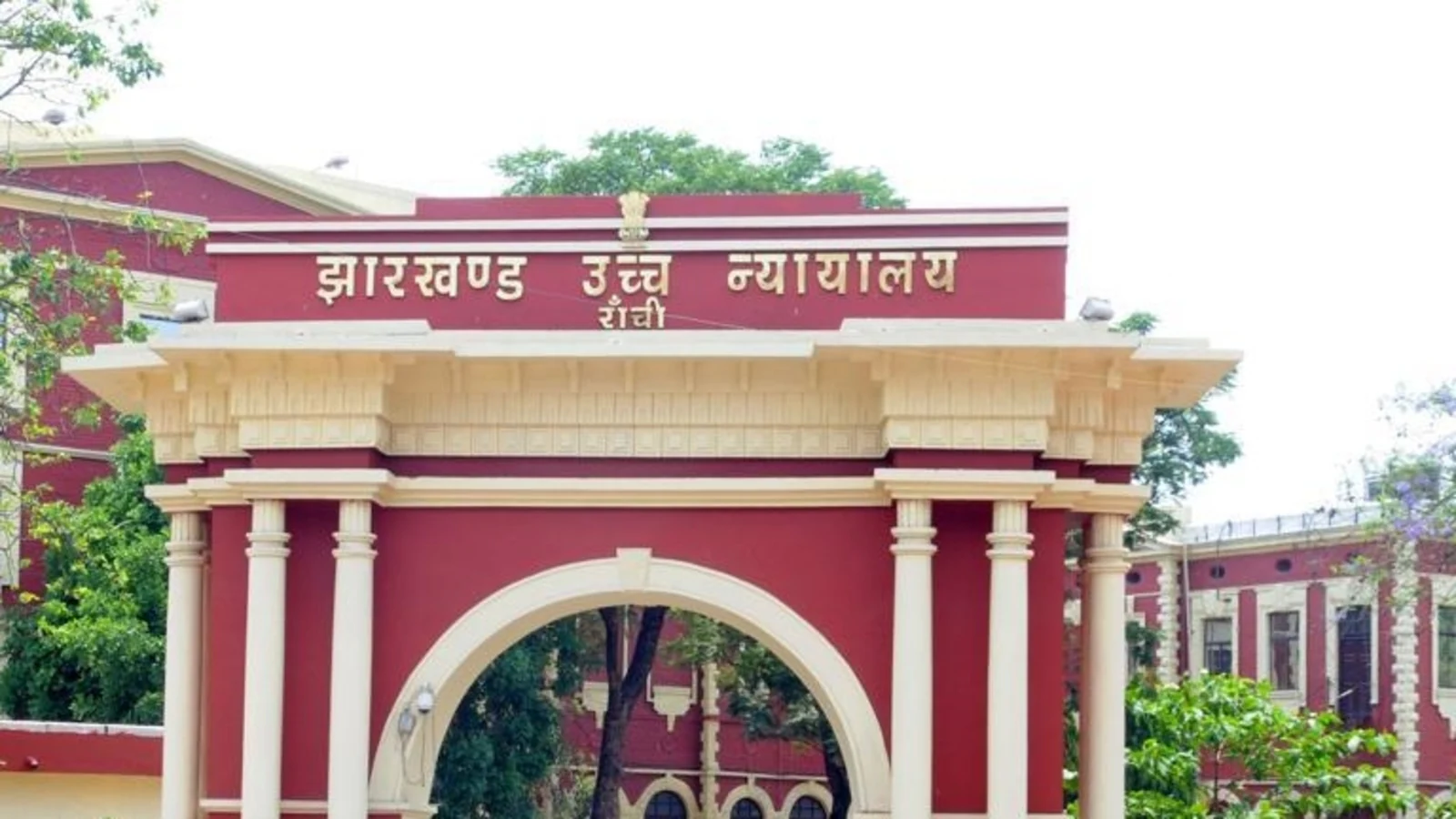
The Jharkhand High Court on Thursday took an unusually stern view of the State’s blood transfusion system, openly recording its dissatisfaction after tracking the issue for years. What began as public interest petitions slowly turned into a scathing audit of how blood banks and hospitals function on the ground.
हिंदी में पढ़ें
Hearing a batch of PILs together, the division bench made it clear that patients, especially those dependent on regular transfusions, cannot be left at the mercy of an inefficient system any longer. The court’s tone was firm, at times almost exasperated, as it dictated a set of time-bound directions.
Background
The matter came up before the bench headed by the Chief Justice along with Justice Rajesh Shankar in several connected public interest cases, some of them pending since 2020. One of the petitions was even initiated by the court itself, indicating the seriousness attached to the issue.
At the heart of the dispute was the State’s failure to move away from “replacement blood donation”, a practice where relatives of patients are forced to arrange donors. This is against the National Blood Policy, which insists on voluntary donations to ensure safety and dignity for patients. Despite repeated meetings of the State Blood Transfusion Council over the years, little had changed on the ground.
Court’s Observations
The bench did not mince words. It observed that Objective 8.5 of the National Blood Policy, which mandates replacement-free transfusions, had simply not been implemented in Jharkhand. “Even after four years, the situation remains grim,” the judges remarked, pointing to official data filed by the State itself.
According to figures placed before the court, voluntary blood donation accounted for barely 13 percent in July 2025, rising to only about 25 percent by September. The bench noted that private hospitals and blood banks were also at fault, as many failed to organise regular donation camps despite clear instructions.
The court further flagged serious gaps in Day Care Centres meant for patients with thalassemia and sickle cell disease. Essential medicines were missing, trained doctors were not clearly identified, and basic data on blood components was absent. The judges also recalled an earlier assurance given in 2018 to set up Blood Component Separation Units in every district - a promise that remained unfulfilled till date.
Another concern was the toll-free helpline 104, which, the court said, did not actually help patients arrange blood or even register complaints. Adding to the problem was acute staff shortage, with most blood banks operating with just one medical officer, far below recommended norms.
Read also:-Supreme Court Steps In on Supernova Mess: Judges Dismantle Insolvency Setup, Put Homebuyers First
Decision
Taking an overall view, the High Court directed the Health Department and the State Blood Transfusion Council to ensure that blood collection in Jharkhand moves entirely to voluntary donation. Private hospitals and blood banks were ordered to conduct their own donation drives.
The court also directed the State to establish Blood Component Separation Units in every district within three months, make all Day Care Centres fully functional as per national guidelines, and create a dedicated grievance redressal system - including a mobile app, website, and toll-free number - to help patients arrange blood without replacement. Regular quarterly inspections of blood banks and immediate steps to fill manpower shortages were also mandated, with the matter listed for compliance on March 20, 2026.
Case Title: Court on Its Own Motion & Others vs. State of Jharkhand & Others
Case No.: W.P. (PIL) No. 6062 of 2025 (along with W.P. (PIL) Nos. 2971 of 2020, 2413 of 2021 & 4688 of 2025)
Case Type: Public Interest Litigation (PIL)
Decision Date: 18 December 2025
Download Judgment

