

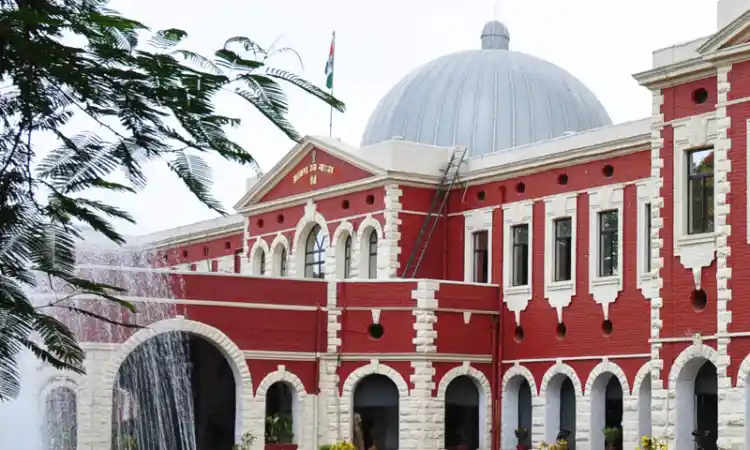
The High Court of Jharkhand has refused to halt the demolition of illegal constructions in Jamshedpur, making it clear that courts will not shield unauthorized buildings raised in violation of law. A Division Bench dismissed a batch of applications seeking modification of its earlier order directing demolition of illegal structures within the Jamshedpur Notified Area Committee (JNAC) limits.
The ruling came on January 28, 2026, in a public interest litigation concerning rampant illegal constructions in the city.
Read also:-Adopted Child’s Caste Same as Adoptive Parents, Biological Origin Irrelevant: Bombay High Court
Background of the Case
The case arose from a Public Interest Litigation (PIL) highlighting widespread illegal constructions in Jamshedpur. Earlier, on January 14, 2026, the Court had recorded an undertaking from JNAC stating that illegal structures would be demolished within a month.
A court-appointed committee of advocates had inspected the area and submitted a report confirming that several buildings were raised without permission or in gross violation of sanctioned plans. The committee also noted the absence of mandatory completion certificates.
Following this, multiple property owners moved interlocutory applications seeking modification of the January 14 order, arguing that demolitions should be stayed and regularisation allowed.
Arguments Raised by the Applicants
The applicants claimed that:
• The JNAC lacked proper authority over the area.
• Minor deviations could be regularised.
• They were not given a fair opportunity to apply for regularisation.
• The demolition drive violated Supreme Court directions against “bulldozer justice.”
They relied heavily on the Supreme Court’s ruling in Directions in the Matter of Demolition of Structures to argue that demolitions without due process were illegal.
Court’s Observations
The Bench strongly rejected these arguments.
“The applicants have failed to place even prima facie material to show the legality of their constructions,” the Court observed.
The judges noted that none of the applicants had produced completion certificates, which are mandatory under law. The Court said the absence of such certificates itself showed that the constructions exceeded permissible limits.
The Bench further remarked that illegal buildings could not have come up without either active connivance or gross inaction by authorities, adding:
“Tolerating such rampant illegal constructions amounts to victimisation of law-abiding citizens.”
The Court also clarified that the Supreme Court’s directions on demolition were meant to prevent arbitrary action, not to protect blatantly illegal structures.
No Protection for Illegal Constructions
Rejecting the plea for regularisation, the Court held that:
• Regularisation is an exception, not a right.
• It cannot be claimed for deliberate or large-scale violations.
• Courts cannot legalise constructions that flout planning laws.
The Bench noted that allowing such pleas would reward violators and penalise honest citizens who follow the law.
It further observed that the committee’s report clearly established that many buildings were constructed either without permission or far beyond approved limits.
Read also:-Kerala High Court Tightens Oversight on Travancore Devaswom Digitisation After Nilakkal Petrol Pump
Final Decision
Dismissing all applications, the Court held that no case was made out to interfere with the earlier demolition order.
“The applicants have failed to demonstrate even prima facie legality of their constructions,” the Bench said while rejecting the plea.
The Court refused to stay the demolitions and upheld the earlier direction allowing JNAC to proceed against illegal structures. However, no costs were imposed.
Case Title: Rakesh Kumar Jha v. State of Jharkhand & Others
Case No.: W.P. (PIL) No. 2078 of 2018
Decision Date: 28 January 2026


