

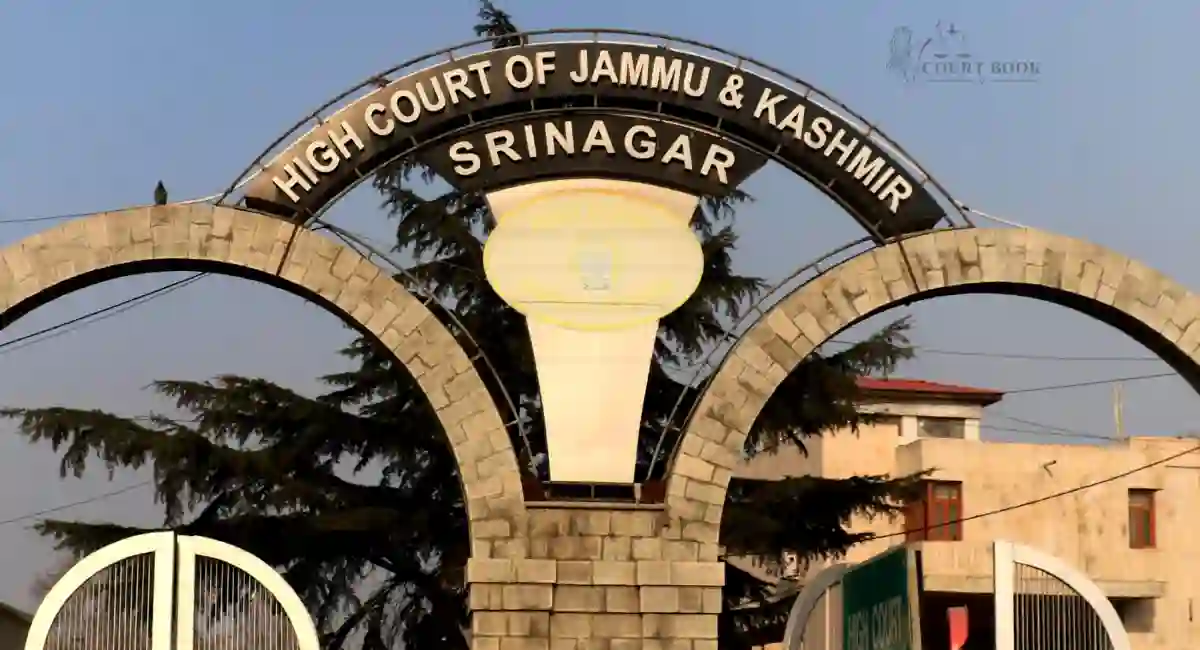
The conviction of four men in a 1997 village clash case from Anantnag was overturned by the High Court of Jammu & Kashmir and Ladakh after nearly thirty years of legal proceedings. The court held that the prosecution had not proven its case beyond a reasonable doubt. A Division Bench Justice Sanjeev Kumar and Justice Sanjay Parihar decided that there were too many inconsistencies in the evidence to support a conviction for culpable homicide.
Background of the Case
The case started on May 19, 1997, when residents of two nearby villages, Kul Choher and Renipora, got into a violent altercation over a disputed pathway that led to forest land used for cattle grazing. Ghulam Hassan Reshi, a villager, was killed and several others were injured in the altercation.
Read also:- Supreme Court Rejects Curative Pleas in Land Acquisition Case, Says No Grounds Within Limited Review Scope
Fifteen people were put on trial under several Ranbir Penal Code provisions, including murder, after a formal complaint was filed at Police Station Anantnag. Four defendants, Nazir Ahmad Bhat, Haba Ganie, Imtiyaz Kuchay, and Amma Bhat, were found guilty by the Sessions Court in 2002 under Section 304 Part I read with Section 34 RPC and sentenced to three years of rigorous imprisonment. The remaining defendants were found not guilty.
Both parties went to the High Court: the State appealed the acquittal and requested an increase in sentence, while the convicted accused contested their conviction.
Court’s Examination of Evidence
The prosecution's evidence was carefully examined by the High Court, which found significant discrepancies in key elements of the case. Conflicting accounts of the incident's location were provided by witnesses; some placed it close to the Dak Bungalow, others near the village of Dahnambal, and still others near a residential home or private fields.
Read also:- Supreme Court Rejects Goregaon Pearl Society's Curative Pleas, Ends Long-Running Housing Dispute
Additionally, there was inconsistent information regarding the incident's timing, including whether the complainant was traveling to or from the jungle. The prosecution was unable to definitively establish either of these "two mutually exclusive situations," the Bench noted.
The court noted, "The prosecution's evidence itself gives rise to competing probabilities, which were never resolved."
The judges also had serious doubts about the recovery and use of the weapons. Witnesses disagreed on whether the blow was delivered with the blunt or sharp side of the axe, despite the prosecution's claim that the axe caused the fatal injury. Some witnesses even claimed that the axe they had previously described did not match the one displayed in court.
Read also:- Supreme Court Mandates Timelines for Oral Arguments, Issues SOP to Streamline Hearings and Cut Delays
The prosecution's case was further undermined by medical evidence. The doctor acknowledged that stone pelting could also cause such injuries, but the post-mortem revealed that the fatal injuries were caused by a blunt object.
The Bench stated, "The medical opinion does not conclusively link the alleged weapon with the fatal injury."
The court repeatedly referred to evidence suggesting that the incident was a free fight, with stone pelting from both sides. Even police officers admitted that large groups from both villages were involved in the melee.
Importantly, the same set of witnesses had been relied upon by the trial court to acquit ten accused, while convicting four others. The High Court found this selective reliance unjustified.
“Mere presence at the scene, even assuming some participation, is not sufficient to fasten criminal liability,” the Bench said, stressing that suspicion cannot replace proof.
Allowing the appeal filed by the convicted accused, the High Court set aside their conviction and sentence, acquitting them of all charges. The State’s appeal challenging the acquittals and seeking harsher punishment was dismissed as meritless.
“With this, a grave miscarriage of justice stands corrected,” the court concluded, bringing the long-pending case to an end.
Case Title:- State of J&K v. Nazir Ahmad Bhat & Others
Download Judgment

