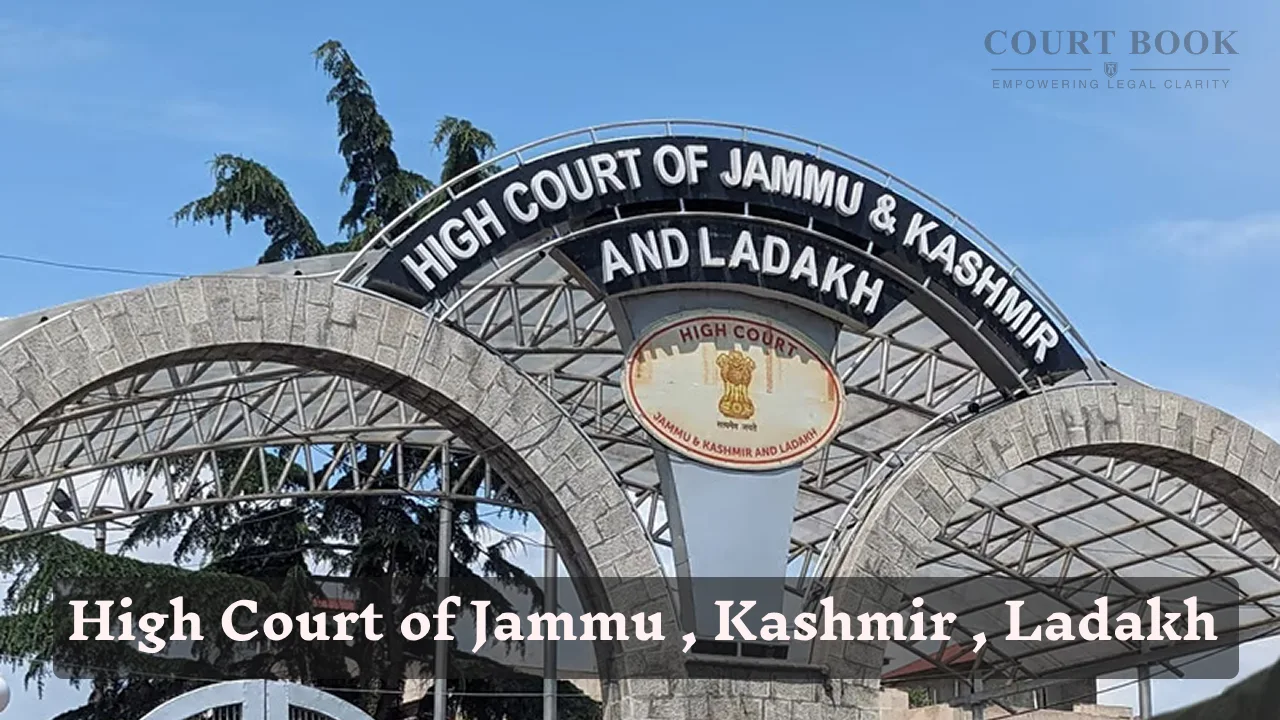
In a detailed order pronounced on December 29, 2025, the High Court of Jammu & Kashmir and Ladakh at Srinagar cleared the way for arbitration in a long-running payment dispute between a private supplier and the Union Territory administration. The court declined to shut the door at the threshold on the ground of limitation and instead referred the matter to a sole arbitrator.
हिंदी में पढ़ें
Background of the Case
The petitions were filed by Promark Techsolutions Pvt. Ltd., a private company that supplied furniture to various Block Development Offices in Srinagar between July 2020. According to the company, the furniture was delivered against proper receipts, but the bills were never cleared by the Rural Development Department.
Read also:-Patna High Court Orders NIOS to Correct Student’s Marksheet After Record Error
Over time, the company initiated multiple civil suits before courts in SAS Nagar, Mohali, seeking recovery of the dues along with interest. These suits either ended in the plaint being returned for lack of territorial jurisdiction or were later withdrawn. Eventually, in March 2024, the company invoked the arbitration clause contained in the General Conditions of Contract and sought appointment of an arbitrator.
When the authorities did not respond, the supplier approached the High Court under Section 11(6) of the Arbitration and Conciliation Act, 1996.
The Union Territory of Jammu & Kashmir opposed the petitions, arguing that the claims were hopelessly delayed. It was contended that the cause of action arose in 2020, when the furniture was delivered and payment allegedly became due. Since arbitration was invoked only in 2024, the UT claimed the disputes were time-barred and had become “dead claims” that could not be referred to arbitration.
The respondents also argued that once the company chose to file civil suits, it could not conveniently revive the arbitration clause later.
Court’s Observations
Justice Sanjay Dhar carefully examined the scope of the court’s powers at the referral stage. The bench noted that under settled Supreme Court law, a court hearing a Section 11 application is not expected to conduct a detailed trial on limitation.
“The court can refuse reference only where it is manifest and ex facie clear that the claim is hopelessly time-barred,” the bench observed, adding that even a slight doubt must tilt the balance in favour of arbitration.
The court took note of the petitioner’s argument that it had been prosecuting civil remedies before a wrong forum and could seek exclusion of that period under the Limitation Act. Whether such exclusion is available, the judge said, is a factual issue that must be decided by the arbitral tribunal, not at the referral stage.
On the objection that the Section 11 petitions themselves were delayed, the court rejected it outright, pointing out that the petitions were filed within a year of invoking arbitration.
Decision
Rejecting all objections raised by the UT, the High Court held that the disputes were arbitrable and deserved to be examined on merits by an arbitral tribunal.
The court appointed Advocate Asifa Padroo as the sole arbitrator to adjudicate all disputes arising from the contracts. The arbitrator has been asked to first decide the issue of limitation after hearing both sides, before moving to the merits of the claims.
With these directions, all three arbitration petitions were disposed of.
Case Title: Promark Techsolutions Pvt. Ltd. vs UT of J&K & Anr
Case No.: Arb. P No. 45/2024 with Arb. P Nos. 46/2024 & 47/2024
Case Type: Arbitration Petition (Section 11)
Decision Date: 29 December 2025