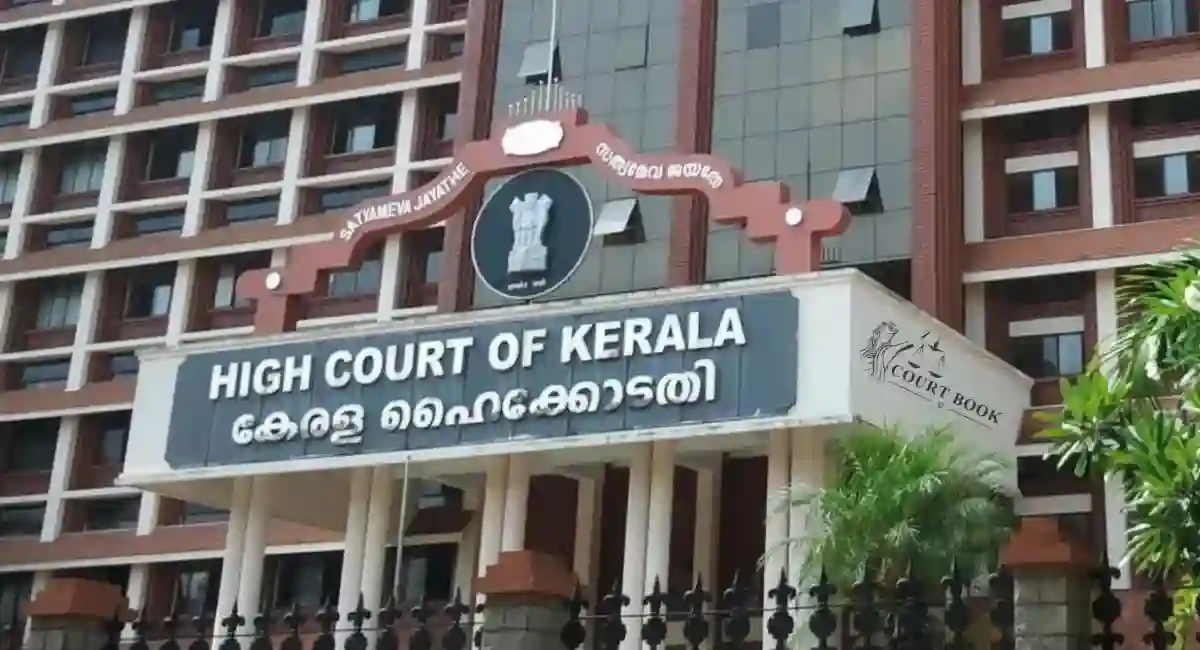
The Kerala High Court on Tuesday set aside the conviction of a man accused of preparing to commit dacoity, holding that the prosecution failed to prove the basic legal requirement for the offence under Section 399 of the Indian Penal Code (IPC).
Justice M.B. Snehalatha allowed the criminal revision petition filed by Hari, who had earlier been convicted by the trial court and whose conviction was confirmed in appeal by the Sessions Court.
Background of the Case
According to the prosecution, the incident took place on December 1, 2002, around 10 pm, when a police patrol team allegedly found Hari and two other accused travelling in a car carrying weapons and suspicious items. The police claimed they were making preparations to commit dacoity.
The case was first registered under Sections 41(1)(a)(d) and 102 of the Code of Criminal Procedure (CrPC) and Section 27 of the Arms Act, 1959. Later, after investigation, the police filed a final report accusing the three men under Section 399 IPC and Section 27 of the Arms Act.
Hari, listed as the first accused (A1), faced trial in S.C. No.71/2004 before the Assistant Sessions Court, Irinjalakkuda.
What the Police Alleged in Court
During trial, police witnesses told the court that they intercepted an Ambassador car bearing registration number KL-7C-459 after it allegedly refused to stop despite signals at a junction.
The police claimed that during inspection of the car’s dicky, they found several items including knives, iron rods, gloves, a helmet, a monkey cap, and stickers with a different registration number. The accused were arrested on the spot and the items were seized under a mahazar.
The trial court convicted Hari under Section 399 IPC (making preparation to commit dacoity) but acquitted him under the Arms Act charge.
His appeal before the Sessions Court was dismissed, and the conviction and sentence under Section 399 IPC were confirmed.
Read also:- Allahabad High Court Orders Special Exam for BSc Student Denied Admit Card Due to Portal Error
Court Observation
Before the High Court, Hari argued that the prosecution failed to prove the ingredients of Section 399 IPC and that the case did not show any real preparation for dacoity.
The High Court focused on the legal meaning of dacoity and preparation for dacoity. It noted that Section 391 IPC defines dacoity and clearly requires five or more persons acting together.
The court explained that this “numerical requirement” is not optional. Since Section 399 deals with preparation to commit dacoity, the same condition applies there as well.
As the bench observed in substance, if the number of persons involved is less than five, the offence of dacoity-and preparation for it-cannot stand in law.
The High Court also took note of the timeline of the case. While the accused were arrested and the FIR was registered on December 1, 2002, the offence under Section 399 IPC was added only on January 31, 2003, nearly two months later.
Read also:- Unrecognised Madarsa Cannot Be Shut Down for Lack of Approval Alone: Allahabad High Court
This delay, along with the lack of proof of the legal ingredients of the offence, weakened the prosecution case further. HARI
Decision
Allowing the revision petition, the Kerala High Court held that merely travelling with weapons and other articles-when only three persons were involved-was not enough to attract Section 399 IPC.
“The prosecution failed to establish the ingredients of the offence under Section 399 IPC,” the court noted while setting aside the conviction.
Hari was acquitted, his bail bond was discharged, and the court directed the registry to transmit the records back to the trial court.
Case Title: Hari v State of Kerala
Case No.: Crl.R.P. No. 588 of 2018
Decision Date: 14 January 2026
Download Order