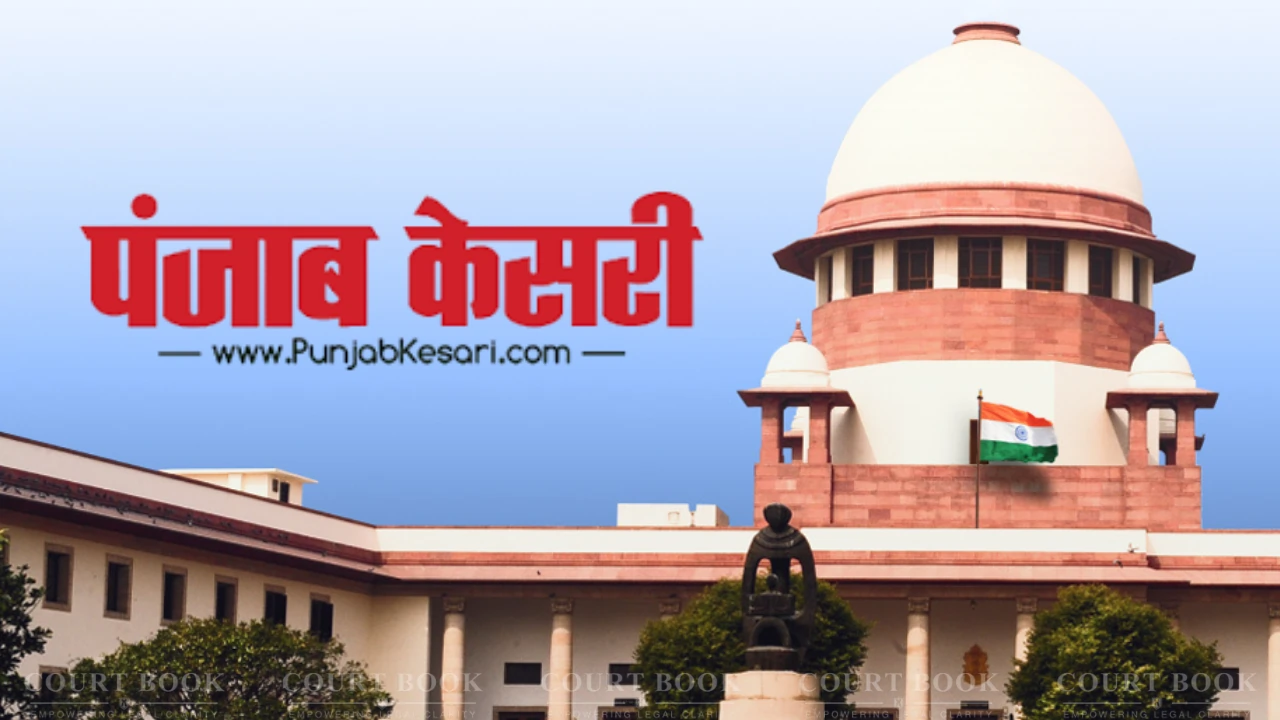
In a swift intervention that came within hours of an urgent mention, the Supreme Court on Tuesday ordered that the Ludhiana printing press of the Punjab Kesari newspaper group must be allowed to function without interruption.
A Bench led by Chief Justice of India Surya Kant, along with Justice Joymalya Bagchi and Justice Vipul M. Pancholi, directed the State of Punjab not to take any coercive steps that would stop the publication, while a decision from the Punjab and Haryana High Court on the same dispute is still awaited.
“The newspaper cannot be stopped,” the Bench remarked during the hearing.
Background of the Case
The controversy began after the Punjab Pollution Control Board ordered the closure of the newspaper group’s printing press at Ludhiana, reportedly citing alleged violations related to pollution control norms.
The media group-publisher of widely read newspapers Punjab Kesari, Jag Bani, and Hind Samachar-claimed the shutdown was not a routine regulatory action but part of a larger pattern of pressure.
The group also pointed out that a hotel run by the same management had been shut down recently under similar orders, and that the State government had allegedly stopped placing advertisements in its newspapers-an issue that could significantly affect revenue.
Read also:-Bombay High Court Sets Aside ₹20,000 Maintenance Order, Flags Gaps in Wife’s Income Disclosure
Urgent Mention Before the Supreme Court
The matter reached the Supreme Court after the Punjab and Haryana High Court reserved its judgment on Monday but did not grant interim relief to the media group.
On Tuesday morning around 10:30 AM, Senior Advocate Mukul Rohatgi, appearing for the newspaper management, made an oral mention before the top court, calling it an “extraordinary matter” and seeking urgent protection.
Rohatgi told the Bench that after the newspaper carried reports critical of the Punjab government, the group faced a rapid chain of actions-ranging from notices to closures-within days.
“Press cannot be stopped because you have published some articles,” Rohatgi submitted.
Read also:- Jharkhand High Court Upholds Divorce, Grants ₹35,000 Monthly Maintenance to Wife and Daughter
Court Observations
During the hearing, the Supreme Court made it clear that even while legal processes on regulatory issues may continue, the newspaper’s functioning should not be disrupted.
CJI Surya Kant was direct in his response to the State’s position, stating, “It is alright. Newspaper cannot be stopped.”
The Bench also appeared to draw a distinction between the printing press and other commercial units run by the management.
In a pointed observation, the Chief Justice said, “Don’t close the newspaper part. Hotel or other commercial establishment, one can understand, can be closed for a few days. But allow the newspaper.”
Punjab Government’s Stand
Representing Punjab, Senior Advocate Shadan Farasat, appearing as Additional Advocate General, argued that the action was taken strictly under pollution control law and not for any other reason.
He informed the court that the High Court judgment was expected soon and suggested the Supreme Court could wait.
“The actions are exactly as per the book in terms of the Pollution Control law,” Farasat said, adding that no further steps were being planned.
The State also claimed that only one unit had been affected, and it was incorrect to say that the entire newspaper had been shut down.
Read also:- General Allegations Can’t Prove Cruelty Where In-Laws Never Lived With Complainant: Patna High
Newspaper Group’s Allegations
The management strongly contested the manner of the closure, alleging it was ordered without basic procedural safeguards.
In its plea, the group argued that the closure order was passed on the very day of inspection and sample collection, without waiting for reports or giving the management a hearing.
It claimed this violated principles of natural justice and statutory rules, including provisions under the Punjab Water Prevention and Control of Pollution Rules, 1977, and the Environment Protection Rules.
The group also told the court that the events followed reports published concerning political developments, including those related to AAP National Convenor Arvind Kejriwal, and that the actions created a “chilling effect” on free speech.
Read also:- Can ED Move High Court Under Article 226? Supreme Court Issues Notice on Kerala
Supreme Court’s Decision
Passing an interim order without commenting on the merits, the Supreme Court directed that the printing press must be allowed to operate.
Recording the arrangement, the Bench stated:“Without prejudice to the rights of both sides, and without expressing any opinion on the merits of the case, it is directed that the printing press of Punjab Kesari newspaper shall continue to function uninterruptedly.”
However, the court clarified that for other establishments such as the hotel, status quo must be maintained.
The interim protection will remain in place until the High Court pronounces its judgment and for one week thereafter, allowing the aggrieved party time to seek further legal remedies.
Case Title: Jagat Vijay Printers & Anr. vs State of Punjab & Ors.
Decision Date: 21 January 2026 (Tuesday)




 chief. Eknath Shinde – Shiv Sena leader-300x169.webp)
-300x169.webp)