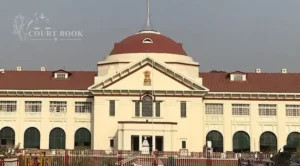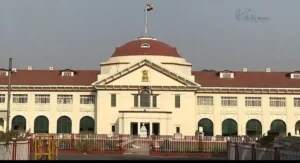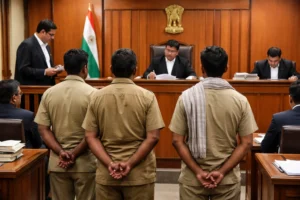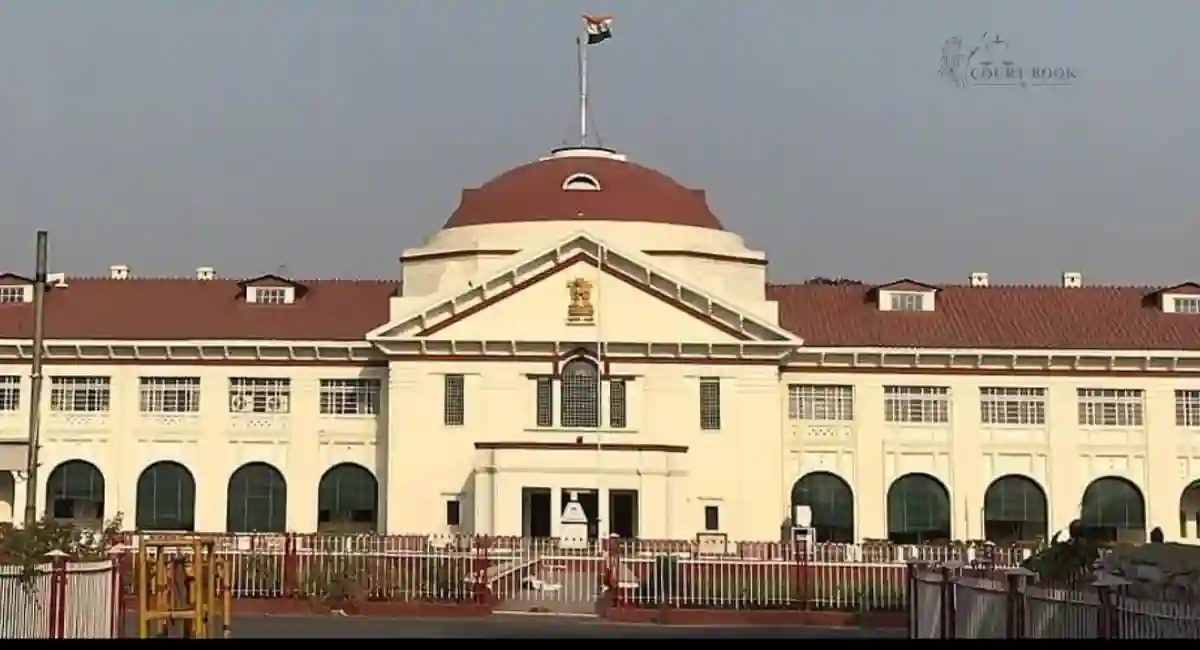
The Patna High Court has quashed criminal proceedings against three relatives of a man accused in a matrimonial dispute, holding that the case was built on vague allegations and lacked the foundation of a legally valid marriage. The court said continuing the trial would amount to abuse of the criminal justice process.
The order was passed by Justice Rudra Prakash Mishra while deciding a petition filed by Manju Devi and two other family members, challenging a magistrate’s order that had taken cognizance of offences under the Bharatiya Nyaya Sanhita, 2023 .
Background of the Case
The dispute arose from a complaint filed by a woman who claimed she had married Sumit Kumar at a temple in Begusarai according to Hindu rites. She alleged that after the marriage, she was subjected to cruelty, caste-based abuse, and physical assault by her husband and his family members.
Read also:- Madras High Court Stops ‘Nandini’ Agarbatti Trademark, Upholds Karnataka Milk Federation’s Brand Rights
The complaint further alleged that one of the accused relatives attempted to press her neck with intent to harm her. Based on these allegations, a Judicial Magistrate in Begusarai issued summons against the husband’s relatives under Sections 85, 115(2), 118(1), and 191(2) of the Bharatiya Nyaya Sanhita, 2023.
Aggrieved by the order, the relatives approached the High Court seeking quashing of the proceedings.
Arguments by the Petitioners
Counsel for the petitioners argued that the criminal case was a clear misuse of law. It was submitted that the complaint contained sweeping and generalized accusations without describing any specific act of cruelty by the in-laws.
Read also:- CAT Stays Disciplinary Action Against Sameer Wankhede, Questions Use of Preliminary Inquiry Material
The defence also pointed out that the complainant herself admitted she had been living separately from the petitioners for nearly three years and never shared a household with them. In such circumstances, allegations of daily harassment were said to be inherently improbable.
Another key argument raised was that the complainant was already married earlier and no divorce decree had been placed on record. As a result, the alleged second marriage was void in the eyes of law, making prosecution for matrimonial offences legally unsustainable.
Court’s Observations
After examining the complaint and witness statements, the High Court found that the allegations against the petitioners were “vague, omnibus and generalized.”
“The complaint does not attribute any specific role or overt act of cruelty to the petitioners,” the bench observed, noting that courts have repeatedly cautioned against implicating every family member in matrimonial disputes without clear material.
Read also:- Gujarat High Court Upholds Tanker Negligence, Enhances Accident Compensation to ₹1.07 Crore
The court gave weight to the complainant’s admission that she never lived with the petitioners. It said cruelty under matrimonial law presupposes proximity and interaction, which was missing in this case.
On the allegation of an attempt to press the complainant’s neck, the court noted the absence of medical evidence or any contemporaneous record. It also observed that this allegation surfaced only during the enquiry stage and was not part of the original complaint, making it doubtful.
Validity of the Marriage
A crucial factor in the court’s decision was the legal status of the marriage itself. The bench noted that the complainant had a subsisting earlier marriage and a minor child from that relationship. No document showing dissolution of the first marriage was produced.
Read also:- Supreme Court backs Rajasthan ACB probe against Central govt staff in bribery case; SLPs dismissed
“In the absence of a valid and subsisting marriage, the very basis for prosecution under matrimonial provisions collapses,” the court said, relying on recent Supreme Court rulings.
Justice Mishra explained that Section 85 of the Bharatiya Nyaya Sanhita requires two essentials: a valid marital relationship and cruelty arising from that relationship.
“Neither ingredient is satisfied in the present case,” the court observed.
Read also:- Delhi High Court Quashes Income Tax Reopening Against Radhika, Prannoy Roy Over Interest-Free Loan Issue
Decision of the Court
Concluding that the magistrate’s order suffered from non-application of mind, the High Court held that allowing the criminal proceedings to continue would result in grave miscarriage of justice.
Accordingly, the petition was allowed, and the entire criminal proceeding, including the order taking cognizance against the petitioners, was quashed .
Case Title: Manju Devi & Ors. v. State of Bihar & Anr.
Case Number: Criminal Miscellaneous No. 36935 of 2025
Download Judgment