

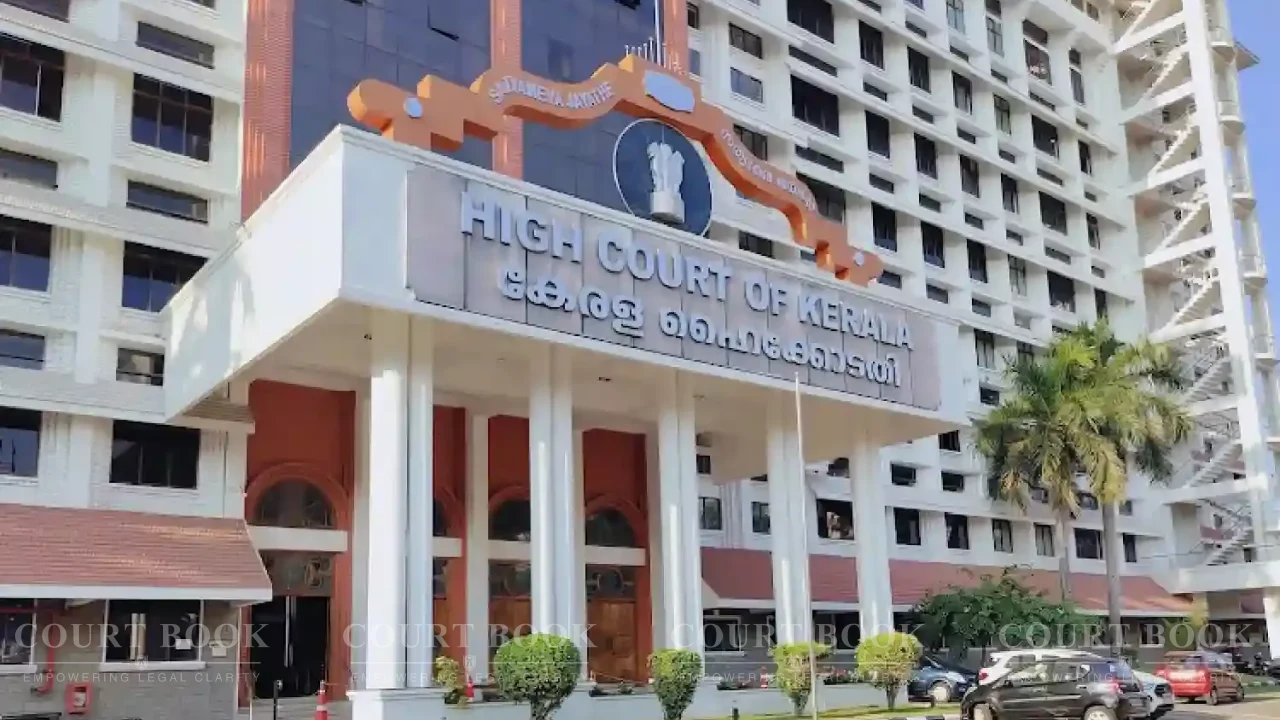
Sitting through the screening in court and hearing both sides at length, the Kerala High Court on Friday dismissed objections raised against the Malayalam film “HAAL”, clearing the way for its certification. The Division Bench made it clear that creative expression cannot be clipped merely because a section feels uncomfortable, especially when the overall message of the film does not disturb public order or morality.
हिंदी में पढ़ें
Background
The case arose from a dispute over the censor clearance of HAAL, produced by Juby Thomas and directed by Veera alias Muhammed Rafeek, starring actor Shane Nigam. After the Central Board of Film Certification (CBFC) initially found the movie unsuitable for unrestricted public exhibition, it suggested several cuts and modifications, proposing an ‘A’ certificate.
Aggrieved by this decision, the filmmakers moved the High Court, arguing that the CBFC’s objections were arbitrary and made without proper reasoning. A Single Judge watched the film, quashed most of the proposed cuts, and directed the Board to issue a fresh certificate, except for two deletions the filmmakers themselves agreed to. That ruling was then challenged through writ appeals by the Catholic Congress and the Union of India.
Court’s Observations
The Division Bench of Justice Sushrut Arvind Dharmadhikari and Justice P.V. Balakrishnan also viewed the film before deciding the appeals. The judges repeatedly stressed that films must be judged as a whole, not by pulling out a few scenes and reading them in isolation.
“The social impact of a film has to be seen through the eyes of an ordinary, reasonable viewer, not someone who is hypersensitive,” the bench observed, relying on settled Supreme Court principles. The court noted that HAAL essentially narrates a love story between a Muslim man and a Christian woman, facing resistance from their families, before acceptance eventually follows.
On the objections raised about alleged promotion or denial of “love jihad”, the judges were blunt. They said the scenes cited by the appellants only reflected arguments and counter-arguments within the storyline and did not endorse or deny the existence of any movement. Describing the challenge as exaggerated, the bench remarked that the objections were based on “a hypersensitive, intolerant and blinkered mind”.
The court also rejected claims that the film insulted religious groups or demoralised the police, holding that such interpretations ignored the context and narrative flow.
Read also:Gauhati High Court Allows Guwahati Meat Trader to Operate Frozen Bank Account, Orders ₹1 Lakh Lien
Decision
While dismissing both writ appeals, the High Court upheld the Single Judge’s order quashing most of the CBFC’s restrictions, calling them an unwarranted interference with artistic freedom under Article 19(1)(a) of the Constitution.
However, the bench added an important procedural direction. It clarified that this case should not be treated as a precedent for bypassing statutory remedies. Noting confusion over how appeals under Section 5C of the Cinematograph Act should be filed, the court directed the Registry to accept such appeals under the temporary nomenclature “MFA (Cinematograph Act)” until formal rules are notified.
With these observations, both appeals were dismissed, bringing the legal battle over HAAL’s certification to a close.
Case Title: Catholic Congress v. Juby Thomas & Others
Case No.: W.A. Nos. 2803 & 2926 of 2025
Case Type: Writ Appeals (Cinematograph / Film Certification Matter)
Decision Date: 12 December 2025
Download Judgment

