

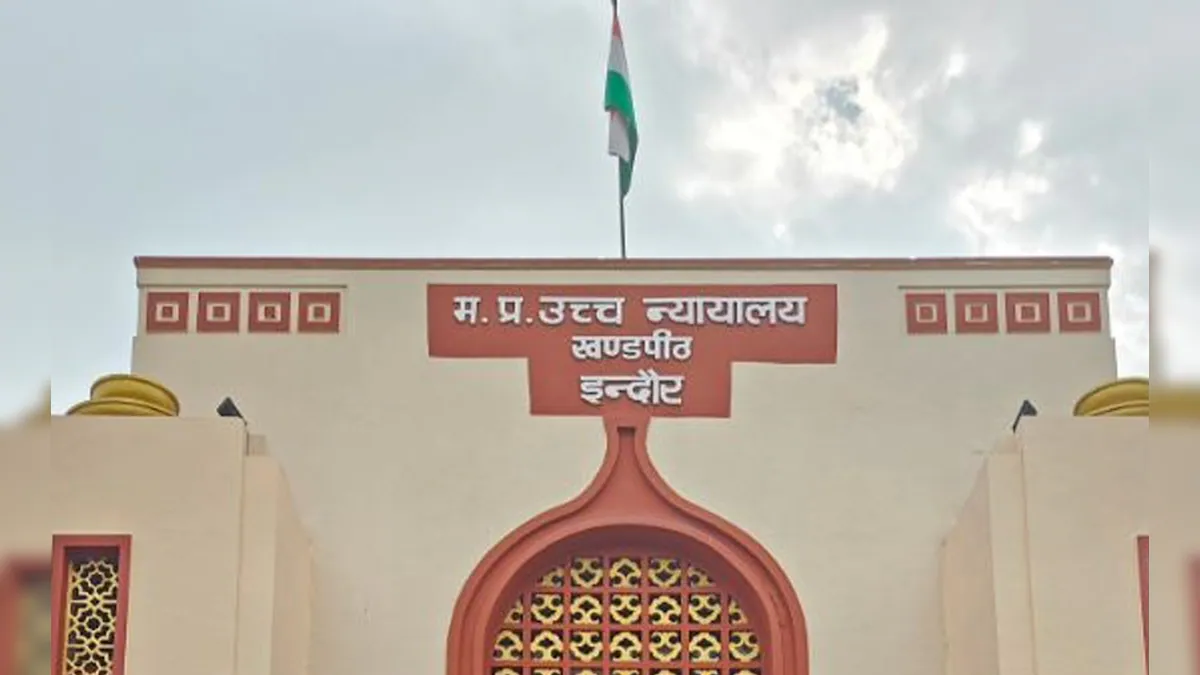
The courtroom at Gwalior had a familiar election-season buzz on Thursday as the Madhya Pradesh High Court took up a writ petition that, on the face of it, looked simple but raised a recurring question - when should courts step back once the election clock has started ticking?
हिंदी में पढ़ें
Justice Amit Seth, hearing the matter at the admission stage, made it clear early on that the court would tread cautiously. The petition came from Mrs. Ganga Shree, whose nomination for a municipal councillor’s post had been rejected just a day earlier.
Read also:-Himachal Pradesh High Court Upholds Bus Driver’s Acquittal, Says Mechanical Brake Failure Ruled Out Rash Driving Allegations in 2007
Background
Mrs. Ganga Shree had filed her nomination for Councillor, Ward No. 4 of the Municipal Council, Mau in Bhind district. She was, as her counsel stressed, the only candidate in the fray. Had things gone smoothly, she would have walked in unopposed.
The trouble began during scrutiny on December 16. The Returning Officer rejected her nomination for not enclosing a “No Electricity Dues Certificate” by the stipulated time of 11:30 am. The petitioner’s side argued that this requirement, in her understanding, applied only to government servants or those who previously held government office.
Her lawyer told the court that once the omission was pointed out, the certificate was immediately obtained and produced. Still, the Returning Officer refused to accept it, citing the missed deadline. “This is arbitrary,” the petitioner contended, adding that a sole candidate was being shut out on a technicality.
Read also:-Jharkhand High Court Grants Final Surrender Window to Sourav Bardhan in ED Case, Modifies Earlier Bail Order Citing Supreme Court Law
Court’s Observations
The court examined Section 35 of the Madhya Pradesh Municipalities Act, 1961, which disqualifies any candidate who has electricity dues pending for over six months. The bench observed, “The statute does not draw any distinction between candidates based on their employment history.” In plain terms, the rule applies to everyone - government employee or not.
Justice Seth noted that the nomination form itself mentioned the requirement. Admittedly, the certificate was not submitted along with the form. On the larger issue, the court turned to a well-settled principle: once an election process has begun, courts ordinarily do not interfere.
Citing constitutional provisions and earlier Supreme Court rulings, the bench observed that disputes like improper rejection of nomination papers are meant to be raised through an election petition, not a writ under Article 226. The judge remarked that this was not a case where the entire election process was vitiated or illegal from the start.
Read also:-Supreme Court steps in Punjab fraud case, issues notice and grants interim bail protection to Harjit Kaur against possible arrest
Decision
In the end, the High Court declined to interfere. The writ petition was disposed of, with liberty granted to Mrs. Ganga Shree to challenge the rejection by filing an election petition before the appropriate election tribunal. The court also clarified that if such a petition is filed, it must be decided independently, without being influenced by observations made in this order.
Case Title: Mrs. Ganga Shree vs. The State of Madhya Pradesh & Others
Case No.: Writ Petition No. 49824 of 2025
Case Type: Writ Petition (Article 226 of the Constitution of India)
Decision Date: 19 December 2025


