

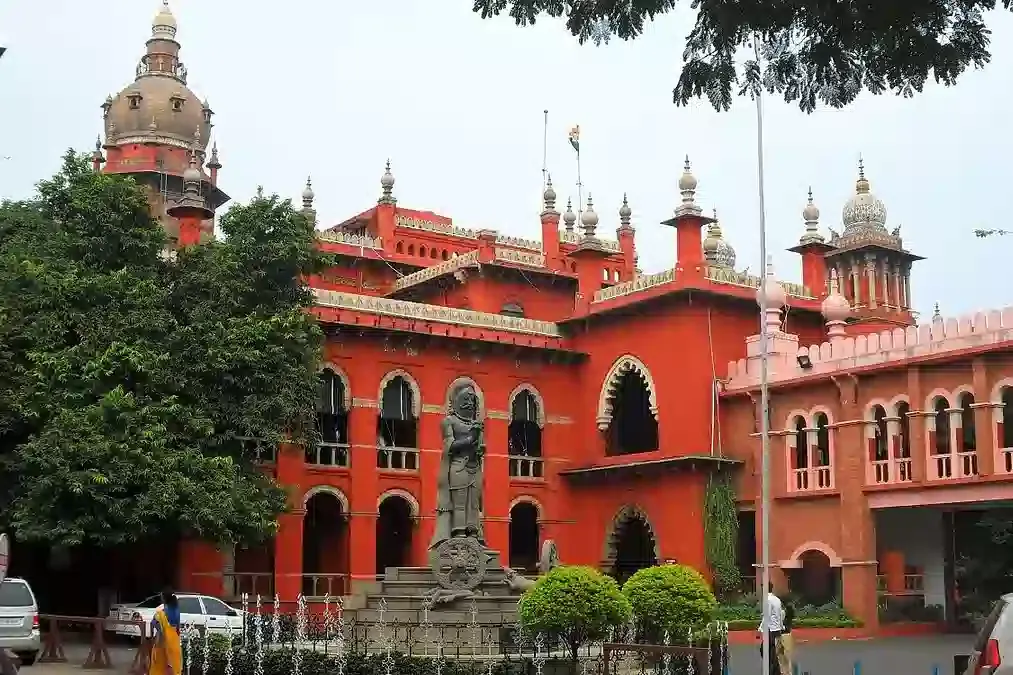
The Madras High Court has enhanced compensation for three child victims in a POCSO case, holding that the trial court failed to adequately address their rehabilitation needs despite recording findings about the severe trauma they had suffered. Justice A.D. Jagadish Chandira directed that each child be paid ₹10 lakh as compensation under the applicable victim compensation framework.
Background of the Case
The appeal was filed by the guardian of three male child victims against a January 2025 judgment of the Special POCSO Court in Vellore. While the trial court had convicted the accused and imposed prison sentences and fines, it declined to award any additional compensation beyond an earlier interim payment of ₹25,000 to each child.
According to the prosecution case, the children were subjected to sexual abuse over an extended period. Following trial, the Special Court convicted two accused for aggravated penetrative sexual assault under the POCSO Act and convicted two others for sexual harassment.
The guardian challenged only the compensation aspect of the judgment, arguing that the children had suffered long-term psychological harm and required adequate support for treatment and rehabilitation.
Justice Chandira noted that the trial court itself had recorded findings showing that the children were suffering from post-traumatic stress disorder and would require continuing care and rehabilitation.
The Court observed,
“The Trial Court ought to have taken them into consideration and ensured that the victim children received adequate compensation for their past and future sufferings arising out of the offence.”
The High Court further held that compensation under the POCSO framework is not merely symbolic and must account for the victim’s treatment, therapy, rehabilitation and future needs. It found it difficult to accept the trial court's view that interim compensation and possible disbursal of fine amounts would be sufficient.
Referring to Supreme Court decisions including Nipun Saxena v. Union of India, Saibaj Noormohammad Shaikh v. State of Maharashtra and Bhanei Prasad @ Raju v. State of H.P., the Court emphasized that victim compensation must be considered independently and adequate reasons must be given if compensation is denied.
The Court also noted that the abuse involved persons who were expected to protect the children. It described the circumstances as exceptional and warranting the highest level of compensation available under the Tamil Nadu Child Victim Compensation Fund.
While assessing the quantum, the Court considered factors under Rule 9 of the POCSO Rules, 2020, including the gravity of the abuse, the prolonged nature of the incidents, the relationship between the victims and offenders, the psychological impact on the children, and the cost of future therapy and rehabilitation.
The Court found that the children had suffered aggravated abuse over several years and continued to experience post-traumatic stress disorder requiring ongoing support.
Allowing the appeal on the limited issue of compensation, the Madras High Court modified the trial court’s judgment and directed the Commissioner/Director of Social Defence to pay compensation of ₹10 lakh to each of the three victim children.
The Court ordered that the previously paid interim compensation and any fine amounts already received be adjusted against the final compensation.
The payment was directed to be made within 30 days of receipt of the judgment.
Case Details
Case Title: XXXX (Guardian of Victim Children) v. State & Others
Case Number: Criminal Appeal No. 1443 of 2025
Judge: Justice A.D. Jagadish Chandira
Decision Date: 02 June 2026


