

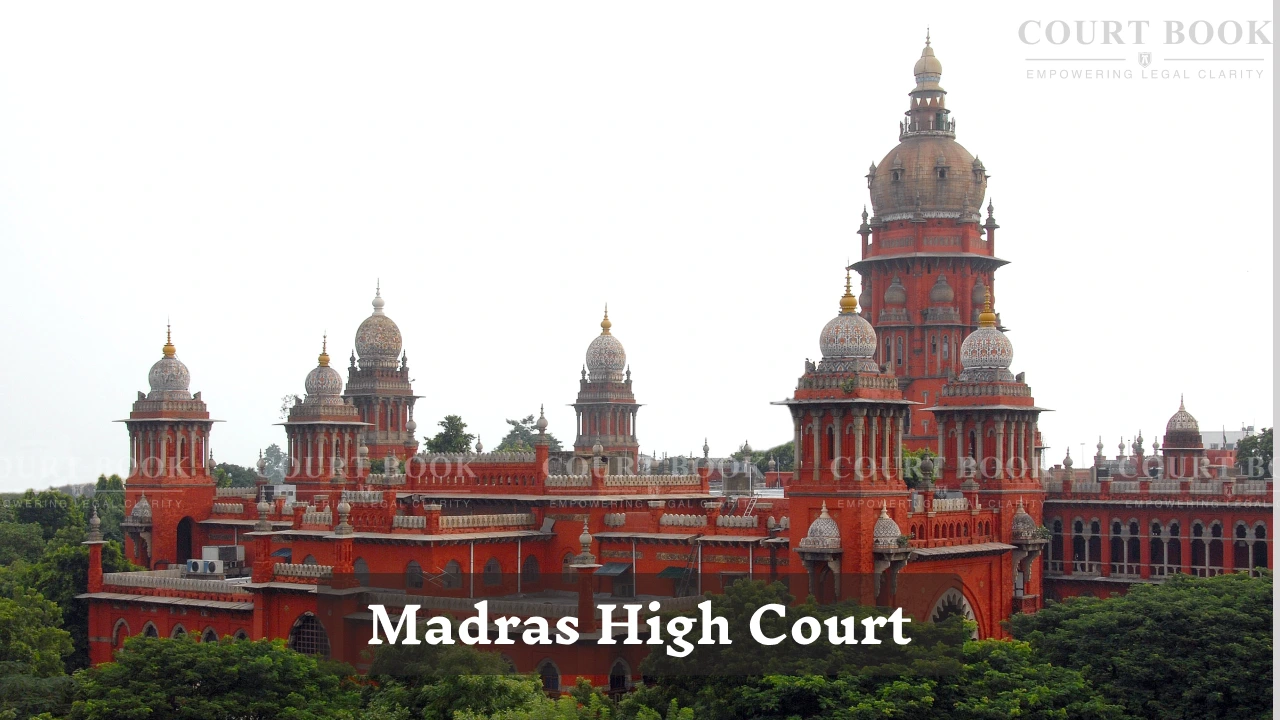
The Madras High Court has ruled that denying a nativity certificate to a disabled candidate merely because he temporarily stayed outside Puducherry was illegal and arbitrary. The court directed authorities to immediately issue the certificate and ordered a fresh medical evaluation regarding his eligibility for the post of Junior Engineer.
The bench emphasised that government authorities must act with sensitivity while dealing with persons with disabilities and ensure equality in employment opportunities.
Read also:-Chhattisgarh High Court Quashes Criminal Complaint Against Judges, Says Allegations Based
Background of the Case
The petitioner, E. Hariharan, a person with 40% locomotor disability, had been provisionally selected for the post of Junior Engineer (Electrical) in the Electricity Department of Puducherry. His selection, however, was subject to verification of required certificates, including nativity and community certificates.
Hariharan was born and educated in Puducherry and completed his B.Tech in Electrical and Electronics Engineering from Pondicherry Engineering College. He had also worked for several years as an Electrical Supervisor in a private company.
However, authorities refused to issue him a nativity certificate. Their decision was based on the fact that after his mother died during the COVID-19 pandemic, he temporarily moved with his elderly father to stay near relatives in a village located in Tamil Nadu.
Without the certificate, he could not complete the appointment process despite securing marks high enough in the recruitment examination.
Read also:-Bombay High Court Upholds Deemed Conveyance to Housing Society, Says Builder Cannot Retain FSI
Petitioner’s Arguments
Senior counsel appearing for the petitioner argued that the denial of the nativity certificate was contrary to the government policy governing such certificates.
According to the policy, nativity can be established either by birth in Puducherry or by continuous residence. The petitioner claimed nativity by birth, supported by several documents including his birth certificate, educational records, voter identity, Aadhaar card, and other official records indicating Puducherry as his native place.
It was also argued that his stay outside the Union Territory was only temporary and was compelled by difficult circumstances following his mother’s death and his father’s illness during the pandemic.
Read also:-Kerala High Court Quashes Ombudsman Proceedings Against Village Officer, Says He Is Not
Court’s Observations on Nativity Certificate
The bench noted that the petitioner was born, educated, and largely lived in Puducherry. His voter registration and multiple identity documents also confirmed his connection with the Union Territory.
The court found that authorities had ignored these factors and rejected his request merely because he had temporarily stayed outside Puducherry.
“The authority denied the Nativity Certificate in a most mechanical manner without taking into consideration all attending circumstances,” the bench observed.
It further held that temporary absence from a place does not automatically mean a person has abandoned their nativity, particularly when evidence shows an intention to return.
Medical Fitness Issue
Apart from the certificate issue, the petitioner’s candidature was also rejected after a Medical Board declared him medically unfit for the post.
Read also:-Gurmeet Ram Rahim Acquitted in Journalist Murder Case, Punjab & Haryana HC Upholds Life Term
The board cited his condition-hereditary sensory motor neuropathy-and weakness in all four limbs as reasons for disqualification.
However, the court found the medical assessment inadequate. It noted that the petitioner had successfully completed an engineering degree involving practical work with electrical equipment and had worked for nearly four years as an Electrical Supervisor.
According to the court, these facts indicated that his ability to perform the duties of a Junior Engineer had not been properly evaluated.
The bench stressed that disability assessments must consider the nature of the job and the individual’s functional capability rather than rely on a routine or mechanical approach.
Court’s Decision
Allowing the writ petition, the Madras High Court issued several directions:
• Authorities must immediately issue the nativity certificate to the petitioner.
• A fresh Medical Board must be constituted to reassess his fitness for the post of Junior Engineer. The board must include medical experts, including a neurologist, as well as a departmental officer familiar with the duties of the post.
• The board must consider the petitioner’s engineering qualification and prior professional experience during its assessment.
• If found medically fit, the petitioner will be entitled to appointment against the available vacancy.
• The authorities were also directed to pay costs of ₹50,000 to the petitioner.
The court further directed the Chief Secretary of Puducherry to frame a Standard Operating Procedure and conduct sensitisation programmes for officials dealing with persons with disabilities.
Case Title: E. Hariharan v. Union of India & Others
Case No.: W.P. No. 26303 of 2025
Decision Date: 05 March 2026


