

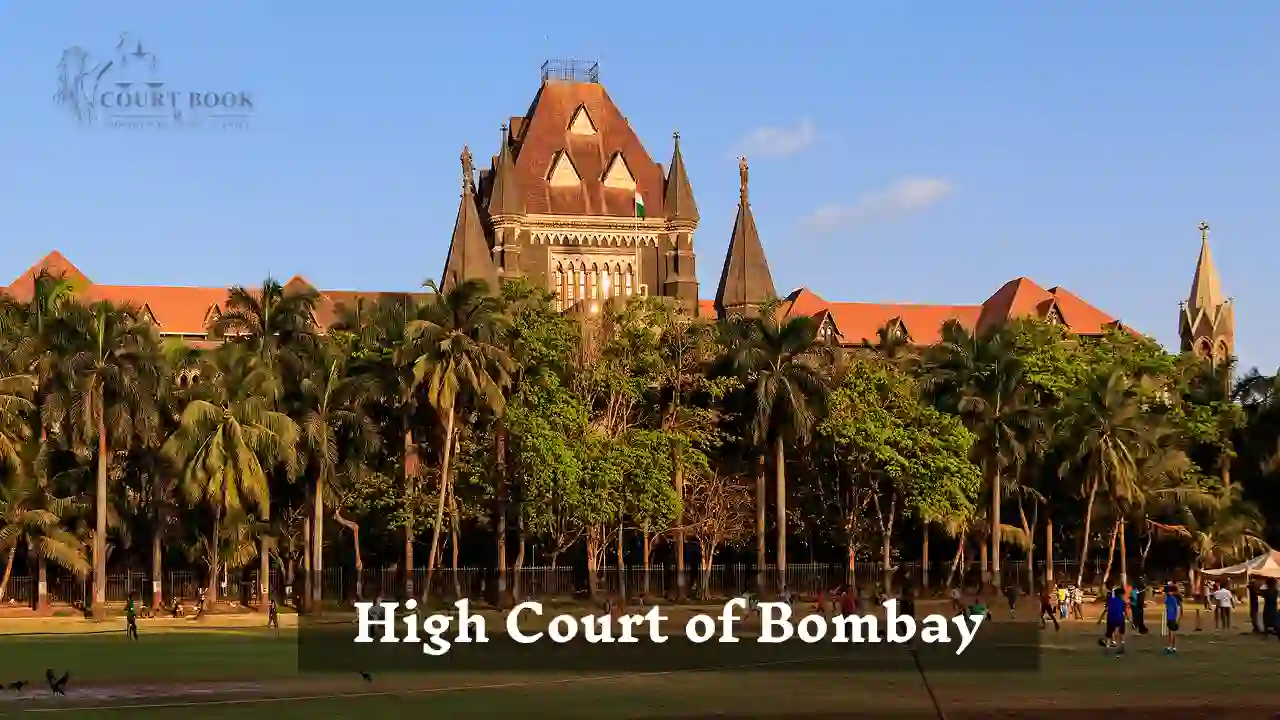
On a packed Wednesday morning, the Bombay High Court brought some closure to a clutch of petitions filed by aspirants of the Maharashtra judicial services examination. The courtroom, calm but attentive, heard out disappointed candidates who narrowly missed the cut-off and were questioning how their answers had been evaluated. By the end of the hearing, the court struck a careful balance-opening a small window for scrutiny, but firmly shutting the door on wholesale re-checking of exam papers.
हिंदी में पढ़ें
Background
The petitions arose from the Civil Judge (Junior Division) and Judicial Magistrate (First Class) Competitive Examination, 2022. Four candidates approached the High Court after failing to secure selection despite clearing earlier stages, including interviews.
Read also:- Unnao Rape Case Reaches Supreme Court Again as Plea Challenges Delhi High Court’s Suspension of Kuldeep Sengar's Life Sentence
Their grievance was straightforward, at least on the surface. They wanted access to their evaluated answer sheets. Some also sought re-evaluation or moderation, alleging that marking was “perfunctory” and lacked individual assessment. In one case, the petitioners even relied on an earlier High Court order where the court had noticed a mechanical pattern of marking.
The State and the Maharashtra Public Service Commission (MPSC), however, pushed back. Their stand was that the rules governing the judicial service exam do not permit re-evaluation as a matter of right, and that courts should be slow to interfere in competitive examinations involving thousands of candidates.
Read also:- Calcutta High Court Rules MSTC Can Recover Gratuity Losses Under CDA Rules, Sets Aside Single Judge Order in Senior CMD Dispute
Court’s Observations
Chief Justice Shree Chandrashekhar, speaking for the Division Bench, made it clear that disappointment alone cannot be a ground for judicial interference. “A writ of mandamus is not a writ of course,” the bench observed, reminding that courts can step in only when a clear legal right is shown.
The judges walked through Supreme Court precedents in some detail, particularly decisions explaining when courts may allow inspection or limited intervention. Referring to earlier rulings, the bench noted that candidates do not have an automatic right to re-evaluation simply because they believe they deserved more marks.
At the same time, the court did not completely close ranks around the examining authority. The bench acknowledged that there may be rare cases where a grave injustice occurs-say, where a correct answer is treated as wrong or not awarded marks at all. “If there is no dispute about the correctness of the answer,” the bench observed, “the writ court may step in to avoid grave injustice.”
Still, the judges were cautious. Any doubt, they said, must ordinarily be resolved in favour of the examining body, not the candidate. Competitive exams, the court underlined, have their own sanctity.
Read also:- Allahabad High Court dismisses accused's revision plea, reiterates no challenge lies against magistrate's FIR order under Section 156(3) CrPC
Decision
In the final order, the High Court disposed of all four writ petitions. The court permitted the petitioners to inspect their answer books, but strictly for the limited purpose indicated by the Supreme Court-namely, to see whether there was a clear and demonstrable error such as non-award of marks for an undisputed correct answer.
However, the bench categorically refused to order re-evaluation, moderation, or recalculation of marks as a general exercise. There was no direction to redraw the merit list or keep posts vacant. With that, the court brought the matter to a close, reaffirming that judicial review in examination matters remains the exception, not the rule.
Case Title: Green Gene Enviro Protection & Anr. vs The State of Maharashtra & Ors.
Case No.: Writ Petition (Civil) – exact number as per record
Case Type: Writ Petition under Article 226 (Examination / Administrative Law)
Decision Date: December 2024


