

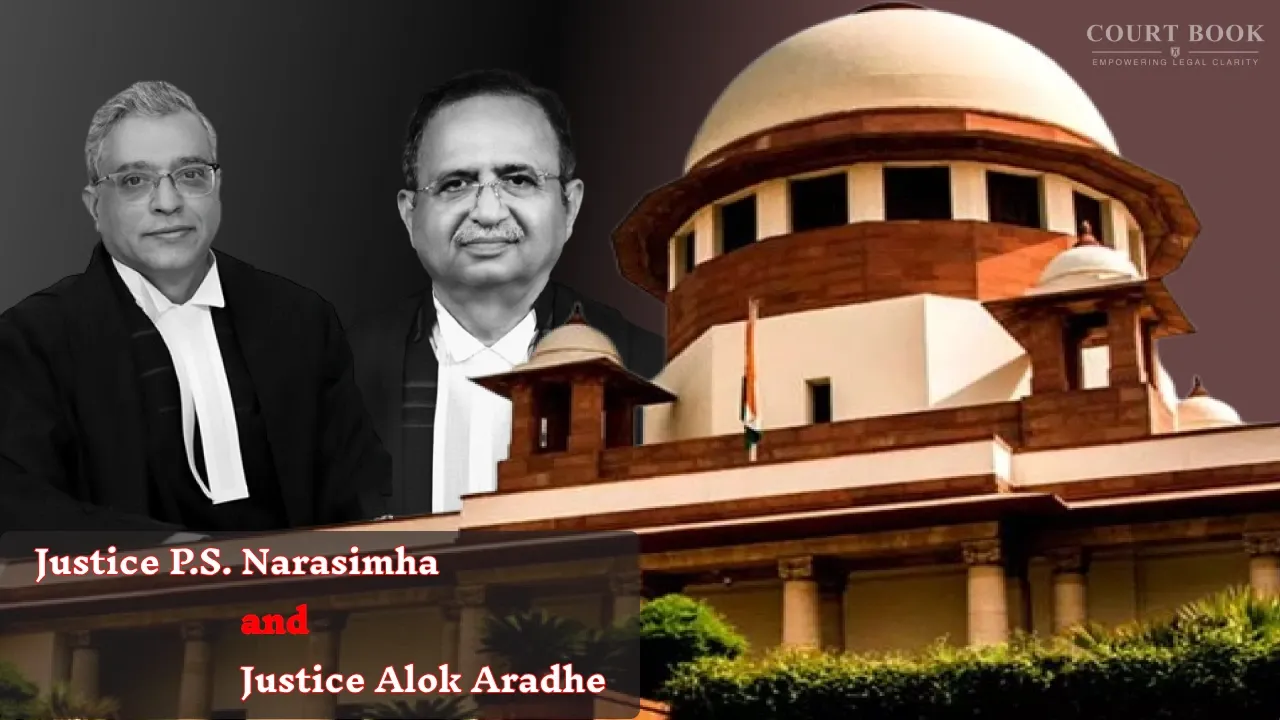
In a significant ruling on the use of Artificial Intelligence in the justice system, the Supreme Court has set aside the orders of the National Company Law Tribunal (NCLT) and the National Company Law Appellate Tribunal (NCLAT) after finding that the NCLT had relied on non-existent and AI-generated judicial precedents while deciding an insolvency matter. The Court said the integrity of the judicial process cannot be compromised by fabricated legal authorities and declared a policy of "zero tolerance" towards the use of fake or hallucinated AI-generated material in court proceedings.
Background of the Case
The appeal arose from insolvency proceedings initiated by Jammu and Kashmir Bank Ltd. against Essel Infraprojects Ltd. (EIL), which had acted as a corporate guarantor for loans extended to Pan India Utilities Distribution Company Ltd. After the borrower defaulted, the bank moved the NCLT under Section 7 of the Insolvency and Bankruptcy Code, 2016.
The NCLT admitted the insolvency application on August 28, 2024. Pooja Ramesh Singh, a suspended director of EIL, challenged that order before the NCLAT, arguing that the company's liabilities had been transferred under a demerger and amalgamation scheme and that the guarantee had effectively ceased. However, the NCLAT dismissed the appeal and affirmed the NCLT's findings.
Fake AI-Generated Precedents Came to Light
Before the Supreme Court, senior advocate Madhavi Divan, appearing for the appellant, pointed out that several judgments cited by the NCLT either did not exist or contained paragraphs that could not be traced to the reported decisions.
After independently verifying the authorities, the Supreme Court found that some citations referred to entirely non-existent judgments, while others quoted paragraphs that had never formed part of genuine Supreme Court decisions. The Court also noted that even the NCLAT failed to detect these errors while affirming the NCLT's order.
Court's Observations on Artificial Intelligence
The Bench clarified that it was not opposed to the responsible use of Artificial Intelligence in legal work. However, it stressed that AI must remain an aid to human decision-making and cannot replace judicial reasoning.
"The bench observed,
'It is necessary for Courts to adopt a zero-tolerance mode for producing, citing or using AI-generated precedents without verification.'"
The Court further held that relying on fake or hallucinated AI-generated material amounts to a serious lapse. It said that where such fabricated precedents enter the judicial decision-making process, the resulting judgment cannot be sustained because it undermines the sanctity of adjudication.
The Bench also remarked that while technology has greatly assisted courts, AI presents unique challenges because it can generate convincing but entirely false legal material. Therefore, every stage of adjudication must remain under effective human supervision.
Recognising that the issue extends beyond this individual case, the Supreme Court directed the Bar Council of India to constitute a committee to examine the problem of advocates placing fake AI-generated material before courts.
The Court asked the Bar Council to frame guiding principles and consider appropriate disciplinary measures to prevent such incidents in the future. It emphasised that both the Bar and the Bench share responsibility for ensuring that only verified legal authorities are cited before courts.
Supreme Court's Decision
Allowing the appeal, the Supreme Court set aside both the NCLT's order dated August 28, 2024, and the NCLAT's judgment dated September 11, 2025. It restored the Section 7 insolvency application to the NCLT for fresh consideration.
The Bench clarified that it had expressed no opinion on the merits of the insolvency dispute and directed the NCLT to decide the matter independently in accordance with law, preferably within two weeks. Until then, the parties were directed to maintain status quo.
Case Details:
Case Title: Pooja Ramesh Singh v. Jammu and Kashmir Bank Ltd. & Anr.
Case Number: Civil Appeal No. 11950 of 2025
Judge: Justice Pamidighantam Sri Narasimha and Justice Alok Aradhe
Decision Date: July 2, 2026


