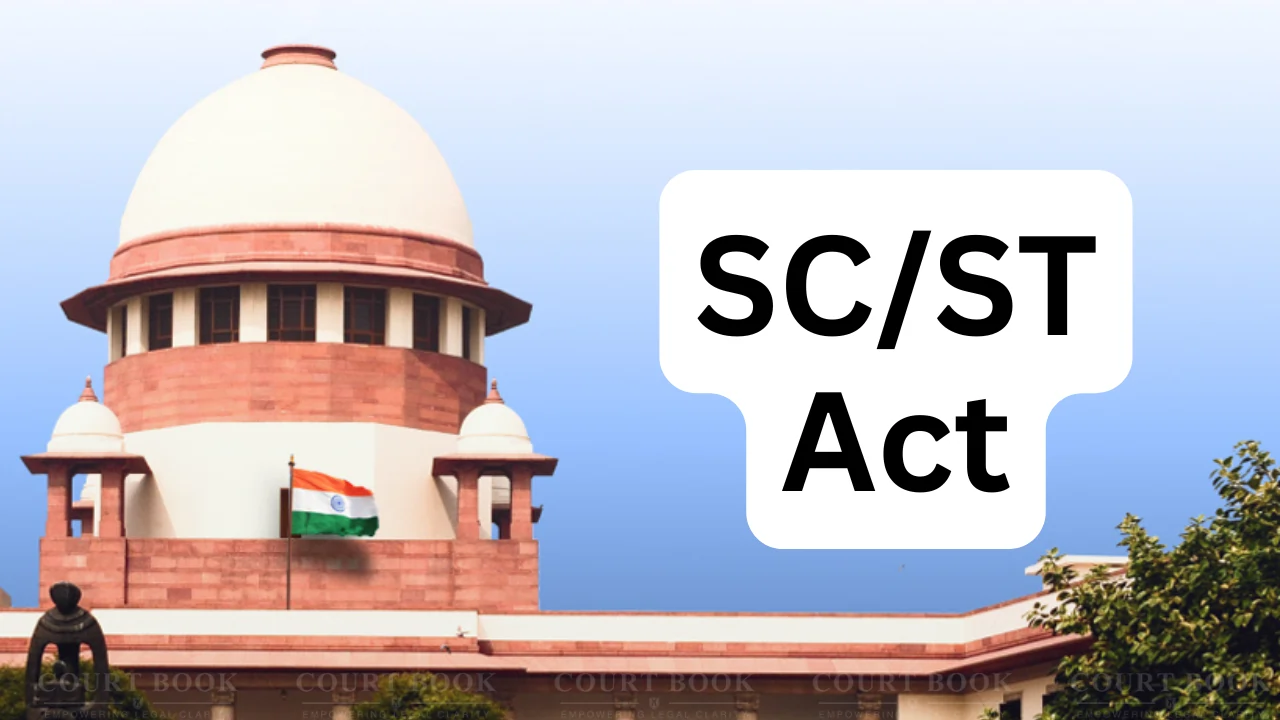
The Supreme Court on September 22, 2026, dismissed a public interest petition challenging the constitutional validity of the 2018 amendments to the Scheduled Castes and Scheduled Tribes (Prevention of Atrocities) Act, 1989. The Bench declined to reconsider the Court’s 2020 decision upholding the amendments.
A three-judge Bench comprising Chief Justice Surya Kant and Justices Joymalya Bagchi and V. Mohana was hearing the plea filed by Brijbhushan Saini and others.
Background
The challenge principally concerned Section 18A of the SC/ST Act. The provision removed the requirement of a preliminary inquiry before registration of an FIR and stated that prior approval was not required before arrest. It also reaffirmed the restriction on anticipatory bail in cases under the Act.
These provisions were introduced after the Supreme Court’s 2018 judgment in Dr. Subhash Kashinath Mahajan v. State of Maharashtra, which had directed certain safeguards concerning arrest and preliminary inquiry. Parliament subsequently enacted the 2018 amendment.
The constitutional validity of the amendment was later upheld by a three-judge Bench in Prithvi Raj Chauhan v. Union of India on February 10, 2020.
Advocate Hari Shankar Jain, appearing for the petitioners, argued that the stringent provisions could affect fundamental rights under Articles 14 and 21 of the Constitution. He also questioned the restriction on anticipatory bail and alleged that the provisions were capable of misuse.
The petitioners sought reconsideration of the 2020 judgment, but the Bench was not persuaded to reopen the constitutional challenge.
Justice Joymalya Bagchi emphasised that individual instances of alleged misuse could be examined by courts without reconsidering the validity of the legislation. The Bench also noted that existing procedural safeguards remain relevant when arrests are made under special laws.
"Courts have the right to examine at least whether a prima facie case is made out," Justice Bagchi observed. The Court also noted that an FIR invoking the SC/ST Act could be examined and, where legally justified, quashed on the facts of an individual case.
Justice Bagchi further referred to Section 35 of the Bharatiya Nagarik Suraksha Sanhita (BNSS), observing that its requirements would remain relevant when an arrest is made under a special statute.
The Supreme Court ultimately dismissed the petition and declined the request to reconsider the 2020 ruling. The Bench held that the safeguards already recognised by the Court were available for dealing with individual cases, while leaving the 2018 amendment and Section 18A of the SC/ST Act in place.
Case Details:
Case Title: Brijbhushan Saini and Ors. v. Union of India and Ors.
Case Number: W.P.(C) No. 1211/2026
Judge: CJ Surya Kant, Justice Joymalya Bagchi and Justice V. Mohana
Decision Date: September 22, 2026