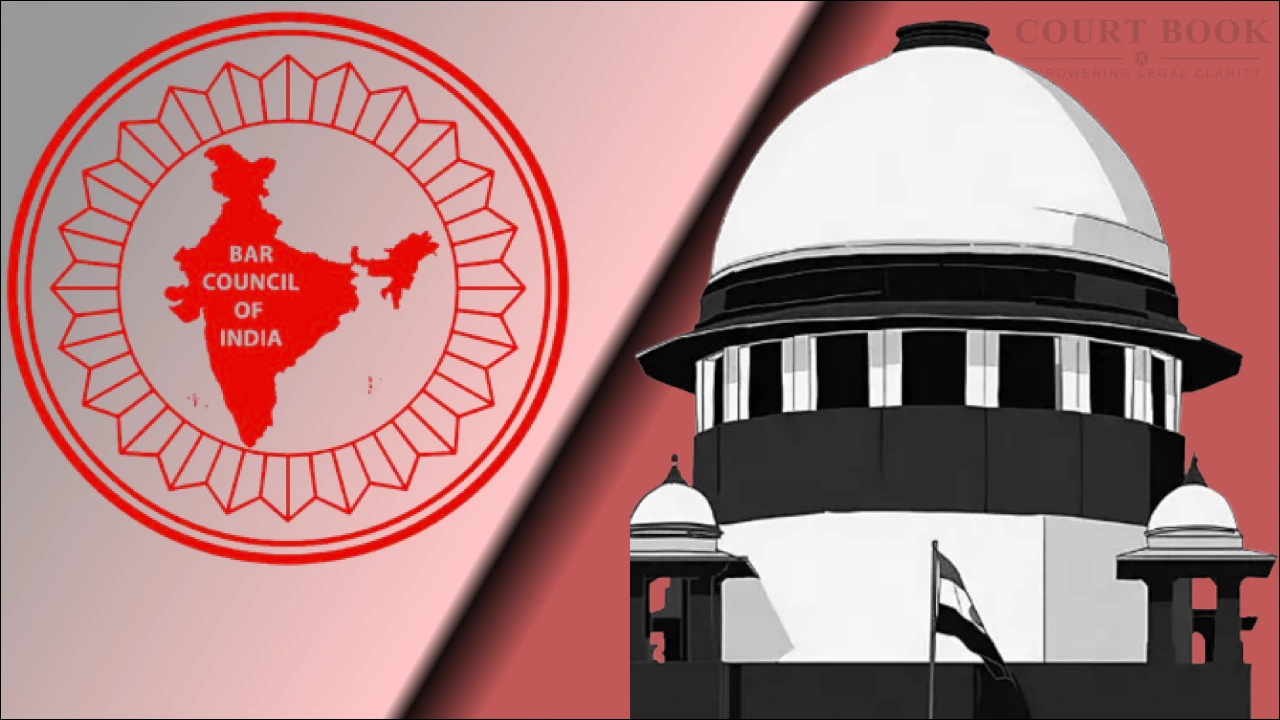
The Supreme Court has decided to examine the extent of the Bar Council of India’s (BCI) statutory power over law colleges and universities. The issue arose in a petition concerning the BCI-PEARL FIRST Trust and institutions established through arrangements involving the Trust.
A Bench comprising CJI Surya Kant, Justice Joymalya Bagchi and Justice V. Mohana questioned whether the BCI’s authority to promote legal education and prescribe educational standards under the Advocates Act, 1961 extends to actually controlling or running law institutions.
Advocate Prashant Bhushan, appearing for the petitioner, raised questions concerning the creation and functioning of the BCI-PEARL FIRST Trust and the transfer of funds from the earlier BCI trust.
He also challenged statutory arrangements concerning law colleges in Goa and Andhra Pradesh. According to his submissions, the concerned enactments provided the BCI with substantial control over the institutions, including the power to nominate 27 of 35 members of their Executive Councils.
Bhushan argued that a regulatory body should not itself control an institution that it is required to regulate.
The Bench indicated that the central question was whether the BCI possesses the statutory authority to regulate and control law colleges or universities.
Chief Justice Surya Kant observed:
“How can BCI regulate law colleges? That's the real question.”
The Court also referred to Section 7(1)(h) of the Advocates Act, 1961, which empowers the BCI to promote legal education and lay down standards of such education. The Bench questioned whether this provision permits the BCI to exercise operational control over educational institutions.
The Chief Justice further observed that while the BCI may prescribe general standards, including the duration and curriculum of law courses, questions of academic administration could involve specialised academic expertise.
“How the BCI is expert body to regulate legal education? What do they know about legal education? There are eminent law scholars, academia... you can lay down general guidelines... curriculum should be 4 or 5 year... but you can't control.”
Senior Advocate Guru Krishna Kumar, appearing for the BCI, submitted that the issue concerning lifetime trusteeship had subsequently been considered by the Council. He stated that the BCI had resolved that trusteeship would be linked to the tenure of the concerned BCI membership rather than continue for life.
The petitioners, however, maintained that the statutory provisions concerning the institutions themselves raised a separate question about the extent of BCI control.
The Supreme Court issued notice on the petition and sought the response of the Bar Council of India. The Court will examine the statutory scope of the BCI's authority over law colleges and universities in the proceedings.
Case Details:
Case Title: Girish Mittal v. Bar Council of India & Ors.
Case Number: W.P.(C) No. 1115/2026
Judge: Chief Justice Surya Kant, Justice Joymalya Bagchi and Justice V. Mohana
Decision Date: September 23, 2026