In a significant ruling on the intersection of banking mergers and tenancy law, the Supreme Court has held that the merger of a tenant bank with another bank does not exempt the successor bank from eviction under the Delhi Rent Control Act if the landlord's written consent was never obtained. The Court restored an eviction decree against Punjab National Bank (PNB), holding that the transfer of tenancy rights following the amalgamation of Hindustan Commercial Bank (HCB) with PNB amounted to "parting with possession" under the law.
Background of the Case
The dispute concerned commercial premises in Pratap Building, Connaught Circus, New Delhi, which British Motor Car Company (1939) Ltd. had leased to Hindustan Commercial Bank in 1947 for non-residential use.
In December 1986, the Central Government approved a scheme under Section 45 of the Banking Regulation Act, resulting in HCB's amalgamation with Punjab National Bank. Following the merger, all assets, liabilities and tenancy rights of HCB vested in PNB, which continued to occupy the premises.
The landlord initiated eviction proceedings under Section 14(1)(b) of the Delhi Rent Control Act, alleging that HCB had assigned or parted with possession of the premises in favour of PNB without obtaining written consent.
While the Additional Rent Controller initially dismissed the eviction petition, the Rent Control Tribunal later allowed it and ordered eviction. The Delhi High Court subsequently reversed that decision, holding that the merger had taken place by operation of a statutory scheme and therefore did not amount to unlawful subletting or assignment. The landlord challenged that ruling before the Supreme Court.
Court's Observations
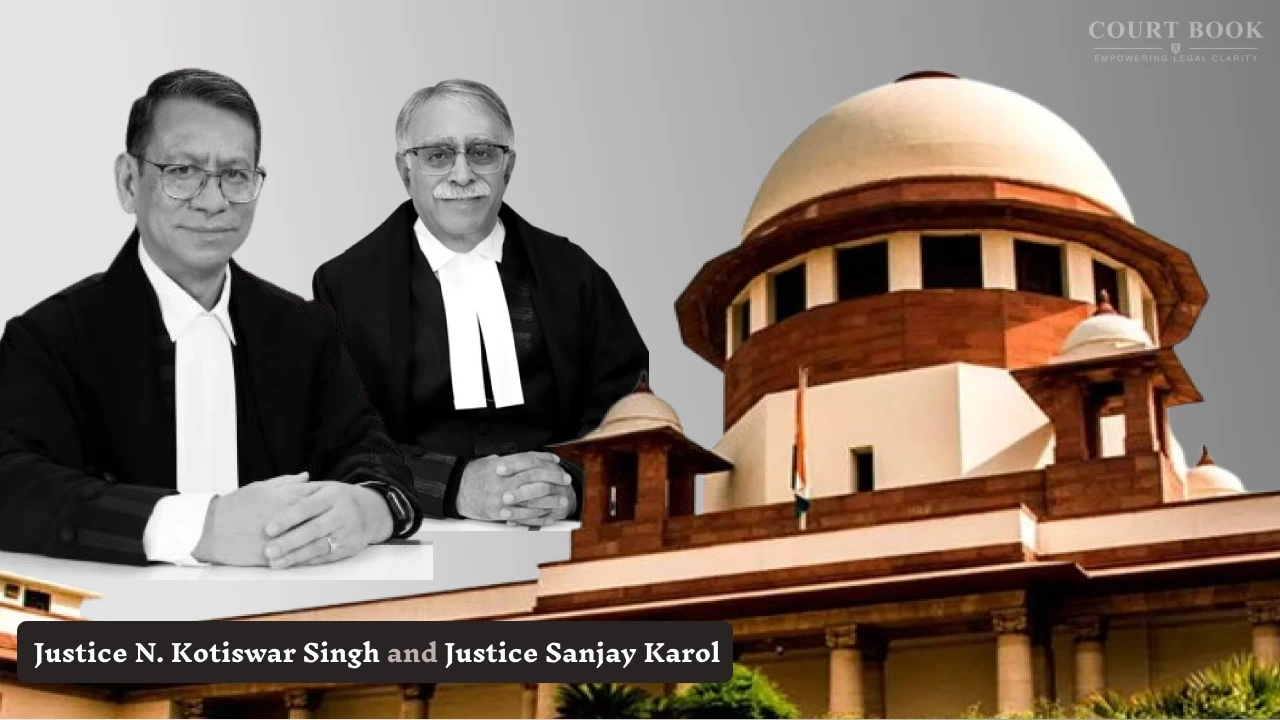
A Bench of Justice Sanjay Karol and Justice Nongmeikapam Kotiswar Singh examined whether the statutory amalgamation protected PNB from eviction under Section 14(1)(b) of the Delhi Rent Control Act.
The Court explained that the provision requires only two conditions: the tenant must have transferred possession or tenancy rights to another entity, and such transfer must have occurred without the landlord's written consent.
Rejecting the argument that only voluntary transfers attract the provision, the Bench observed:
"The applicability of Section 14(1)(b) depends upon the occurrence of a factual situation... The reasons necessitating such transfer or whether it was voluntary or involuntary, are wholly immaterial."
The Court noted that once HCB merged into PNB, the original tenant ceased to exist and all tenancy rights vested in PNB. Since this transfer occurred without the landlord's written approval, the statutory requirements for eviction stood satisfied.
The Bench further held that Section 14(1)(b) does not distinguish between voluntary and involuntary transfers and is broad enough to cover every mode through which possession passes from the original tenant to another entity.
RBI Scheme Does Not Override Rent Control Law
PNB argued that the merger occurred under a scheme framed by the Reserve Bank of India under Section 45 of the Banking Regulation Act and therefore operated by statute rather than by assignment.
The Supreme Court rejected this submission. Relying on its earlier decision in K.I. Shephard, the Bench held that a scheme framed under Section 45 of the Banking Regulation Act is administrative in nature and not a legislative enactment.
The Court clarified that such a scheme cannot override the protections available to landlords under Section 14(1)(b) of the Delhi Rent Control Act merely because it is approved by the Central Government.
"The amalgamation scheme framed by the Reserve Bank of India... cannot be accorded the status of a statutory enactment so as to override the operation of Section 14(1)(b) of the DRC Act," the Bench observed.
Why Earlier High Court Decision Was Set Aside
The Supreme Court also found that the Delhi High Court had incorrectly relied on an earlier judgment involving a different banking law governing nationalised banks.
According to the Bench, schemes framed under the Banking Companies (Acquisition and Transfer of Undertakings) Act are legally different from schemes framed under Section 45 of the Banking Regulation Act. Therefore, the precedent relied upon by the High Court was not applicable to the present dispute.
Supreme Court's Decision
Allowing the appeal, the Supreme Court restored the eviction decree passed by the Additional Rent Control Tribunal and set aside the Delhi High Court's judgment.
Recognising that PNB had occupied the premises for several decades, the Court granted the bank time until 31 January 2027 to hand over peaceful and vacant possession. It directed PNB to file an undertaking before the Supreme Court within four weeks and continue paying rent on the existing contractual terms until possession is delivered. If it fails to comply, the landlord will be free to recover possession in accordance with law.
Case Details:
Case Title: British Motor Car Company (1939) Ltd. v. M/s Hindustan Commercial Bank Ltd. (Since Merged into Punjab National Bank) & Anr.
Case Number: Civil Appeal No. 5714 of 2012
Judge: Justice Sanjay Karol and Justice Nongmeikapam Kotiswar Singh
Decision Date: 9 July 2026