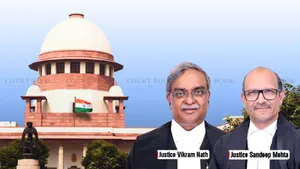
The Supreme Court has set aside the Patna High Court's judgment that had invalidated the auction sale of a mortgaged property conducted by the Bihar State Financial Corporation (BSFC). Holding that financial institutions cannot be prevented from recovering public money after giving borrowers repeated opportunities, the Court ruled that the auction sale was legally sustainable and that the borrowers' prolonged defaults and successive rounds of litigation did not justify equitable relief.
Background of the Case
The dispute arose from loans granted by BSFC to Ranjeet Motel for establishing an industrial unit. The corporation initially sanctioned ₹8.50 lakh in 1982 and later extended another ₹3.15 lakh in 1984 against an equitable mortgage of the borrowers' land and building.
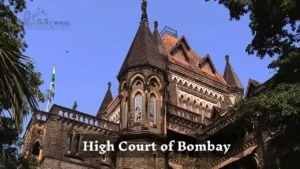
After the borrowers repeatedly defaulted on repayment, BSFC issued recovery notices under Sections 29 and 30 of the State Financial Corporations Act, 1951. Although the Patna High Court earlier granted the borrowers a repayment schedule and several opportunities to clear their dues, they failed to comply with the instalments.
BSFC eventually published an auction notice in March 1996. After the auction process began, the corporation even offered the borrowers one last opportunity to retain the property by matching the successful bid within 21 days. The borrowers did not accept the offer, and the sale was completed in favour of the auction purchaser.
Why the Lower Courts Ruled for the Borrowers
The Trial Court had partly decreed the borrowers' suit, holding that BSFC had acted unfairly because it had not obtained a valuation report before the auction, had allowed the auction purchaser to pay in instalments, and had allegedly failed to properly conduct the sale process. The Patna High Court affirmed those findings in 2025 and declared the auction sale invalid.
Supreme Court's Observations
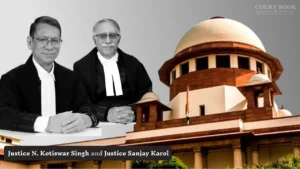
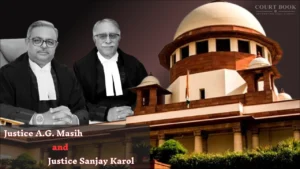
Justice Sanjay Karol, speaking for the Court, emphasised that the statutory power under Section 29 allows financial corporations to sell secured assets when borrowers repeatedly default, provided the action is fair and lawful.
The Court observed that fairness "is not a one-way street" and cannot be stretched to prevent public financial institutions from recovering public money after extending multiple opportunities to defaulting borrowers. It reiterated that courts should interfere only where there is a statutory violation or where the corporation has acted arbitrarily or unreasonably.
The Bench found that BSFC had issued repeated notices over several years, accommodated the borrowers through court-approved repayment schedules, and even invited them to match the auction terms before finalising the sale. The borrowers failed to take advantage of these opportunities.
Rejecting the argument that the absence of a prior valuation alone invalidated the auction, the Court noted that the borrowers themselves had sought to retain the property on the same terms offered to the auction purchaser. According to the Bench, this weakened their later challenge to the auction process.
"The fairness required of a financial corporation cannot be carried to the extent of disabling it from recovering what is due,"
the Bench observed while relying on earlier Supreme Court precedents governing recovery under the State Financial Corporations Act.
Court Finds Repeated Litigation by Borrowers
The Court also took note of the borrowers' conduct throughout the dispute. It recorded that they had challenged recovery proceedings through multiple writ petitions and civil proceedings over several years while continuing to remain in default.
According to the judgment, these repeated legal proceedings effectively delayed the recovery process and did not reflect any genuine attempt to discharge the outstanding liability. The Bench held that such conduct disentitled the borrowers from claiming equitable relief.
The Court further found no material establishing fraud or collusion between BSFC and the auction purchaser. It held that once the auction had been completed and confirmed, it should not ordinarily be disturbed in the absence of material irregularity causing legal prejudice.
Decision
Allowing the appeals filed by Bihar State Financial Corporation and the auction purchaser, the Supreme Court set aside the judgments of the Trial Court and the Patna High Court that had invalidated the auction sale. The Court held that BSFC had acted within its statutory powers after providing the borrowers several opportunities to regularise their account and recover the mortgaged property.
Case Details:
Case Title: Bihar State Financial Corporation & Anr. v. Bhushan Singh & Ors.
Case Number: Civil Appeal Nos. of 2026 (arising out of SLP (C) Nos. 16552–53 of 2025) with Civil Appeal arising out of SLP (C) No. 24073 of 2025
Judge: Justice Sanjay Karol
Decision Date: 9 July 2026