

The Supreme Court has dismissed two civil appeals challenging a Delhi High Court judgment that denied a legal heir’s claim for allotment of a plot in the Burmah Shell Co-operative Housing Society. The Court held that the High Court was justified in interfering with orders of the Arbitrator and Co-operative Tribunal after finding that important documentary evidence had not been properly considered.
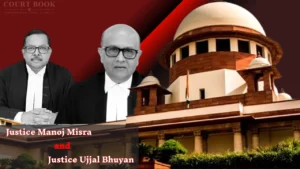
The judgment was delivered by Justice Ujjal Bhuyan and Justice Atul S. Chandurkar on August 31, 2026.
Background of the Case
The dispute originated with S.N. Sharma, who claimed membership of the Society and sought allotment of a plot. After an earlier round of litigation, the matter was remanded for fresh consideration.
On October 7, 2003, the Registrar, acting as Arbitrator, held that Sharma was a member of the Society and that his legal heir was entitled to a plot, subject to payment of the land cost. The Society challenged the decision before the Co-operative Tribunal, but the Tribunal upheld the Arbitrator’s order.
The Society then approached the Delhi High Court. It argued that Sharma had resigned from membership in 1951 and was never admitted again in 1952. The High Court accepted the contention and set aside both the Arbitrator’s award and the Tribunal’s order.
Supreme Court Examines Membership Records
The Supreme Court focused on whether the High Court had exceeded the limited scope of its power to issue a writ of certiorari. Such a power allows a High Court to correct serious legal or jurisdictional errors, but it is not ordinarily meant to function as an appeal over factual findings.
The Court noted that the record contained several important documents which had not been properly considered by the Arbitrator and the Tribunal. These included the recorded acceptance of Sharma’s resignation in 1951, transfer of his share to another member, rejection of his 1952 membership application, and rejection of his request to deposit money for a plot in 1979.
The Court observed:
“The Arbitrator failed to consider these documents that were available on record, which if considered, would have resulted in only one finding, that the original claimant was not a member of the Society.”
The Bench also found that the Tribunal’s order was brief and had affirmed the Arbitrator’s conclusion without adequately addressing the relevant material.
Court’s Decision
The Supreme Court held that the Delhi High Court was justified in exercising its writ jurisdiction because the findings of the Arbitrator and Tribunal had overlooked material documentary evidence.
The Court further noted that four other members had prior claims for allotment of plots, which also supported the High Court’s decision on equitable grounds.
Since the Court concluded that the original claimant had never been admitted as a member of the Society, it found no need to examine whether a plot was actually available for allotment.
Accordingly, the Supreme Court declined to interfere with the Delhi High Court judgment and dismissed Civil Appeal Nos. 10693-10694 of 2026 with no order as to costs.
The pending interlocutory applications were also disposed of.



-300x169.webp)



-300x169.webp)