The Supreme Court has set aside the arrest of the vessel M.V. Nereus Progress, holding that a valid termination notice issued under the terms of a bareboat charterparty can bring the demise charter to an end even before the owner physically repossesses the vessel.
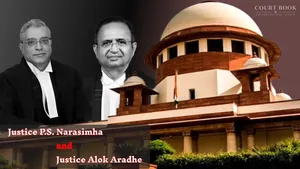
A Bench comprising Chief Justice of India Surya Kant, Justice Joymalya Bagchi and Justice V. Mohana delivered the judgment on September 25, 2026. The Court held that after valid termination, the former charterer could hold the vessel only as a “gratuitous bailee” pending physical repossession and could no longer be treated as the demise charterer for the purpose of vessel arrest.
Background
The dispute arose between the registered owner of M.V. Nereus Progress and Om Freight Forwarders Ltd. The vessel had earlier been given on a bareboat charter to Nereides Marine Services, a UAE-based shipping operator.
According to the judgment, Nereides failed to pay hire due under the charterparty. The owner issued several demand notices, followed by an Anti-Technicality Notice on November 6, 2025. When the payment default continued, the owner issued a Termination Notice on November 13, 2025, followed by a Repossession Notice on November 19.
Meanwhile, Om Freight Forwarders had a separate charter arrangement with Nereides concerning another vessel, M.V. Bharadwaj. Claiming unpaid dues under that separate arrangement, Om Freight approached the Madras High Court and obtained an arrest order against M.V. Nereus Progress on December 4, 2025, before the owner could physically take possession of the vessel.
The Madras High Court sustained the arrest, reasoning that physical repossession was generally required before the demise charterer’s status came to an end. The vessel owner then approached the Supreme Court.
The Supreme Court first examined whether the termination of the bareboat charter was valid. It noted that the owner had followed the contractual procedure, including giving Nereides an opportunity to cure its payment default before issuing the termination notice.
The Court found that Nereides had not disputed the payment default and had itself acknowledged the termination notice while seeking additional time to make payment. On this basis, the Court held that the termination dated November 13, 2025 was valid.
The crucial question was whether physical repossession was still necessary to end the demise charter.
The Court examined Clauses 31 and 32 of the BIMCO BARECON 2017 charterparty. Clause 32 specifically stated that after early termination, the charterer would hold the vessel as a gratuitous bailee pending physical repossession.
The Court observed:
“The opening words of Clause 32, ‘in the event of the early termination of this Charter Party’, make it clear that repossession of the Vessel is treated by the parties as a consequence flowing from a termination already accomplished, and not as an event upon which the termination itself is dependent.”
The Court further explained that a gratuitous bailee and a demise charterer occupy fundamentally different legal positions. Once the contract itself changed the character of Nereides’ possession to that of a gratuitous bailee, the company could no longer simultaneously remain the demise charterer.
The Supreme Court also considered Section 5(1)(b) read with Section 5(2) of the Admiralty (Jurisdiction and Settlement of Maritime Claims) Act, 2017.
It held that for the arrest of M.V. Nereus Progress to be sustained as a sister-ship arrest, Nereides had to continue to be the demise charterer of that vessel when the arrest was effected. Since the charter had already been validly terminated before December 4, 2025, that requirement was not satisfied.
The Supreme Court set aside the Madras High Court judgment and allowed the appeal. It held that the November 13, 2025 termination notice validly ended the demise charter and that physical repossession was only the subsequent process for restoring physical control of the vessel.
The Court concluded that Nereides was no longer the demise charterer when the vessel was arrested and was holding it only as a gratuitous bailee.
Consequently, the arrest order was vacated.




-300x169.webp)