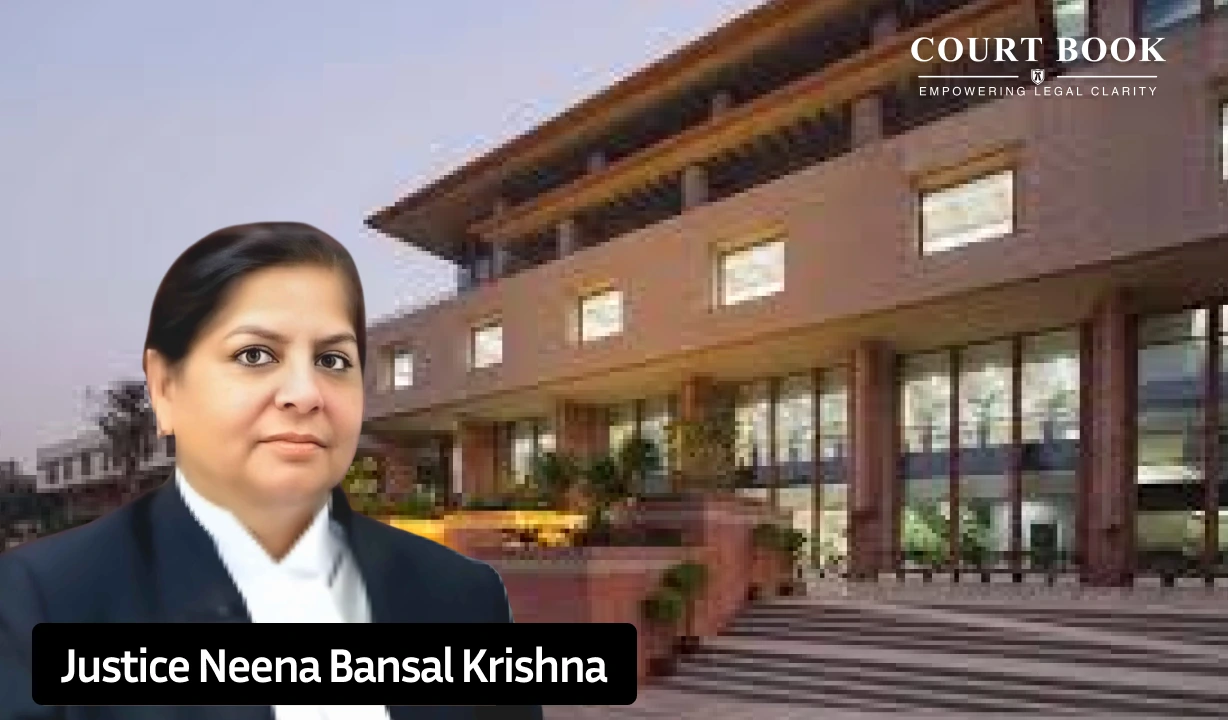
The Delhi High Court has dismissed a second appeal filed by Shalu, affirming concurrent findings of two lower courts that directed her to hand over possession of a residential property in West Delhi to its owner, Meera Batra.
Justice Neena Bansal Krishna held that the appellant had entered the property only because her husband had been allowed to stay there by his sister, and once that permission came to an end, she could not claim an independent right to continue occupying the premises.
Background of the Case
The dispute concerned a property at Ramesh Nagar, New Delhi. Meera Batra claimed ownership of the ground floor and second floor of the house through a Will executed by her mother, Maya Devi, in February 2012.
According to Meera Batra, after their mother's death, her brother Munish Kumar Lakhina requested permission to stay on the ground floor. She allowed him to occupy the premises as a licensee. Following his marriage to Shalu in October 2012, the couple began residing there together.
The plaintiff later alleged that disputes arose within the family and that she withdrew her permission for the defendants to stay in the property. A legal notice was issued in July 2015 asking them to vacate. When the premises were not vacated, she filed a suit seeking possession and an injunction restraining creation of third-party interests in the property.
Shalu opposed the suit, contending that the property was her matrimonial home and that the proceedings had been initiated in collusion with her husband to deprive her of residential rights. She also challenged the validity of the Will relied upon by Meera Batra.
Findings of the Trial Court and First Appellate Court
The trial court accepted the plaintiff's claim of ownership after examining the Will and the testimony of attesting witnesses. It concluded that Meera Batra had become the absolute owner of the property after her mother's death.
The court also rejected Shalu's claim that she could continue residing in the premises as a shared household under the Protection of Women from Domestic Violence Act. It found that there was no domestic relationship between Shalu and Meera Batra and that the appellant's occupation flowed only from her husband's permission to stay there.
The first appellate court agreed with these conclusions and dismissed Shalu's appeal.
Court’s Observations
During the hearing of the second appeal, the High Court examined whether Shalu had any legal right to remain in possession of the property after her husband's occupation had ended.
Justice Krishna noted that the ownership of the property had been duly established through the Will executed by Maya Devi. The Court observed that Shalu entered the premises only after her marriage and resided there because her husband had been permitted to occupy the property.
“The sole question which arises is what is the right of the Appellant to continue in occupation of the Suit property,” the Court observed while examining her claim.
The bench further stated that once the husband's right to stay in the property stood terminated and he had left the premises,
“the status of the Appellant becomes no better than that of a trespasser and she is liable to vacate the property.”
Addressing the argument that she was entitled to residence protection under the Domestic Violence Act, the Court held that any remedy in that regard would lie against the husband and not against the sister-in-law who owned the property.
“The discord inter-se the husband and the wife cannot become a penalty for a sister-in-law, who in good faith, had permitted them to occupy her Suit property,” the Court remarked.
Decision
Finding no substantial question of law in the matter, the Delhi High Court held that both the trial court and the first appellate court had correctly appreciated the evidence and the legal position.
Justice Krishna concluded that Shalu had no right, title or interest in the property after the withdrawal of permission to occupy it and upheld the decrees directing her to hand over possession to Meera Batra.
The Regular Second Appeal was accordingly dismissed, and all pending applications were disposed of.
Case Details
Case Title: Shalu v. Meera Batra & Anr.
Case Number: RSA 22/2022
Judge: Justice Neena Bansal Krishna
Decision Date: June 5, 2026




-300x169.webp)