

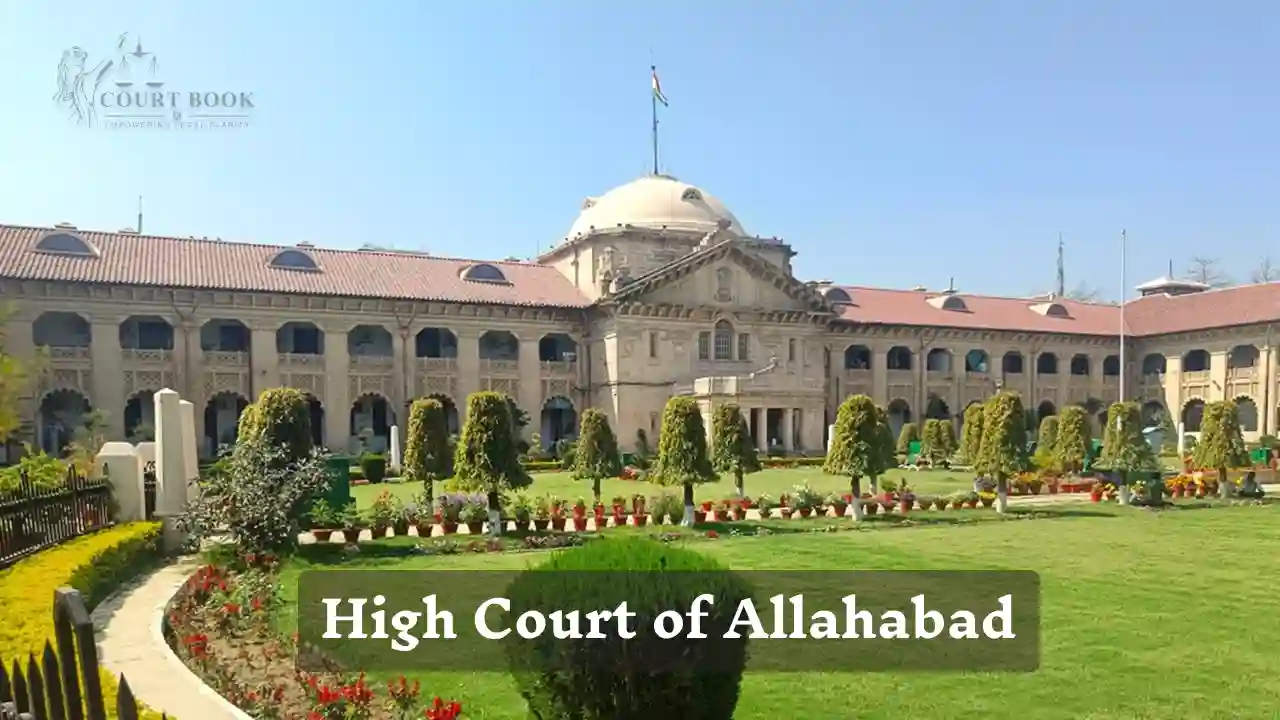
In a courtroom that stayed quietly attentive through detailed arguments, the Allahabad High Court on Monday declined maintenance to a woman who claimed to have lived as a wife for nearly ten years. The court made it clear that emotional bonds and long cohabitation cannot override the law when a previous marriage still survives. The criminal revision was heard by Justice Madan Pal Singh, who upheld the Family Court’s earlier rejection of her maintenance claim.
हिंदी में पढ़ें
Background
The case was filed by Smt. Madhu, also known as Aruna Bhajpai, challenging a 2024 order of the Family Court in Kanpur Nagar. She had sought maintenance under Section 125 of the Criminal Procedure Code, a provision meant to protect wives from destitution.
Read also:-Supreme Court Settles Decades-Old Faridabad Land Auction Dispute, Clarifies Rights of Buyers During
Her story, as placed before the court, was layered. Madhu had married Ram Chandra Tiwari in 1992 and had two children from that marriage. Though the couple separated and litigation followed, there was never a final legal divorce. During this period, she came in contact with Shiv Prakash Bajpai, an advocate. According to her, he assured her that marriages could be dissolved through a family settlement and a notarised document. Trusting this advice, she claimed they married in 2009 and lived together as husband and wife for almost a decade.
When the relationship soured and she was allegedly forced out in 2018, she approached the court seeking maintenance, saying society and official records had accepted her as Bajpai’s wife.
Read also:-Supreme Court Clarifies Limits on Foreign Banks’ Head Office Expense Deductions, Overrules Long
Court’s Observations
The High Court, however, took a hard look at the legal facts. “The material on record clearly establishes that the first marriage of the revisionist continues to subsist in law,” the bench observed. It noted that her divorce petition against her first husband had been dismissed, leaving the marriage legally intact.
The court also pointed out that the man she sought maintenance from was himself already married and living with his legally wedded wife and children. In such a situation, the court said, any second marriage during the lifetime of a spouse is void from the very beginning.
Madhu’s reliance on Supreme Court rulings recognising relationships “akin to marriage” did not persuade the court. Justice Singh remarked that such protection applies only in limited circumstances. “Section 125 Cr.P.C. cannot be stretched to include a woman who is not legally married,” the bench said, distinguishing earlier judgments where the woman had no surviving marriage of her own.
Read also:-Supreme Court restores trial court decree in Kerala land deal dispute, rejects High Court’s remand
The court was particularly clear that notarised agreements or private settlements cannot dissolve a Hindu marriage. “Such documents cannot confer the legal status of a wife,” the judge observed, adding that accepting such claims would weaken the very purpose of marriage laws.
Decision
Concluding that long cohabitation, however genuine, cannot replace a valid marriage, the High Court held that Madhu did not fall within the definition of a “legally wedded wife” under Section 125 Cr.P.C.
“The impugned judgment warrants no interference,” the bench said, dismissing the criminal revision and affirming the Family Court’s order rejecting her maintenance claim.
Case Title: Smt. Madhu @ Aruna Bhajpai vs. State of Uttar Pradesh & Another
Case No.: Criminal Revision No. 2099 of 2024
Case Type: Criminal Revision (Maintenance under Section 125 Cr.P.C.)
Decision Date: December 8, 2025
Download Judgment

