

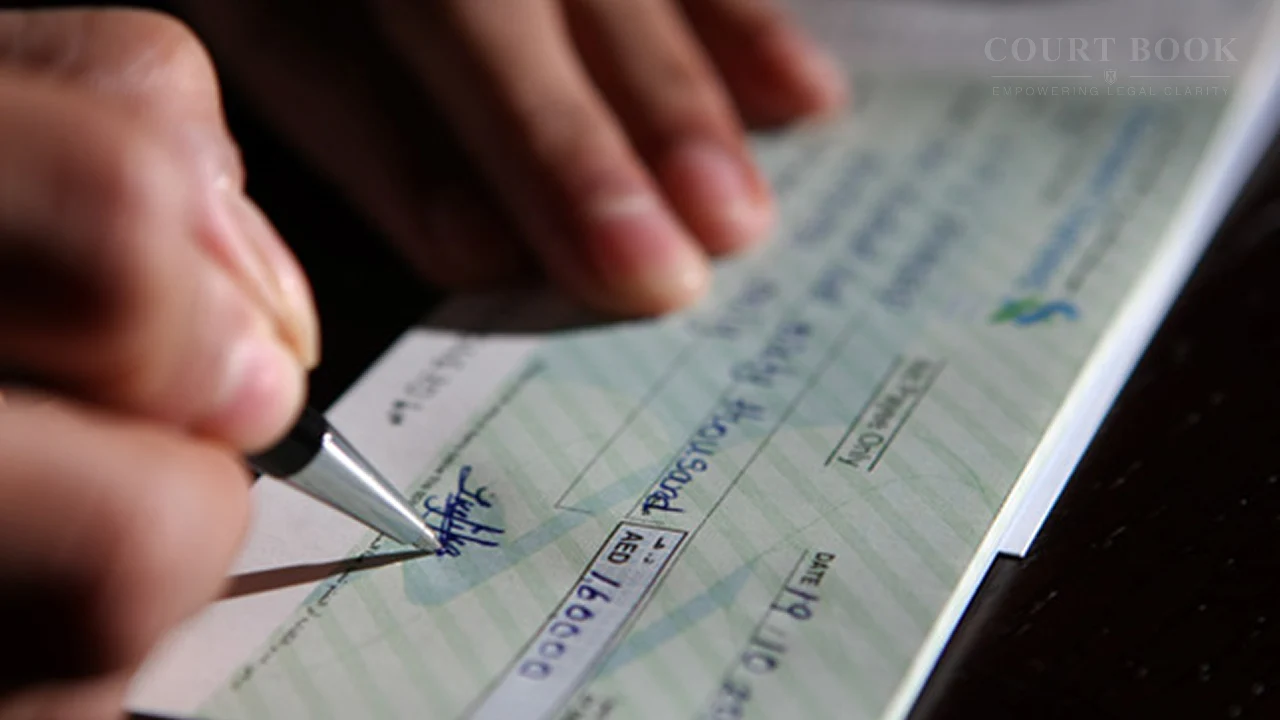
The Punjab and Haryana High Court has dismissed a criminal revision petition filed by an accused in a cheque bounce case, refusing to interfere with a trial court order that denied his request to examine a handwriting and fingerprint expert. The court held that the application appeared to be an attempt to delay proceedings that were already at the final stage.
Justice Anoop Chitkara, while rejecting the plea, also emphasised the importance of mediation in cheque dishonour cases and directed that such disputes be referred to mediation at the earliest stage to promote faster resolution.
Background of the Case
The dispute arose from a complaint filed by Kulbir Singh under Section 138 of the Negotiable Instruments Act, which deals with the offence of cheque dishonour due to insufficient funds or similar reasons. The complaint alleged that a cheque for ₹19,49,230 issued by Sonu Kumar had bounced after the drawer stopped payment.
The complainant claimed that the cheque represented accumulated liability arising from business dealings between the parties.
During the trial before the Judicial Magistrate First Class (JMIC), Ludhiana, the accused sought permission to produce additional evidence. Specifically, he requested the court to allow examination of a handwriting and fingerprint expert to compare signatures on a Power of Attorney with those appearing in a notary register.
However, the trial court rejected this application on 3 October 2025, prompting the accused to approach the High Court by filing a revision petition.
Counsel for the petitioner argued that comparing the signatures through an expert was necessary to determine whether the Power of Attorney relied upon by the complainant actually contained the complainant’s genuine signature.
The petitioner also indicated that he was willing to attempt a settlement through mediation but insisted that the application for additional evidence should first be decided.
On the other hand, counsel for the complainant opposed the plea, stating that the trial was already nearing completion and the request was merely a tactic to delay a likely conviction.
They pointed out that the accused had already been granted 15 opportunities to conclude his defence evidence before filing the new application.
Read also:- Supreme Court Acquits Man in 2010 Rajasthan Murder Case Over Weak Evidence
Court’s Observations
After reviewing the record, the High Court agreed with the reasoning of the trial court.
The bench noted that the accused had not raised any allegation about forged or mismatched signatures during his statement recorded under Section 313 of the Criminal Procedure Code. The court observed that raising such a claim at a late stage of the trial suggested it was an afterthought.
“The accused did not take any such stand regarding forged signatures in his statement under Section 313 CrPC,” the court observed, indicating that the defence had changed its position late in the proceedings.
Read also:- Supreme Court Directs Centre to Frame No-Fault Compensation Policy for COVID-19 Vaccine Adverse Events
Another important factor was the nature of the document sought to be compared. The accused wanted the signatures on the Power of Attorney to be compared with those on a photocopy of the notary register, rather than the original record.
The court pointed out that meaningful comparison of signatures normally requires original documents, not photocopies.
Given these circumstances, the High Court concluded that the application was not justified and that the trial court had acted correctly in refusing it.
Court on Cheque Bounce Cases and Mediation
While dealing with the petition, Justice Chitkara also discussed the broader issue of cheque dishonour cases in India.
The court noted that cheques are widely used as a trusted method of deferred payment in commercial transactions and represent a promise that payment will be honoured when the cheque is presented. When such cheques bounce, it undermines financial trust and leads to legal disputes.
The judgment highlighted that offences under Section 138 of the Negotiable Instruments Act are primarily aimed at ensuring compensation to the payee rather than punishment alone.
“The predominant objective is recovery and compensation,” the court noted while explaining why mediation can often provide quicker and more practical outcomes than prolonged criminal trials.
Read also:- Supreme Court Refuses Specific Performance of 2002 Property Deal, Says Agreement Was Only Security for Loan
Referring to the Mediation Act, 2023, the court said mediation offers a platform for dialogue and settlement, helping parties resolve disputes without lengthy litigation.
Accordingly, the High Court directed that trial courts and sessions courts should ordinarily refer pending cheque dishonour cases to mediation once the accused has been served.
Final Decision
After examining the facts and arguments, the High Court found no illegality or error in the order passed by the Judicial Magistrate.
The court therefore dismissed the revision petition, while requesting the trial court to refer the matter to mediation. It added that if mediation does not produce results within 30 days, it would be treated as unsuccessful and the trial can continue.
Case Title:- Sonu Kumar vs Kulbir Singh
Case Number:- CRR-2873-2025 (O&M)
Judgment Pronounced On: 10 March 2026
Download Judgment

