

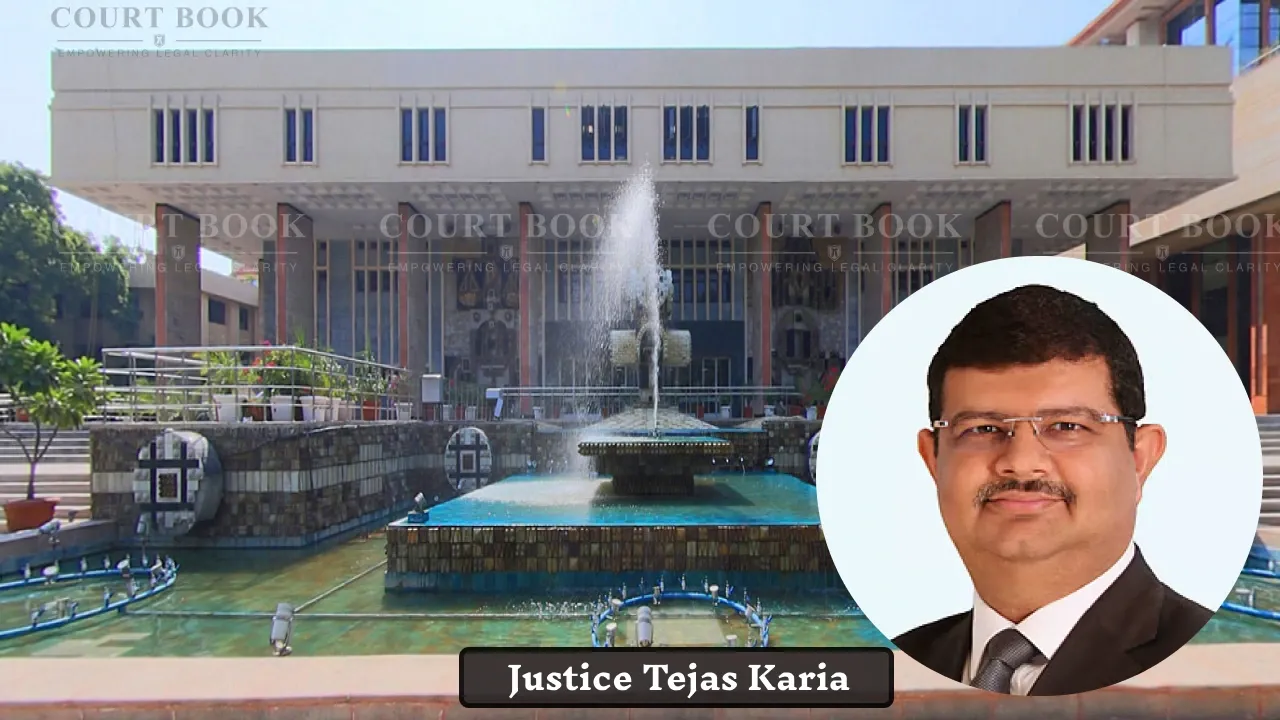
The Delhi High Court has declined to interfere with a notice issued by the Delhi Government proposing a Comptroller and Auditor General (CAG) audit of power distribution companies BSES Rajdhani Power Limited (BRPL) and BSES Yamuna Power Limited (BYPL).
Justice Tejas Karia held that the notice merely invited the companies to present their objections and did not amount to a final adverse decision. The court observed that judicial review at such a preliminary stage would be inappropriate.
Background Of The Case
The dispute arose after the Government of NCT of Delhi issued a notice on June 6, 2026 under Section 20(3) of the Comptroller and Auditor General (Duties, Powers and Conditions of Service) Act, 1971. The notice proposed entrusting the audit of the two BSES distribution companies to the CAG.
The proposed audit was linked to directions issued by the Supreme Court in a 2025 judgment concerning Regulatory Assets (RA), which represent unrecovered costs in electricity tariffs. The Supreme Court had directed regulatory commissions to undertake a strict and intensive audit to examine why distribution companies continued operating without recovery of such regulatory assets.
BSES challenged the notice before the Delhi High Court, arguing that it was contrary to earlier judicial decisions, including the Division Bench ruling in the URJA case and subsequent orders passed by the Appellate Tribunal for Electricity (APTEL).
BSES Arguments Before The Court
Senior Advocate Sandeep Sethi, appearing for the petitioners, argued that the notice was legally unsustainable and sought to revive a CAG audit that had already faced judicial scrutiny in earlier proceedings.
The companies contended that the Supreme Court's directions required an examination of regulatory failures and the conduct of the Delhi Electricity Regulatory Commission (DERC), rather than an audit of the distribution companies themselves.
They also argued that APTEL had already directed the appointment of a Chartered Accountant for carrying out the audit exercise and that the Delhi Government could not indirectly reintroduce a CAG audit through a fresh process.
Government's Stand
The Delhi Government opposed the petition, maintaining that the notice was only a show-cause notice and did not affect any legal rights of the petitioners.
The Government submitted that a CAG audit was necessary in public interest to examine the circumstances behind the long-standing accumulation of regulatory assets. It argued that consumers ultimately bear the impact of tariff-related decisions and therefore transparency and accountability were essential.
The Government further contended that the earlier URJA judgment arose in a different factual context and did not prohibit a CAG audit in all circumstances.
Court's Observations
The High Court first addressed the maintainability of the petition and reiterated the settled principle that courts ordinarily do not interfere with show-cause notices.
"The Impugned Notice does not record any adverse finding against the Petitioners, nor does it determine any right or liability,"
the court observed.
Justice Karia noted that the notice merely granted the companies an opportunity to submit their representation before any decision on audit entrustment could be taken.
The court also rejected BSES's argument that the Supreme Court's Regulatory Asset judgment contemplated only an audit of the regulator.
"The scope of the audit is sufficiently broad to include all relevant circumstances that may explain the accumulation of Regulatory Asset over a prolonged period,"
the court observed.
On the issue of the earlier URJA judgment, the court held that the previous ruling was delivered in a substantially different legal and factual setting. The present audit, it said, was linked to compliance with the Supreme Court's Regulatory Asset directions rather than routine tariff regulation.
"The proposed audit is prima facie in public interest as the decision on Regulatory Asset would directly affect the consumers of the Petitioners,"
the bench noted.
Court's Decision
Dismissing the writ petition, the Delhi High Court held that the challenge was premature because the impugned notice only initiated the hearing process and did not impose any adverse consequences.
The court clarified that the Supreme Court's Regulatory Asset judgment does not prohibit an audit of the distribution companies and does not bar the possibility of such an audit being conducted by the CAG, provided the statutory requirements of the CAG Act are followed.
Accordingly, the petition was dismissed, while leaving it open for the competent authority to consider all objections raised by the companies during the hearing process before taking a final decision on the proposed audit.
Case Details:
Case Title: BSES Rajdhani Power Limited & Anr. v. Government of NCT of Delhi & Ors.
Case Number: W.P.(C) 8283/2026
Judge: Justice Tejas Karia
Decision Date: June 22, 2026


