

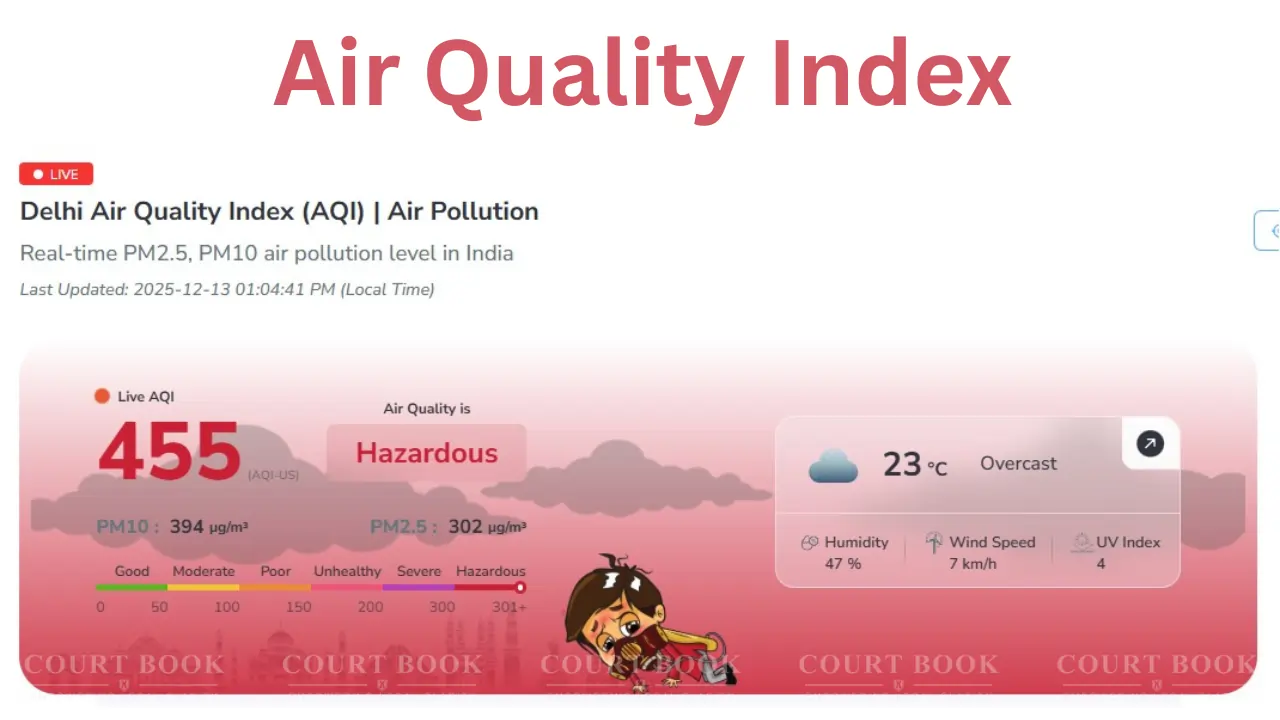
Inside Courtroom 123 of the Delhi High Court, the discussion on Tuesday morning moved swiftly from air quality charts to service rules. A petition filed by a scientist working with a government telecom body raised concerns many Delhi residents quietly share every winter-dust, pollution, and the struggle to breathe at work. But by the end of the hearing, the court drew a firm line between environmental regulations and individual service rights, disposing of the plea.
हिंदी में पढ़ें
Background
The petitioner, Shubham Verma, a Scientist-E with the Centre for Development of Telematics (C-DOT), had approached the court alleging that construction and demolition activities were continuing within his office premises despite restrictions under the Graded Response Action Plan (GRAP). He told the court that dust from the site, combined with Delhi’s already hazardous Air Quality Index, triggered respiratory problems.
Verma sought multiple directions-from stopping construction and conducting inspections to allowing him to work from home and treating days he stayed away due to pollution as “on duty.” He also pointed out that GRAP guidelines issued in November spoke of allowing 50% staff to work from home. His representations to authorities, he said, went unanswered.
During an earlier hearing, the employer offered to transfer him to Bengaluru as an immediate solution. However, the petitioner declined the offer, citing personal difficulties, and pressed for relief from the court instead.
Court’s Observations
Justice Sachin Datta, speaking for the court, was clear that while pollution control measures are important, they cannot be stretched beyond their intent. The bench observed that GRAP and related guidelines are “regulatory measures” meant to curb pollution and empower authorities like the Commission for Air Quality Management (CAQM), not to rewrite service conditions of employees.
“The objective behind implementation of GRAP cannot be construed as to create an enforceable personal right upon individual employees,” the court noted, adding that these norms impose obligations on institutions and citizens, not special entitlements for staff.
On the work-from-home argument, the judge pointed out that the relevant GRAP clause only gave the Central Government discretion to allow WFH-it was not mandatory. The court also recorded that GRAP Stage III, under which expanded WFH was discussed, had already been revoked on November 26. In such a situation, the petitioner’s claim, the court felt, had no legal footing.
Decision
Finding no merit in the plea, the Delhi High Court declined to issue directions that would, in effect, alter service conditions under the garb of pollution compliance. However, acknowledging the health concerns raised, the court left one door open-if medical reasons persist, the petitioner may request a transfer out of Delhi, which the employer should try to consider favourably. With these observations, the petition was disposed of.
Case Title: Shubham Verma vs Centre for Development of Telematics (C-DOT) & Ors.
Case No.: W.P.(C) 18217/2025
Case Type: Writ Petition (Civil)
Decision Date: 09 December 2025
Download Judgment

