

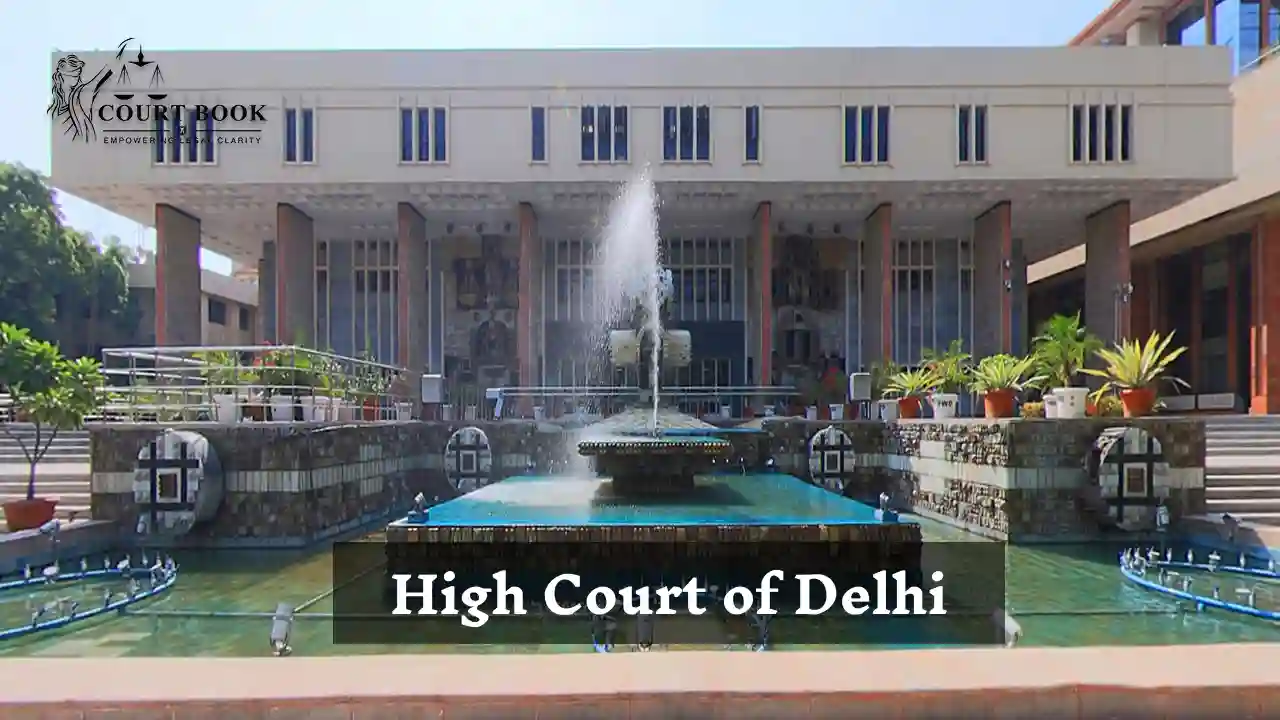
The Delhi High Court has refused to interfere with a trial court order that protected a former High Court judge from being compelled to share personal information with the Central Bureau of Investigation (CBI). The court held that the investigating agency cannot use Section 91 of the Criminal Procedure Code (CrPC) to force an accused to create or supply information that may amount to self-incrimination.
The judgment was delivered by Justice Neena Bansal Krishna on January 12, 2026, in a case arising out of a corruption probe linked to alleged judicial misconduct.
Read Also:-Kerala High Court Quashes Suicide Abetment Case, Says Angry Words Alone Don’t Prove Criminal
Background of the Case
The case stems from an FIR registered by the CBI in December 2019 against former Chhattisgarh High Court judge Justice I.M. Quddusi and others. The agency alleged a conspiracy to obtain a favourable court order for a medical college that had been barred by the Ministry of Health.
During the investigation, the CBI issued a notice under Section 91 of the CrPC asking Justice Quddusi to provide:
• Details of mobile numbers used in 2017
• Bank account details and statements
• Names of drivers and domestic staff employed during a specific period
The former judge challenged this notice before the Special CBI Court, arguing that it violated his constitutional right against self-incrimination under Article 20(3) of the Constitution.
The Special Court accepted his plea and set aside the notice. The CBI then approached the Delhi High Court seeking reversal of that order.
Read Also:-Delhi High Court Rejects Sameer Wankhede’s Defamation Suit Against Netflix Show ‘Ba*ds
CBI’s Argument Before the High Court
The CBI argued that the information sought was purely factual and non-incriminating. According to the agency:
• Section 91 allows investigators to seek documents necessary for investigation
• The requested details were “public in nature”
• The notice did not compel the accused to confess or testify
• Article 20(3) would not apply as no testimonial compulsion was involved
The agency also relied on past Supreme Court rulings which held that production of documents does not always amount to self-incrimination.
Defense Stand: Violation of Constitutional Protection
The respondent opposed the plea, stating that:
• Section 91 cannot be used against an accused
• The notice required him to recall, compile, and create information
• This amounted to testimonial compulsion
• If the CBI needed such details, it could obtain them from banks or service providers
Read Also:-UGC's 2026 Anti-Discrimination Rules Face Protest by Lawyers Near Allahabad High Court
The defense relied heavily on the Supreme Court ruling in State of Gujarat v. Shyamlal Mohanlal Choksi, which held that Section 91 does not apply to an accused person.
Court’s Observations
Justice Neena Bansal Krishna undertook a detailed examination of constitutional law and precedent.
The court observed:
“Section 91 is meant for production of existing documents, not for compelling an accused to create information based on memory.”
The judge clarified that while investigators can collect evidence from third parties, they cannot compel an accused to assist in building the case against himself.
The court further noted:
“The notice required the accused to apply his mind and prepare a statement. This goes beyond mechanical production and amounts to testimonial compulsion.”
Referring to the landmark rulings in Kathi Kalu Oghad and Shyamlal Choksi, the court explained that:
• Article 20(3) protects against forced disclosure of personal knowledge
• Section 91 cannot be used to extract such information
• The law draws a clear line between collecting existing documents and compelling answers
Read Also:-Supreme Court Sets Aside Odisha Land Dispute Orders, Says Section 47 CPC Misused After Decree
Court’s Final Decision
Dismissing the CBI’s petition, the Delhi High Court held:
• The notice under Section 91 was legally unsustainable
• It violated the protection against self-incrimination
• The trial court had correctly quashed the notice
• Investigators must use lawful methods such as third-party summons or interrogation under Section 161
The court concluded:
“The investigating agency cannot use Section 91 as a shortcut to compel an accused to furnish material that may later be used against him.”
With this, the CBI’s plea was dismissed and the trial court’s order was upheld.
Case Title: CBI v. I.M. Quddusi
Case Number: CRL.M.C. 1852/2021
Decision Date: January 12, 2026
Download Judgment

