

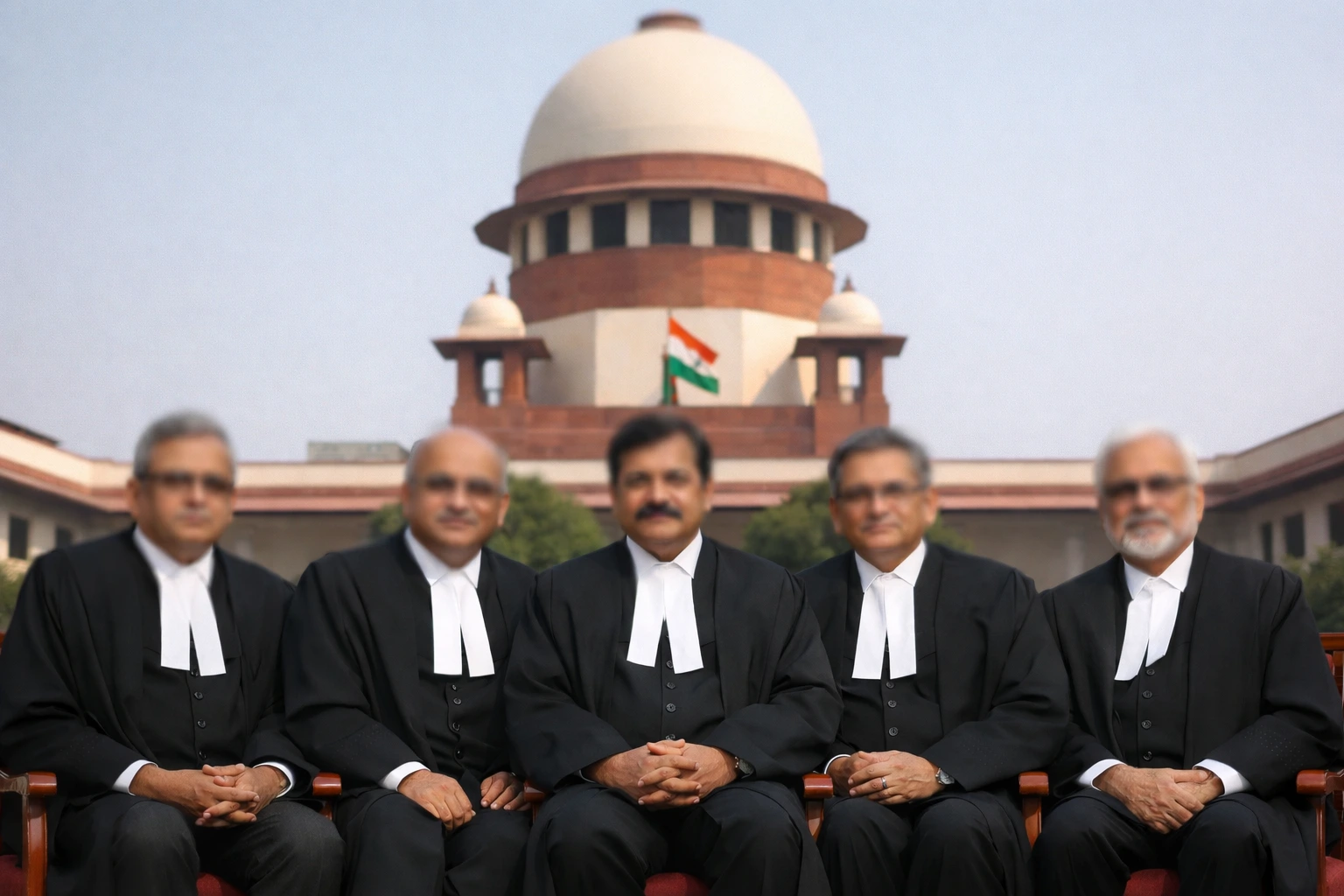
New Delhi: The year 2026 is shaping up to be a year of quiet but significant change for the Supreme Court of India, with five sitting judges scheduled to retire after reaching the age of superannuation. While retirements are a regular feature of the judiciary, the clustering of exits within a single year places fresh focus on judicial appointments and the need to maintain the court’s full working strength.
As of December 2025, the Supreme Court is operating at its sanctioned strength of 34 judges, including the Chief Justice of India. The upcoming retirements, spread between April and November 2026, will open five vacancies that must be filled in time to avoid disruption in the court’s functioning.
Five Judges Due to Demit Office
The judges set to retire in 2026 come from diverse High Court backgrounds and represent different regions of the country. Their exits will take place over a span of about eight months.
• Justice Rajesh Bindal is the first to retire, on 15 April 2026.
• Justice Pankaj Mithal is due to retire on 16 June 2026.
• Justice Jitendra Kumar Maheshwari will superannuate on 28 June 2026.
• Justice Sanjay Karol is scheduled to retire on 22 August 2026.
• Justice Satish Chandra Sharma will be the last to demit office, on 29 November 2026.
Each of these judges has served in multiple High Courts or held leadership roles such as Chief Justice before being elevated to the apex court. Their collective departure will mark the exit of considerable judicial experience within a relatively short time.
Why These Retirements Matter
The Supreme Court handles thousands of cases every year, ranging from routine appeals to matters involving constitutional interpretation and fundamental rights. For lawyers and litigants watching the court closely, bench strength is not just a number it directly affects how quickly cases are heard and decided.
Even a temporary dip in the number of judges can mean fewer benches sitting, longer waiting periods for hearings, and added pressure on existing judges. This is why retirements on this scale attract attention beyond the legal community.
The Role of the Collegium
The responsibility of filling these vacancies rests primarily with the Supreme Court Collegium, which recommends names for appointment, followed by approval from the Central Government. The process usually begins months in advance to ensure that new judges are ready to step in as soon as vacancies arise.
Legal observers note that 2026 will test how smoothly this mechanism works. Timely recommendations and prompt clearances will be essential to ensure that the court continues to function at full capacity.
There is also the question of balance. The retiring judges are linked to High Courts such as Allahabad, Punjab and Haryana, Madhya Pradesh, and Himachal Pradesh. Traditionally, the Collegium takes regional representation into account while making appointments, so these exits may influence the choice of successors.
For the general public, the concern is straightforward: delays. A fully staffed Supreme Court is better equipped to reduce pending cases and deliver timely justice. Any lag in appointments could slow down hearings, especially in complex or constitution-heavy matters.
At the same time, new appointments also bring fresh perspectives to the bench. Judicial transitions, when managed well, can strengthen the institution by blending experience with new approaches.
While 2026 may not bring dramatic courtroom moments linked directly to these retirements, it will quietly shape the future composition of the country’s highest court. How efficiently the vacancies are filled will reflect on the robustness of India’s judicial appointment process.
For now, all eyes remain on the Collegium’s calendar, as the Supreme Court prepares for a year of transition while striving to keep the wheels of justice turning without pause.


