

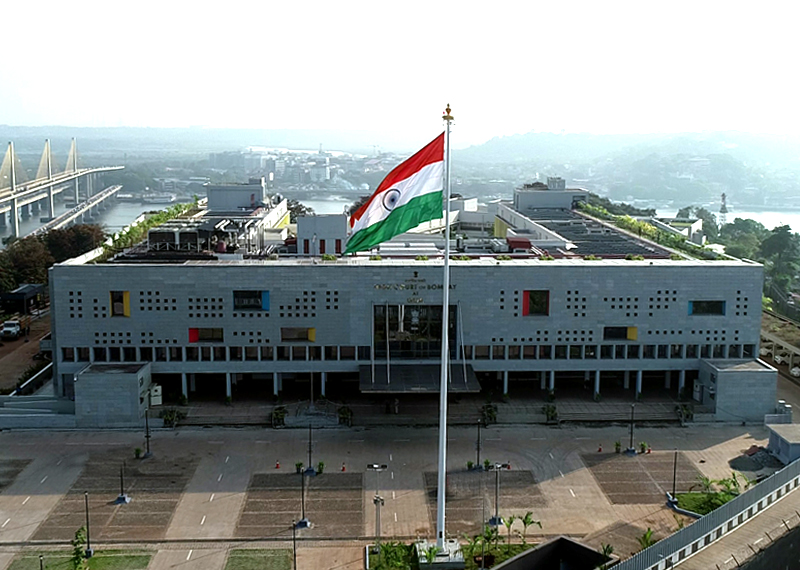
The Bombay High Court at Goa has examined a major challenge to the State’s 2023 iron ore dump policy, with environmental NGO Goa Foundation questioning the legality of allowing former mining lease holders to remove mineral dumps situated outside mining lease areas without any auction process.
The petition focused on Clause 2(2) of the “Policy for Regulating Iron Ore Dump Handling in the State of Goa, 2023,” arguing that the State could not hand over valuable mineral resources to former lessees without competitive bidding. The case also questioned whether dump mining could proceed without granting a proper mining lease.
Background of the Case
The matter arose from Goa’s long and controversial mining history. The court traced developments beginning from the Portuguese-era mining concessions, later converted into mining leases under Indian law after Goa’s liberation.
The judgment also referred to the large-scale illegal mining allegations investigated by the Justice M.B. Shah Commission. Following those findings, the Supreme Court in 2012 suspended mining operations in Goa and ordered inventoried mineral ores to be sold through e-auction.
The High Court noted that the Supreme Court, in the landmark Goa Foundation decisions, had repeatedly emphasized sustainable mining, environmental protection, and lawful allocation of natural resources.
What the 2023 Policy Says
Under Clause 2.1 of the 2023 policy, dumps situated outside lease areas and not approved in mining plans are treated as illegal and must be compulsorily auctioned by the Government.
However, Clause 2.2 creates an exception for inventoried dumps located on private land outside lease areas but shown in approved mining plans. In such cases, former lease holders are allowed to remove the dumps within five years after paying conversion fees, penalties, royalty, and meeting statutory conditions.
Goa Foundation challenged this exception, arguing that these mineral dumps were natural resources and could not be handed back to former lessees without auction.
Court’s Observations
The bench of Justice Suman Shyam and Justice Amit S. Jamsandekar examined earlier Supreme Court rulings dealing with disposal of natural resources and mining leases.
The High Court referred to the Supreme Court’s observations in Natural Resources Allocation, In Re, where it was held that auction is generally the preferred method when valuable natural resources are allocated for commercial profit.
The judges also took note of the Supreme Court’s 2018 ruling in Goa Foundation v. Sesa Sterlite Ltd., where the apex court said auction is not constitutionally mandatory in every situation, though decisions avoiding auction can still face judicial scrutiny under Article 14 of the Constitution.
While discussing Clause 2.2, the High Court observed that the provision effectively recognized the rights of erstwhile lease holders to remove inventoried dumps situated outside lease areas if those dumps were reflected in approved mining plans and statutory dues had been paid.
“The policy proceeds on the premise that instead of conducting auction of such dumps, the Government had permitted the lessees to remove the same within the specified time period,” the court noted while interpreting the provision.
Decision
The judgment was delivered on May 7, 2026, by the division bench of Justice Suman Shyam and Justice Amit S. Jamsandekar in The Goa Foundation v. State of Goa & Ors., PIL WP No. 44 of 2024.
The court extensively analyzed the legality of Goa’s dump policy, the Supreme Court’s earlier mining rulings, and the State’s authority in dealing with inventoried mineral dumps located outside mining lease areas before proceeding to determine the validity of the challenged provisions.
Case Details:
Case Title: The Goa Foundation v. State of Goa & Ors.
Case Number: PIL WP No. 44 of 2024
Judge: Justice Suman Shyam and Justice Amit S. Jamsandekar
Decision Date: 7 May 2026
Download Order

