The Supreme Court has upheld the Punjab and Haryana High Court’s decision to reject the bid of Micky Traders in a public tender for collecting user charges at mandi premises. The Court held that a higher financial bid cannot compensate for failure to satisfy an essential eligibility condition prescribed in the tender documents.
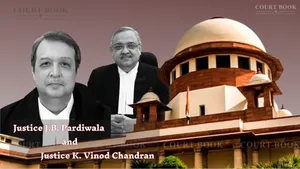
A Bench of Justice K.V. Viswanathan and Justice Alok Aradhe delivered the judgment on September 21, 2026, in appeals arising from the High Court’s order concerning the tender floated by the Market Committee, Ludhiana.
Background
The Market Committee had invited tenders for recovery and collection of user charges from vehicles using mandi infrastructure for the period from April 1, 2026, to March 31, 2027. The reserve price was fixed at ₹12.21 crore per year.
Micky Traders submitted the highest financial bid of ₹16.51 crore, while L.R.Y. Labour Contractor quoted ₹15.03 crore. Although Micky Traders’ technical bid was initially accepted and a Letter of Acceptance was issued, the competing bidder challenged its eligibility.
The dispute centred on an experience requirement under Clause 9(c)(a) of the Punjab State Agricultural Marketing Board’s enlistment instructions. The clause required completion certificates showing successful execution of annual collection of user charges or parking fees for the last two years up to December 31, 2025.
The High Court found that the required experience had not been established and quashed the Letter of Acceptance. Micky Traders and the Board challenged that decision before the Supreme Court.
The Supreme Court explained that courts generally exercise limited judicial review in tender matters. The authority issuing a tender is ordinarily considered the best judge of its own requirements, provided its interpretation remains consistent with the language of the tender and is not arbitrary.
The Bench found that the experience required under Clause 9(c)(a) was specialised. The tender concerned collection of substantial public revenue, involving activities such as ticketing, cash handling, reconciliation and accountability to a public authority.
The Court distinguished this from experience gained by organising cattle fairs. It observed:
"The two are not interchangeable, and the Committee's letter dated 09.03.2026, treating them as such without more, discloses no application of mind to the language of its own clause."
The Court also noted that the certificates relied upon by Micky Traders were issued in the names of other entities and did not establish the necessary connection with the bidder. No partnership deed or other material was produced to verify the claimed association.
The Supreme Court held that the interpretation adopted by the tendering authority was not consistent with the tender conditions. It further rejected the argument that the higher bid should be accepted because it would bring approximately ₹1.5 crore more revenue.
"Revenue considerations cannot cure ineligibility. Bids can be compared only among bidders who are eligible to be compared in the first place," the Court held.
The Bench found no error in the High Court’s order and dismissed both appeals.
No order was made as to costs.