

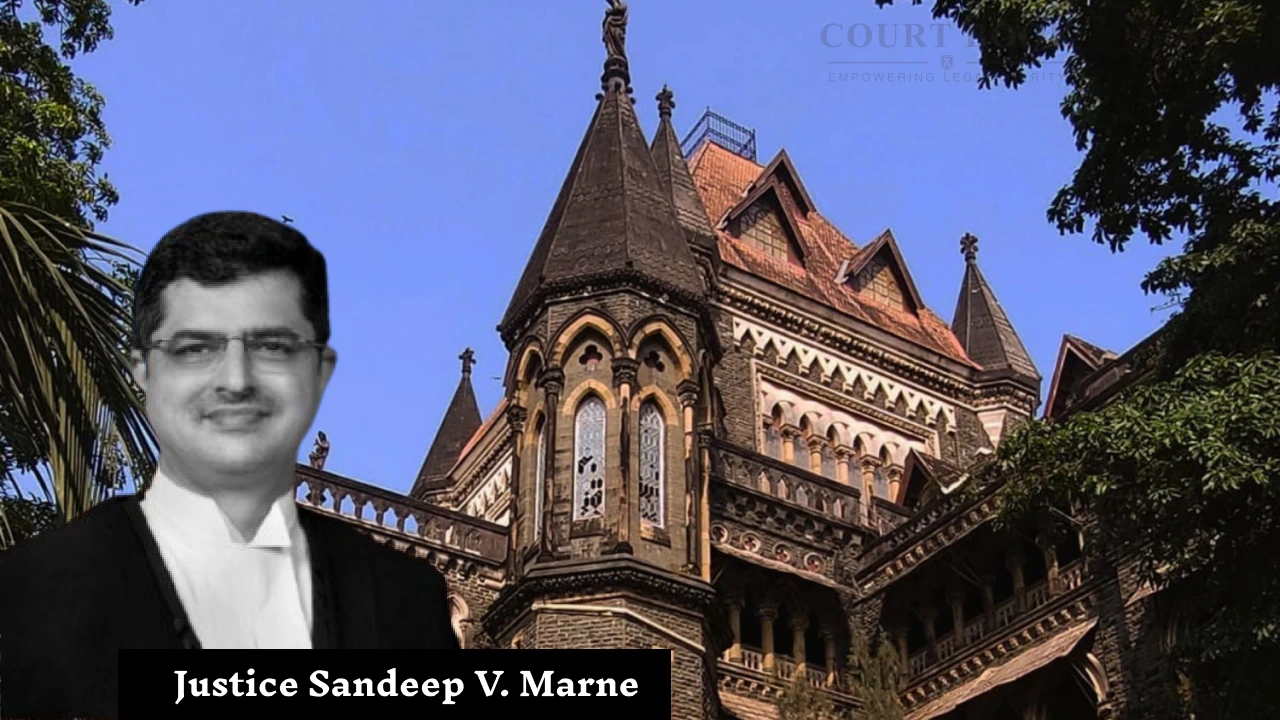
In a significant ruling for cooperative housing societies across Maharashtra, the Bombay High Court has held that a cooperative housing society formed only for managing residential buildings cannot be treated as an “industry” or an “establishment” under labour laws. The decision came while setting aside orders of the Labour Court and the Gratuity Controlling Authority that had allowed proceedings against a Mumbai-based housing society.
The judgment was delivered by Justice Sandeep V. Marne on January 5, 2026, in two writ petitions filed by Apsara Co-operative Housing Society Ltd.
Background of the Case
Apsara Co-operative Housing Society Ltd., registered under the Maharashtra Co-operative Societies Act, had employed Vijay Shankar Singh as its Building Manager in August 2013. His services were terminated in October 2022.
Read also:- Allahabad HC Flags Judicial Misuse, Directs Home Restoration and ₹1 Lakh Compensation
After termination, Singh approached two different forums. He filed an application before the Labour Court under the Industrial Disputes Act seeking recovery of ₹3.87 lakh towards bonus and leave wages for three financial years. Separately, he moved the Controlling Authority under the Payment of Gratuity Act claiming ₹4.67 lakh as gratuity for nearly nine years of service.
The society objected at the threshold. It argued that a cooperative housing society does not carry on any trade or business and therefore cannot be treated as an “industry” or an “establishment.” On January 17, 2024, both objections were rejected, prompting the society to approach the High Court.
Read also:- Supreme Court Rejects NAK Engineering’s Impleadment Plea in Long-Running Mumbai Service Charges Suit
Key Issues Before the Court
The High Court framed two central questions:
• Whether a cooperative housing society is an “industry” under the Industrial Disputes Act.
• Whether such a society is an “establishment” under the Maharashtra Shops and Establishments Act, making it liable under the Payment of Gratuity Act.
Court’s Observations
Justice Marne noted that cooperative housing societies are created by flat owners for collective management of their building and common amenities. They are not formed to carry on trade, business, or commercial activity.
Read also:- Madhya Pradesh HC Backs Biological Father's Right, Orders School to Add His Name in Child’s Academic Records
“The predominant purpose of a housing society is maintenance of the building for personal use of its members,” the court observed, adding that employing staff for security, housekeeping, or management does not convert such activity into a commercial venture.
The court examined arguments that the society earned income by permitting telecom towers on its terrace and by operating a clubhouse. Rejecting this, the bench stated that such incidental income only helps reduce maintenance charges and does not amount to systematic commercial activity.
Referring to earlier Supreme Court and High Court rulings, the judge said that societies rendering personal services to their members stand on the same footing as homeowners employing domestic staff.
On gratuity, the court explained that the Payment of Gratuity Act applies only to establishments engaged in business or trade.
Read also:- Supreme Court Restores ₹3.73 Lakh Compensation in Driver Death Case, Overturns Telangana HC Order
“A residence does not become an establishment merely because employees are engaged for its upkeep,” the bench noted, extending the same logic to collective residential bodies like housing societies.
Decision
Allowing both writ petitions, the High Court set aside the Labour Court’s order as well as the decision of the Gratuity Controlling Authority. The applications filed by the former manager under the Industrial Disputes Act and the Payment of Gratuity Act were dismissed as not maintainable.
The court concluded that Apsara Co-operative Housing Society Ltd. is neither an “industry” nor an “establishment” under the applicable laws, and therefore labour and gratuity proceedings against it cannot continue. No costs were imposed.
Case Title:- Apsara Co-operative Housing Society Ltd. vs Vijay Shankar Singh
Download Order

