

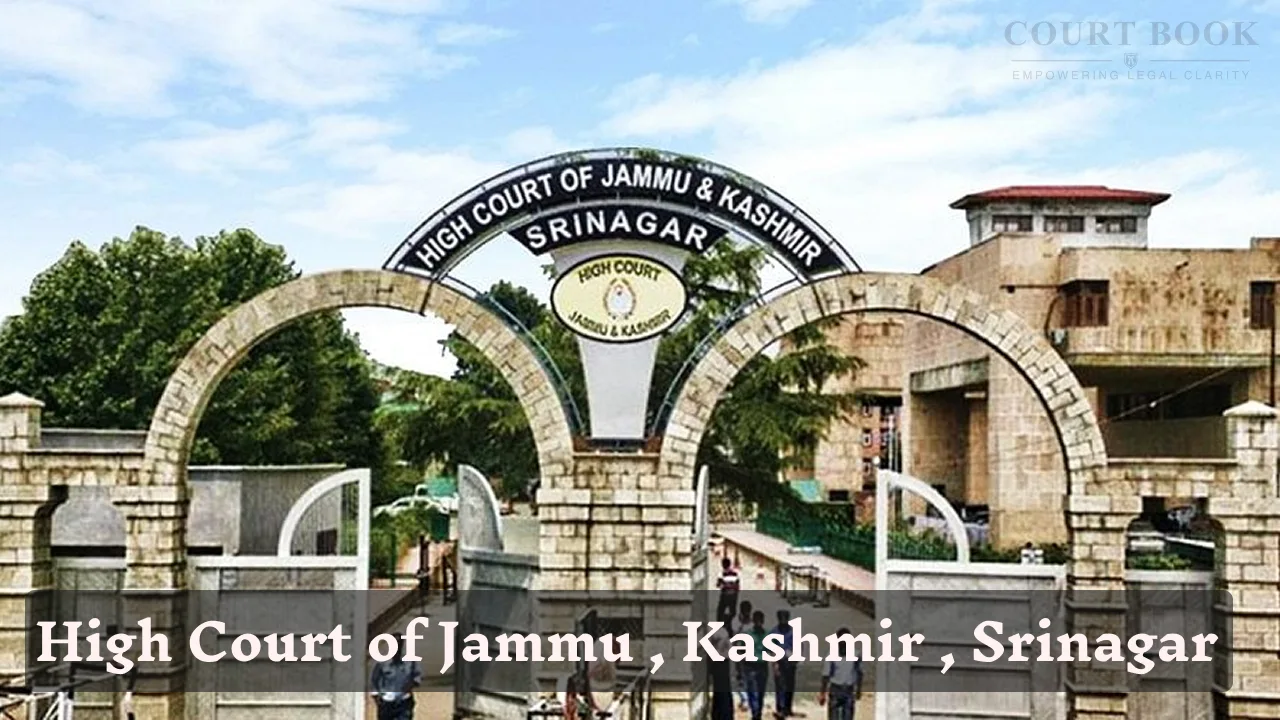
The High Court of Jammu & Kashmir and Ladakh has clarified that criminal prosecutions linked to alleged irregularities under the now-invalidated Roshni Act can continue if corruption charges are involved. Delivering a detailed ruling across multiple connected petitions, the court held that declaring the Roshni Act unconstitutional does not automatically shield public officials or beneficiaries from criminal liability under anti-corruption laws.
Background of the Case
The petitions arose from allegations concerning the implementation of the Jammu and Kashmir State Lands (Vesting of Ownership to the Occupants) Act, 2001-popularly known as the Roshni Act. The law aimed to grant ownership rights to people occupying state land in exchange for payments, with the funds meant to finance power projects in the region.
However, in 2020, a Division Bench of the High Court struck down the Roshni Act, declaring it unconstitutional and void from the outset. It also directed the Central Bureau of Investigation (CBI) to probe alleged large-scale illegal transfers of state land and prosecute those responsible.
Following these directions, multiple public servants and beneficiaries challenged the criminal proceedings against them. Their primary argument was that since the Roshni Act itself was declared void ab initio-meaning it is treated as if it never existed-any prosecution linked to it should also fail.
Key Legal Question
Justice Sanjay Dhar examined whether criminal prosecution for corruption could continue when the statute under which land ownership was granted has already been declared invalid.
The court framed the central issue as whether proceedings under the Jammu & Kashmir Prevention of Corruption Act could survive despite the annulment of the Roshni Act.
Court’s Observations
The High Court ruled that the invalidation of the Roshni Act does not erase possible criminal misconduct. The bench stressed that the accused were not being prosecuted under the Roshni Act itself, but for alleged offences under the Prevention of Corruption law.
“The mere fact that the Roshni Act has been declared unconstitutional would not save their actions,” the court observed, adding that public servants accused of accepting illegal gratification cannot escape prosecution merely because the enabling legislation was later struck down.
The court further clarified that even if land transferred under the Act is returned to the State, that would not wipe out criminal liability. It stated that restitution of benefits does not nullify the offence if the illegal act has already occurred.
Rejecting arguments based on Article 20(1) of the Constitution, which prohibits punishment for acts that were not offences at the time they were committed, the court said the alleged offences relate to corruption laws that were in force when the actions occurred.
Findings in Individual Petitions
Charge-Sheet Quashed in One Case
In the petition filed by Mohammad Showkat Choudhary, the court found insufficient evidence of wrongdoing. The prosecution had alleged that ownership rights were wrongly granted to him under the Roshni scheme.
After examining documents, including power-of-attorney records and revenue reports, the court concluded that the petitioner was in possession of the land in his own capacity and not merely as an agent of the original lessee.
The court also held that discrepancies in survey numbers appeared to be clerical errors rather than evidence of fraud.
“The charge-sheet does not disclose commission of any offence,” the court held while quashing the proceedings against the petitioner.
Other Petitions Dismissed
In another set of petitions filed by Altaf Hussain Khan and others, the High Court refused to interfere with the prosecution.
The CBI alleged that the beneficiaries were not occupying the state land on the crucial cut-off date required under the Roshni Act. According to investigation records, supporting documents such as agreements and power-of-attorney were executed after the statutory deadline.
The court noted that official reports available prior to the beneficiaries’ application did not confirm their possession of the land.
Holding that the issue required examination during trial, the court said there was enough material to suggest possible misuse of official position and conspiracy between officials and beneficiaries. Consequently, the petitions were dismissed.
Decision
The High Court ruled that the declaration of the Roshni Act as unconstitutional does not invalidate corruption prosecutions linked to its implementation. While one charge-sheet was quashed due to lack of evidence, several other petitions were dismissed, allowing criminal proceedings to continue.
Case Title: Mushtaq Ahmad Bakshi & Ors. vs CBI & Ors.
Case No.: CRM(M) No. 308/2024 & Connected Matters
Decision Date: 30 January 2026
Download Judgment

