

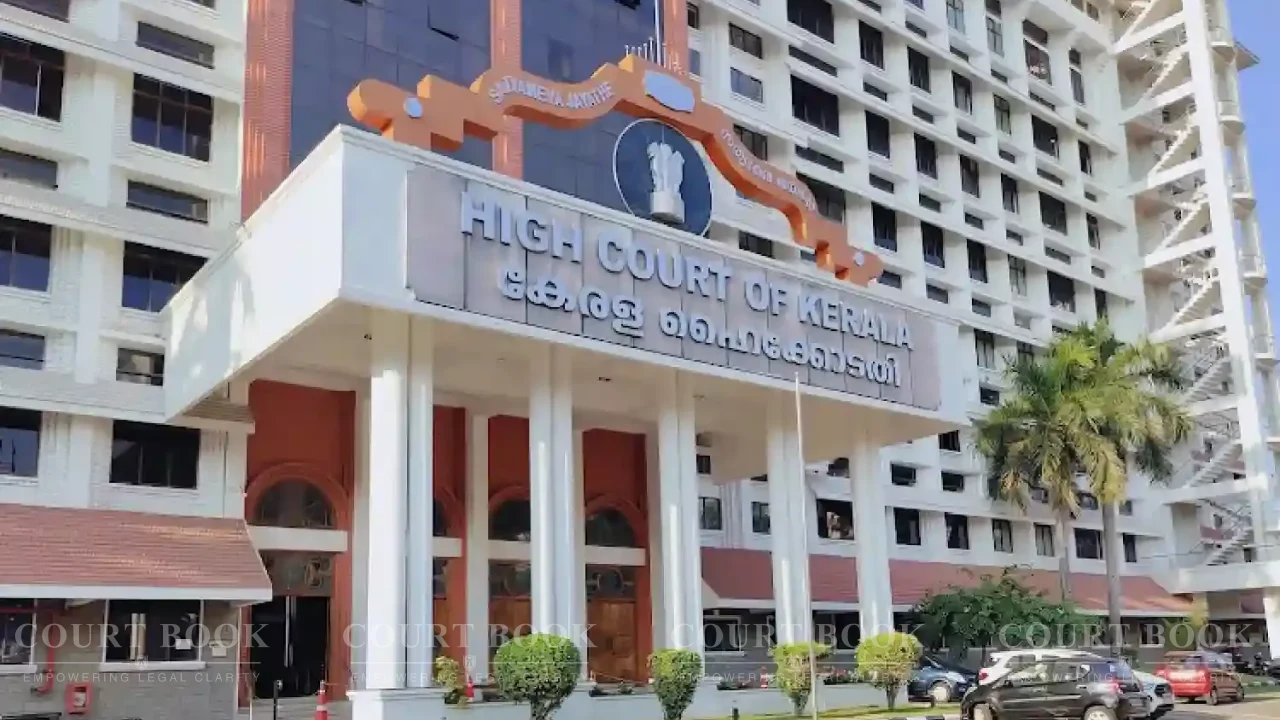
The corridors of the Kerala High Court were unusually attentive on Friday as Justice Kauser Edappagath wrapped up a clutch of writ petitions that had been dragging on for nearly a decade. At the heart of the matter was a question that affects hundreds of landowners across the Malabar region: who really owns the minerals under private land, and who gets to collect royalty for them?
हिंदी में पढ़ें
The judgment, running into several detailed pages, attempts to bring closure to conflicting claims that arose after the State stepped in with a new law in 2021.
Read also:-Himachal Pradesh High Court Upholds Bus Driver’s Acquittal, Says Mechanical Brake Failure Ruled Out Rash Driving Allegations in 2007
Background
The cases were filed by quarry owners, brick manufacturers, and landholders from Kannur, Malappuram, Kozhikode, and Palakkad. Most of them had extracted granite, earth, or clay from their own properties, believing-based on earlier Supreme Court rulings-that minerals in the former Malabar area belonged to the landowner.
Trouble began when the Mining and Geology Department issued demand notices, asking them to pay royalty, mineral value, and penalties for what the State described as “unauthorised extraction.” Matters became more complicated after the Kerala Minerals (Vesting of Rights) Act, 2021, which vested all mineral rights in the State with retrospective effect from December 30, 2019.
The petitioners argued that this law took away their property without compensation and violated constitutional protections. The State, on the other hand, maintained that regulation and royalty were unavoidable, even if the land was privately owned.
Read also:-Jharkhand High Court Grants Final Surrender Window to Sourav Bardhan in ED Case, Modifies Earlier Bail Order Citing Supreme Court Law
Court’s Observations
Justice Edappagath traced the history patiently, starting from colonial-era proclamations to modern constitutional law. The court noted that minerals are indeed “property” and that taking away mineral rights amounts to depriving a landowner of part of their land.
“The issue,” the bench observed, “is not merely ownership, but the authority of the State to regulate extraction in the larger public interest.” The judge pointed out that Article 300A of the Constitution allows deprivation of property by authority of law, and compensation is not automatic in every case.
The court rejected the argument that the 2021 Act was unconstitutional merely because it did not provide compensation. It held that the legislature was competent to enact the law and that vesting mineral rights in the State was a policy decision aimed at uniformity across Kerala.
At the same time, the court made an important distinction on timing. Royalty demands for extraction made before the 2021 law came into force could not be sustained in the Malabar area, where mineral ownership earlier lay with the landowner.
Read also:-Supreme Court steps in Punjab fraud case, issues notice and grants interim bail protection to Harjit Kaur against possible arrest
Decision
In its final order, the High Court upheld the constitutional validity of the Kerala Minerals (Vesting of Rights) Act, 2021, including its retrospective operation. It ruled that after December 30, 2019, the State has the right to demand royalty and regulate mineral extraction, even on private land.
However, the court set aside royalty and mineral cost demands relating to extraction carried out before that date in the Malabar region. The connected writ petitions were disposed of with these directions, bringing a long and messy legal battle to a close.
Case Title: Tutu Jose & Others vs State of Kerala & Others
Case No.: WP(C) No. 36843 of 2015 and connected cases
Case Type: Writ Petition (Civil)
Decision Date: 19 December 2025


