

Introduction
The Allahabad High Court has set aside orders summoning two men to face trial for murder, observing that the complaint version suffered from significant inconsistencies and material improvements that were not properly examined before the accused were summoned.
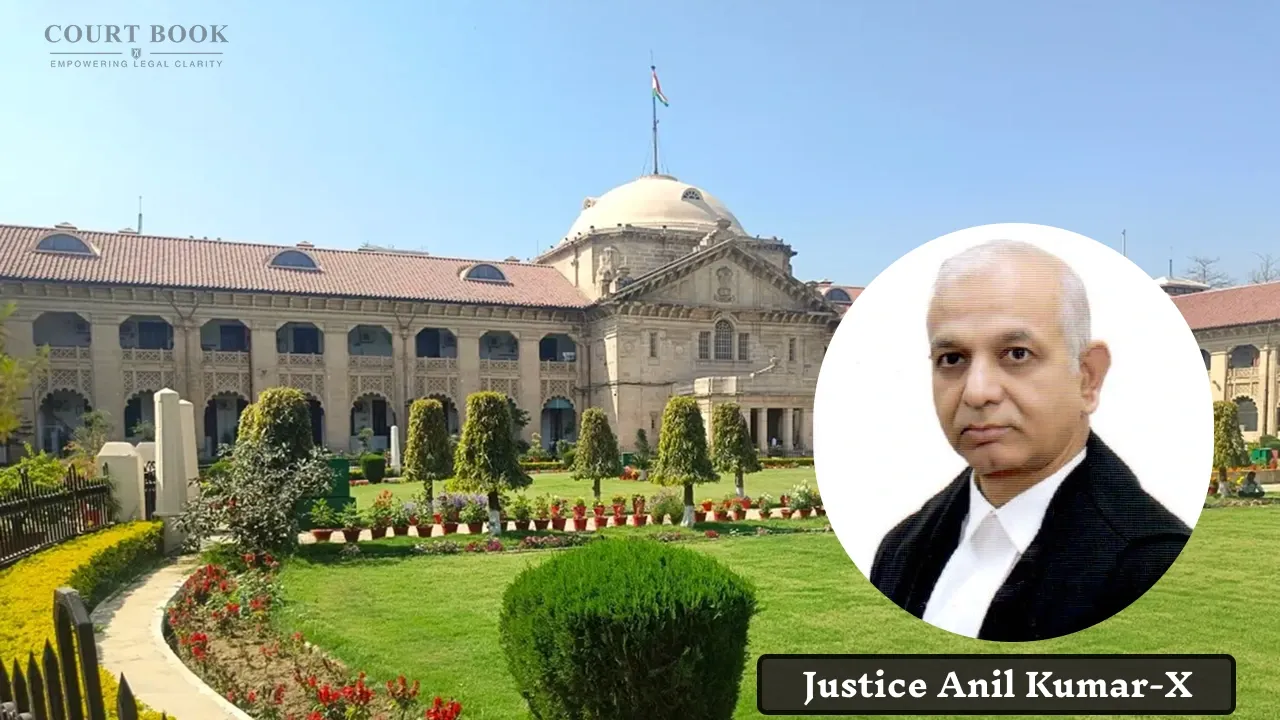
Justice Anil Kumar-X delivered the judgment while allowing a petition filed by Lala and another challenging the summoning order passed by the Chief Judicial Magistrate, Bulandshahr, and a subsequent revisional order affirming it.
Background of the Case
The case arose from the death of Rahul in Bulandshahr district in November 2013. According to information initially provided to the police by a village chowkidar, Rahul had allegedly consumed liquor and fallen from a roof, suffering injuries that later proved fatal.
However, Rahul’s brother subsequently lodged an FIR alleging that Rahul had been murdered by Lala and Mahesh after being made to consume liquor and assaulted. Following investigation, the police filed a final report, concluding that no case was made out against the accused.
Dissatisfied with the police findings, the informant filed a protest petition. The Magistrate treated it as a complaint case, recorded statements of witnesses, and eventually summoned the accused to face trial under Section 302 of the Indian Penal Code.
Arguments Before the Court
Counsel for the petitioners argued that the police investigation had found Rahul’s death to be the result of an accidental fall while intoxicated. It was also submitted that no witness had actually seen the alleged murder and that the statements relied upon by the complainant were based on suspicion or hearsay.
The petitioners further pointed out that an alleged motive involving ₹35,000 said to have been in Rahul’s possession was never mentioned in the FIR and surfaced only during later statements recorded in the complaint proceedings.
On the other hand, the State and the private respondent contended that at the summoning stage the court only needs to determine whether a prima facie case exists. They argued that witness statements indicated Rahul was last seen with the petitioners and that the missing money constituted an incriminating circumstance.
Court’s Observations
After examining the record, the High Court found several weaknesses in the complaint version.
The Court noted that Rahul’s body was found outside the house of another person, yet neither the investigation nor the complaint proceedings explained how he reached that location if he had allegedly been assaulted elsewhere.
Justice Anil Kumar-X observed that the allegations regarding Rahul carrying ₹35,000 and the accused allegedly targeting that money did not appear either in the FIR or in the protest petition. These facts emerged for the first time during witness statements recorded later.
The Court observed that such omissions were significant because a protest petition converted into a complaint becomes the foundation of the case.
“The introduction of such facts for the first time during enquiry amounts to a material improvement and raises serious doubts regarding the genuineness of the accusation,” the Court observed.
The Court also questioned the reliability of a witness who claimed to have seen the assault but also stated that the accused later confessed before him. The judgment described this version as unnatural and requiring careful scrutiny.
Important Guidelines for Magistrates
The High Court used the case to underline broader principles governing protest petitions and complaint proceedings after a final report is filed by police.
The Court stressed that in serious offences such as murder, Magistrates should not mechanically convert a final report into a complaint case. Instead, they must carefully evaluate whether further investigation would better serve the interests of justice.
“The primary object of every criminal proceeding is discovery of truth,” the Court remarked while emphasizing the need for proper judicial application of mind before summoning an accused person.
The judgment also stated that Magistrates should closely examine witness credibility, contradictions, omissions and improvements before proceeding in grave criminal cases.
Decision
Holding that the summoning order was passed without proper scrutiny of the material on record, the High Court concluded that it suffered from non-application of mind.
Accordingly, the Court allowed the petition and set aside both the order dated January 20, 2024, passed by the Chief Judicial Magistrate, Bulandshahr, and the revisional order dated December 18, 2024.
Case Details
Case Title: Lala and Another v. State of U.P. and Another
Case Number: Matters Under Article 227 No. 680 of 2025
Judge: Justice Anil Kumar-X
Decision Date: June 3, 2026


