The Allahabad High Court has set aside disciplinary action taken against an Associate Professor of the Harish Chandra Research Institute (HCRI) in a workplace sexual harassment matter, holding that the Internal Complaints Committee (ICC) failed to follow the procedure prescribed under the Sexual Harassment of Women at Workplace (Prevention, Prohibition and Redressal) Act, 2013 (POSH Act). At the same time, the Court declined to reject the complaints outright, observing that the allegations were serious and required fresh consideration by the ICC.
Background of the Case
The petitioner, Dr. Tapas Kumar Das, an Associate Professor of Astrophysics at HCRI, challenged an order dated July 9, 2017, by which the Institute imposed the penalty of "censure" and prohibited him from supervising female students, post-doctoral fellows, or research associates.
The disciplinary action followed an inquiry by the Institute's Internal Complaints Committee after multiple women, including former students and researchers, submitted complaints alleging acts that they claimed amounted to sexual harassment at the workplace. The ICC concluded that the allegations were substantiated and recommended disciplinary measures, following which the Governing Council imposed the impugned penalty.
Petitioner's Challenge
Before the High Court, the petitioner argued that the ICC proceedings violated the mandatory safeguards under the POSH Act.
It was contended that many complaints were filed beyond the statutory limitation period prescribed under Section 9 of the Act, without recording reasons for extending the limitation. The petitioner also argued that the complainants' statements were never formally recorded, he was not given an opportunity to cross-examine the complainants or participate in an oral hearing, and the inquiry was completed without following the principles of natural justice.
Court's Observations
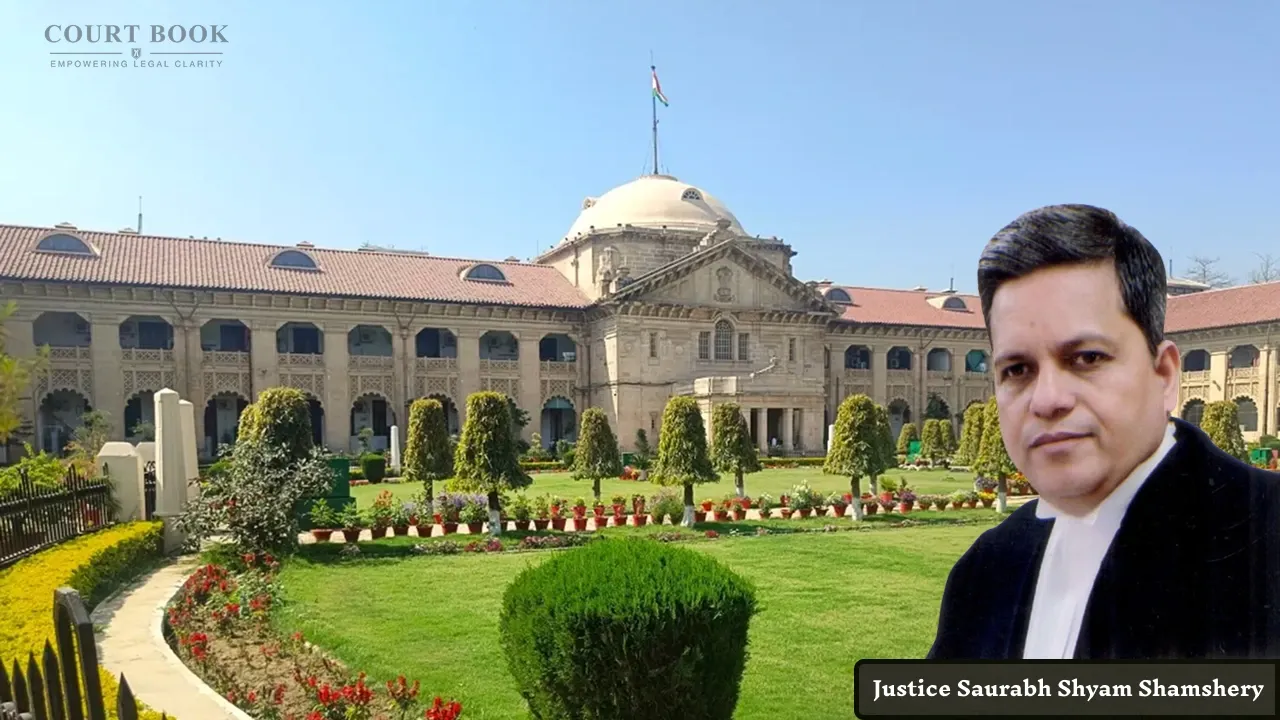
Justice Saurabh Shyam Shamshery observed that the POSH Act is a special legislation enacted to ensure protection against workplace sexual harassment and that its procedural safeguards must be followed carefully.
Examining the record, the Court found significant deficiencies in the inquiry process. It noted that there was no indication that the complainants' statements had been recorded before the ICC or that copies of such statements had been supplied to the petitioner. The Court also found no material showing that the petitioner had been given an opportunity to cross-examine the complainants or participate in an oral hearing.
"The Court finds that the procedure adopted by ICC was defective. Accordingly, its outcome, i.e., inquiry report as well as order passed by Council and Institute cannot sustain," the judgment stated.
Serious Allegations Cannot Be Ignored
While examining whether the matter should end because several complaints appeared to have been filed after the limitation period, the Court declined to reject them solely on that ground.
The Court referred to portions of the complaints placed on record, which included allegations of unwelcome physical contact, sexually coloured remarks, inappropriate messages, late-night meetings, and other conduct alleged to fall within the definition of sexual harassment under Section 2(n) of the POSH Act.
"The contents of aforesaid complaints are serious in nature and would fall within the four corners of definition of 'sexual harassment'," the Court observed.
The Court further noted that complaints of this nature are often not made immediately because the complainants may fear adverse consequences for their careers. It therefore held that the issue of limitation required a reasoned examination by the ICC rather than outright rejection.
Court's Decision
Allowing the writ petition in part, the Allahabad High Court set aside the ICC report, the Governing Council's decision, and the penalty order dated July 9, 2017.
The Court directed the Internal Complaints Committee to first examine afresh whether the complaints should proceed, after considering factors such as the timing of the alleged incidents, the dates on which the complaints were submitted, and any explanation offered for the delay.
Only if the ICC records a reasoned decision to proceed with the complaints will a fresh inquiry be conducted strictly in accordance with the POSH Act and the Rules, including compliance with the principles of natural justice.
The Court directed that the preliminary decision on maintainability be taken within eight weeks.
Case Details:
Case Title: Dr. Tapas Kumar Das v. Harish Chandra Research Institute and 3 Others
Case Number: WRIT - A No. 12736 of 2018
Judge: Justice Saurabh Shyam Shamshery
Decision Date: 07 May 2026