

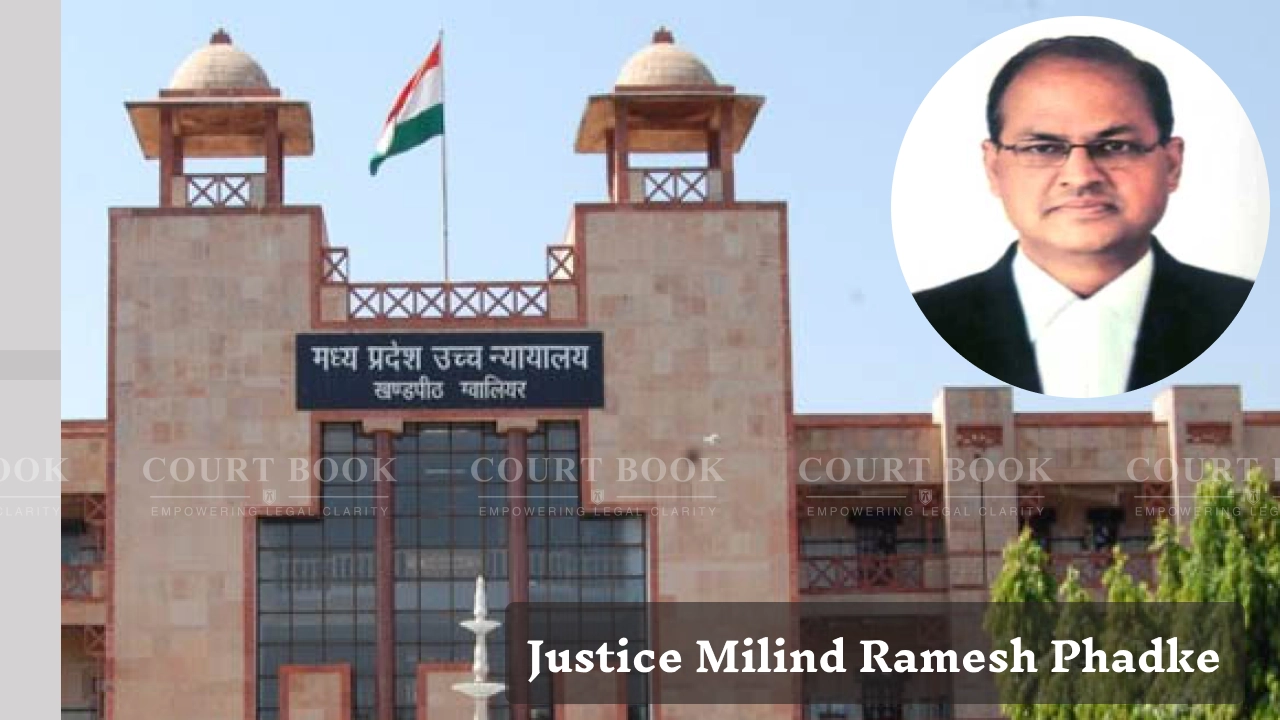
The Madhya Pradesh High Court has quashed an order confiscating a vehicle allegedly involved in an excise offence, ruling that the action could not survive after the vehicle owner was acquitted in the related criminal case. The Court observed that confiscation of property carries serious consequences and must be supported by a legally established offence.
Background of the Case
The petition was filed by Gaurav Verma challenging an order passed by the Collector, Bhind on January 22, 2025. The order had directed confiscation of his vehicle under Section 47-A of the Madhya Pradesh Excise Act, 1915.
According to the authorities, the vehicle had been used in connection with an alleged offence under Section 34(2) of the Excise Act in Crime No. 319/2020 registered at Umri Police Station in Bhind district. However, the criminal prosecution arising from the case later ended in acquittal after trial.
The petitioner argued that when the confiscation order was passed, the criminal trial was still pending and no court had determined whether any offence had actually been committed. He contended that the Collector exceeded his authority by effectively reaching a conclusion on the alleged offence before the criminal court decided the matter.
Justice Milind Ramesh Phadke noted that the criminal case was still pending when the confiscation proceedings were finalized. The Court held that the question of whether an offence had been committed falls within the jurisdiction of the criminal court, which must evaluate evidence and determine guilt or innocence.
The Court observed,
“The Collector, while exercising powers under Section 47-A of the Act, proceeded to record a finding that the offence had been committed and consequently ordered confiscation of the vehicle.”
The Court further noted that the petitioner had subsequently been acquitted by the competent criminal court after a full trial. Since the prosecution failed to establish the charge beyond reasonable doubt, the foundation on which the confiscation order rested no longer existed.
Emphasizing property rights, the bench stated that confiscation is a serious consequence affecting a citizen's proprietary interests and cannot be sustained merely on allegations that fail to withstand judicial scrutiny.
Allowing the writ petition, the High Court set aside the Collector's confiscation order dated January 22, 2025. The Court directed that all consequential actions taken pursuant to the order would also stand annulled.
The bench ordered that if the vehicle had not been disposed of, it should be released to the petitioner, subject to there being no other legal impediment. It also directed the authorities to restore and refund any amount appropriated from the Fixed Deposit Receipt furnished by the petitioner, along with consequential benefits in accordance with law.
The exercise has been directed to be completed preferably within sixty days from the production of a certified copy of the order.
Case Details
Case Title: Gaurav Verma v. State of Madhya Pradesh and Others
Case Number: Writ Petition No. 1037 of 2026
Judge: Justice Milind Ramesh Phadke
Decision Date: June 16, 2026


