

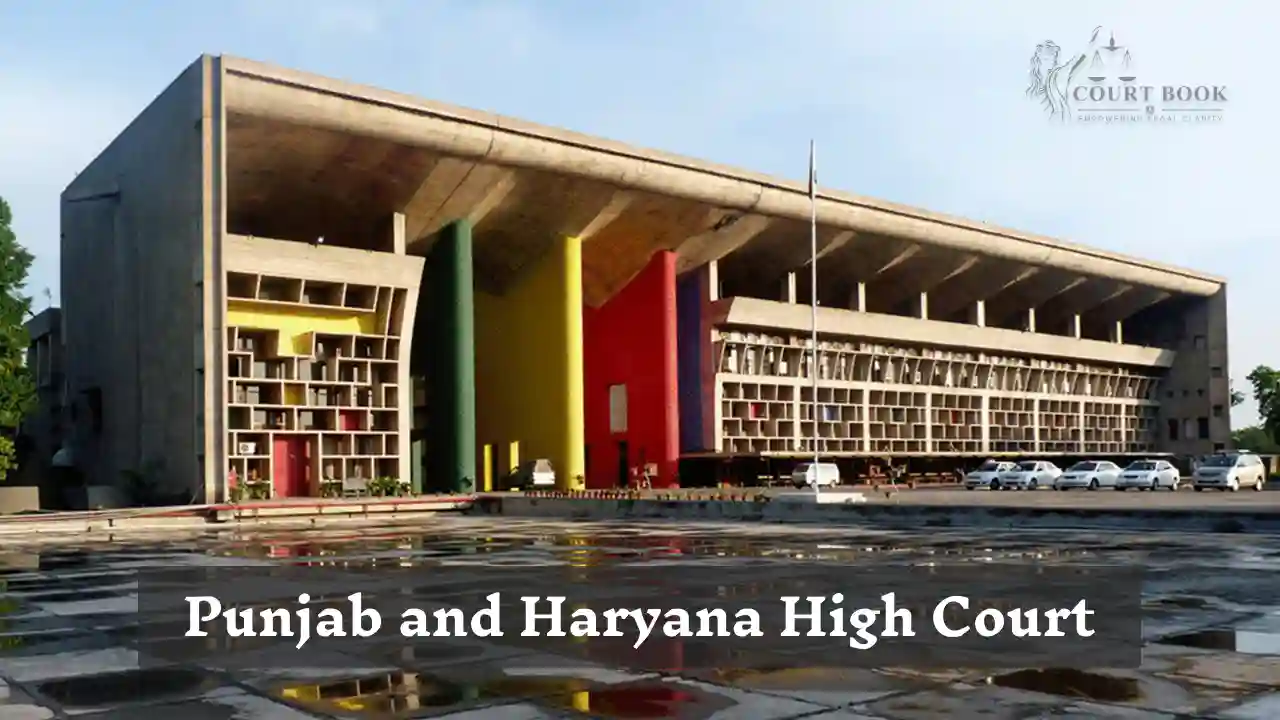
In a significant order touching upon the rights of persons with disabilities, the Punjab and Haryana High Court has expanded the scope of a housing dispute into a larger public interest matter.
The Court was hearing a petition filed by Kuldeep Singh Bhullar, who appeared in person and sought a structurally suitable house with accessibility modifications under the Rights of Persons with Disabilities Act, 2016.
Read also:-Two Women Killed in Acid Attack: Allahabad High Court Modifies Life Imprisonment
During the hearing, the Bench observed that the issue raised was not limited to one individual but had wider implications for similarly placed disabled employees across Punjab, Haryana and Chandigarh.
Background of the Case
As recorded in the order dated February 24, 2026 , the petitioner has been diagnosed with PPRP affecting his right lower limb. He suffers from wasting and shortening of the limb, quadriceps palsy, and deformities in the hip and knee joints. He has been certified with 60% permanent disability in relation to his right leg.
He approached the High Court seeking directions to Punjab Agricultural University and other authorities to allot him a house that is structurally suitable for his condition. He also sought directions for necessary modifications, repairs and accessibility adjustments in line with the Rights of Persons with Disabilities Act, 2016.
Appearing without a lawyer, the petitioner argued that public establishments are under a legal duty to ensure barrier-free access.
Read also:-Karnataka HC Makes Crowd Control SOP Binding Till New Law Is Enacted After Tragedy Concerns
Court’s Observations on Accessibility Law
Justice Kuldeep Tiwari examined the statutory framework under the 2016 Act. The Court referred in detail to Sections 40, 44 and 45 of the Act, which deal with accessibility standards for buildings and public infrastructure .
“The Act comprehensively addresses the grievance articulated in the present writ petition,” the Court noted.
Section 40 requires the Central Government to frame rules laying down standards for accessibility in physical spaces, transport and communication systems.
Section 44 makes it mandatory that no building plan can be approved unless it complies with those accessibility standards.
Section 45 fixes a timeline for making existing public buildings accessible.
The Court also referred to Rule 15 of the Rights of Persons with Disabilities Rules, 2017. This rule mandates compliance with the Harmonised Guidelines and Space Standards for Barrier-Free Built Environment issued by the Government of India in March 2016 .
By referring to these provisions, the Bench underlined that accessibility is not optional. It is a statutory obligation.
Wider Public Importance
While the petition initially concerned housing accommodation for one disabled employee, the Court found that the issue had broader consequences.
“The issue inhering the instant writ petition transcends the individual grievance of the petitioner and bears wider ramifications,” the order states .
The Bench observed that the matter concerns the rights of similarly situated physically disabled employees serving not only in Punjab but also in Haryana and the Union Territory of Chandigarh. This includes employees working in Boards, Corporations and Societies under government control.
To ensure complete adjudication, the Court directed that the States of Punjab, Haryana and the Union Territory of Chandigarh be impleaded as respondents through their respective Chief Secretaries. It also ordered that the concerned Principal Secretaries or Directors of the Departments of Social Justice and Empowerment be added as parties .
Appointment of Amicus Curiae
Taking note of the significance of the matter and the fact that the petitioner was arguing in person, the Court appointed senior advocate Mr. Kshitij Sharma and advocate Mr. Tahaf Bains as amicus curiae (friends of the court) to assist in the case .
The Registry was directed to supply them with copies of the entire case record.
Read also:-Delhi High Court Upholds Disability Pension for Air Force Veteran, Dismisses Union’s Plea
Decision
In its concluding direction, the Court ordered that the writ petition be treated as a Public Interest Litigation.
“Since the matter encompasses substantial elements of larger public interest, the instant writ petition shall be treated as a Public Interest Litigation,” the Court directed .
The case will now be placed before the Hon’ble Chief Justice on the administrative side for assignment to the appropriate Bench as per roster.
The order was passed on February 24, 2026.
Case Title: Kuldeep Singh Bhullar v. Punjab Agricultural University, Ludhiana & Ors.
Case No.: CWP-3200-2026
Decision Date: February 24, 2026


