

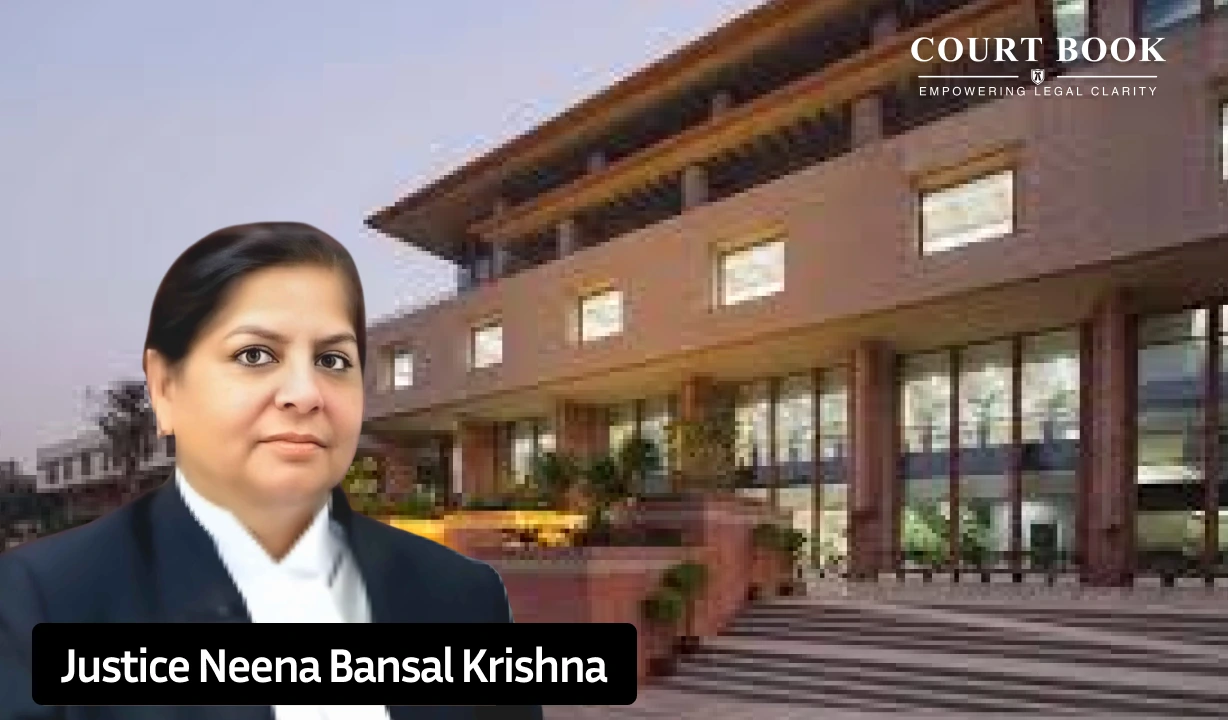
The Delhi High Court has dismissed an appeal filed by a property seller who sought recovery of ₹11 lakh allegedly remaining unpaid after the sale of a property in Ghaziabad. The Court held that once a registered sale deed clearly records the final sale consideration and acknowledges payment, the seller cannot later claim a higher amount based on an earlier agreement.
The dispute arose from the sale of a property in Vaishali, Ghaziabad. According to the appellant, Narendra Kumar Gola, an Agreement to Sell executed in April 2019 fixed the property price at ₹1.20 crore. However, when the sale deed was registered in September 2019, the consideration mentioned in the document was only ₹66.12 lakh.
The seller claimed that the buyers had persuaded him to show a lower amount in the sale deed to reduce tax liability. He further alleged that ₹1.09 crore had already been paid and three post-dated cheques worth ₹11 lakh were issued towards the balance amount. The cheques were later dishonoured.
After the buyers denied liability and stated that the entire consideration mentioned in the sale deed had already been paid, the seller filed a recovery suit under Order XXXVII of the Code of Civil Procedure. The trial court rejected the suit, following which the matter reached the High Court.
Justice Neena Bansal Krishna noted that although the earlier agreement referred to a higher amount, the subsequently executed registered sale deed specifically recorded the consideration as ₹66.12 lakh.
The Court agreed with the trial court’s finding that the execution of the sale deed amounted to a “novation” of the earlier agreement under Section 62 of the Indian Contract Act. It further observed that Sections 91 and 92 of the Indian Evidence Act bar parties from contradicting the terms of a written contract through oral claims or external evidence.
The Court observed that the terms of written documents “cannot be ignored and overlooked,” while emphasizing that any claim contrary to the registered sale deed would not be legally sustainable.
The Court also took note of the seller’s own allegation that the lower value was reflected in the sale deed to avoid taxes and duties. It observed that a party cannot seek court enforcement of transactions allegedly structured to evade legal liabilities.
Finding no error in the trial court’s reasoning, the High Court dismissed the appeal along with pending applications.
Case Title: Narender Kumar Gola v. Kishitiz Goel & Anr.
Case Number: RFA 472/2022
Download Judgment

